
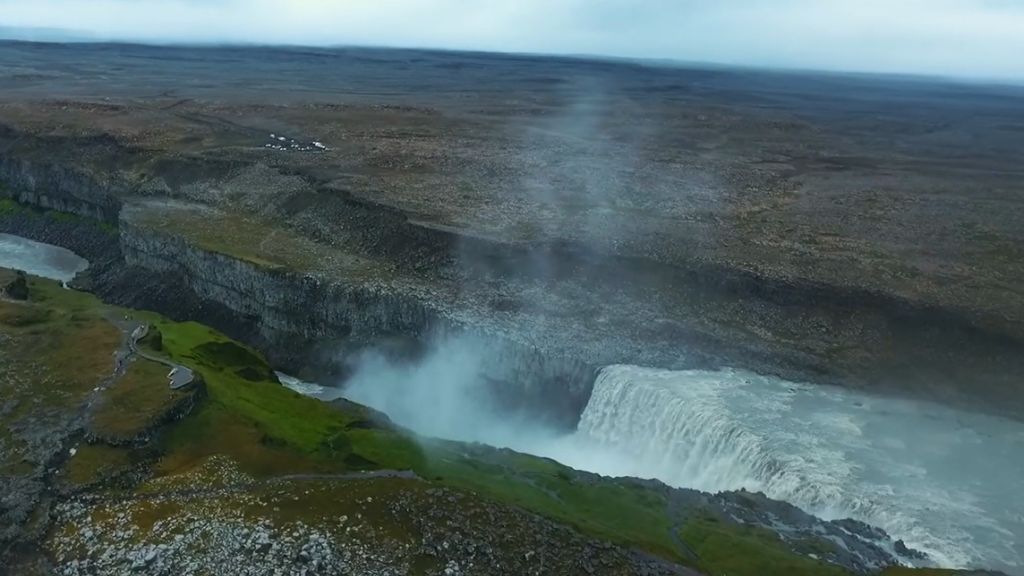
You hear it before you see it. A low, continuous roar that builds as you walk the path, and then the ground starts to vibrate under your boots. When the canyon finally opens in front of you, the scale takes a second to register. A wall of grey-brown water, 44 meters high and 100 meters wide, dropping into a canyon that stretches as far as you can see in both directions.
Dettifoss is not the tallest waterfall in Iceland. It is the most powerful in Europe, pushing roughly 500 cubic meters of water over the edge every second at peak flow. That water comes from Vatnajökull, Europe’s largest glacier, carrying with it the fine sediment that gives the river its distinctive grey color. The ice melts, the river runs, and somewhere downstream the canyon gets a little longer.
A river that carries a glacier
The Jökulsá á Fjöllum is one of Iceland’s great glacial rivers. It runs 206 kilometers from the northern edge of Vatnajökull to the Arctic Ocean, draining a significant portion of the ice cap along the way. Dettifoss sits roughly in the middle of its course, at the point where the river crosses a band of columnar basalt and drops into the canyon of Jökulsárgljúfur.
The grey color of the water is not pollution. It is rock flour, particles of basalt ground down by the glacier and carried suspended in the meltwater. On a calm day the river looks almost concrete-colored. After a warm summer or a subglacial eruption under Vatnajökull, the flow can more than double and the color deepens.
The Icelandic Meteorological Office monitors water levels and issues warnings when glacial flood risk increases upstream.
For a closer look at what happens when that glacier sits above active volcanic systems, the article on Vatnajökull covers the relationship between ice and fire in detail.
What water does to basalt over time
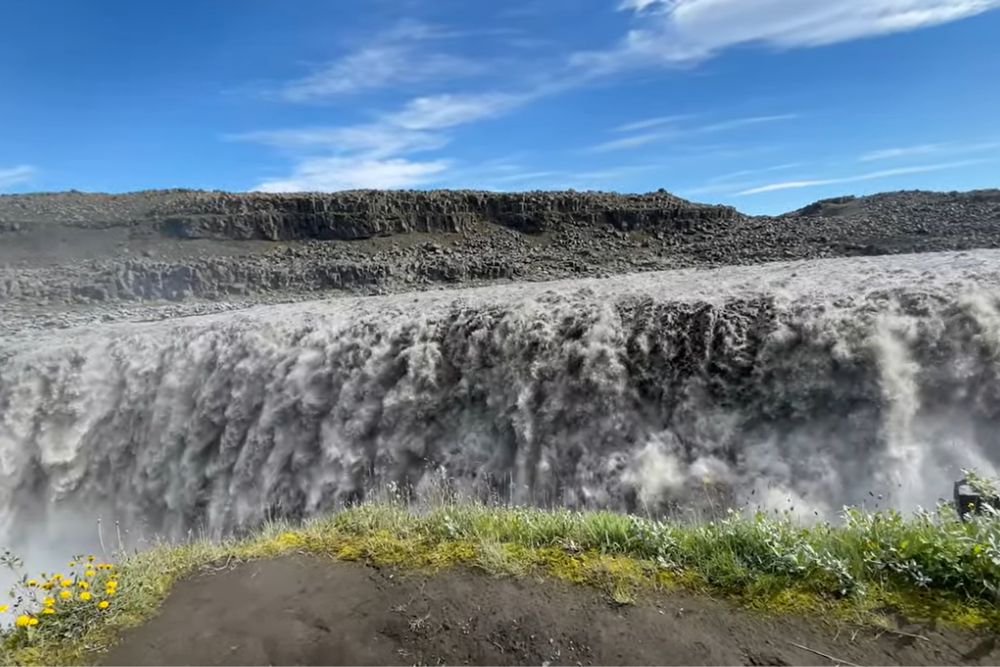
The canyon of Jökulsárgljúfur is 28 kilometers long and up to 500 meters wide in places. It did not exist 10,000 years ago.
It was carved primarily by catastrophic glacial floods, jökulhlaups, released when subglacial volcanic eruptions melted enormous volumes of ice in a matter of hours. The largest of these events sent walls of water across the landscape that dwarfed anything the river produces today. The canyon is the scar they left behind.
But the slower work continues. Dettifoss erodes its lip constantly, and the waterfall migrates upstream through a process called regressive erosion. The water undercuts the basalt, blocks collapse, and the edge retreats. Geologists estimate the falls have moved several kilometers southward since the canyon first formed. The horseshoe shape you see today is the result of that ongoing retreat.
Stand at the edge long enough and the idea becomes concrete: the place you are standing will eventually be a canyon wall, and the waterfall will be somewhere else.
The two sisters
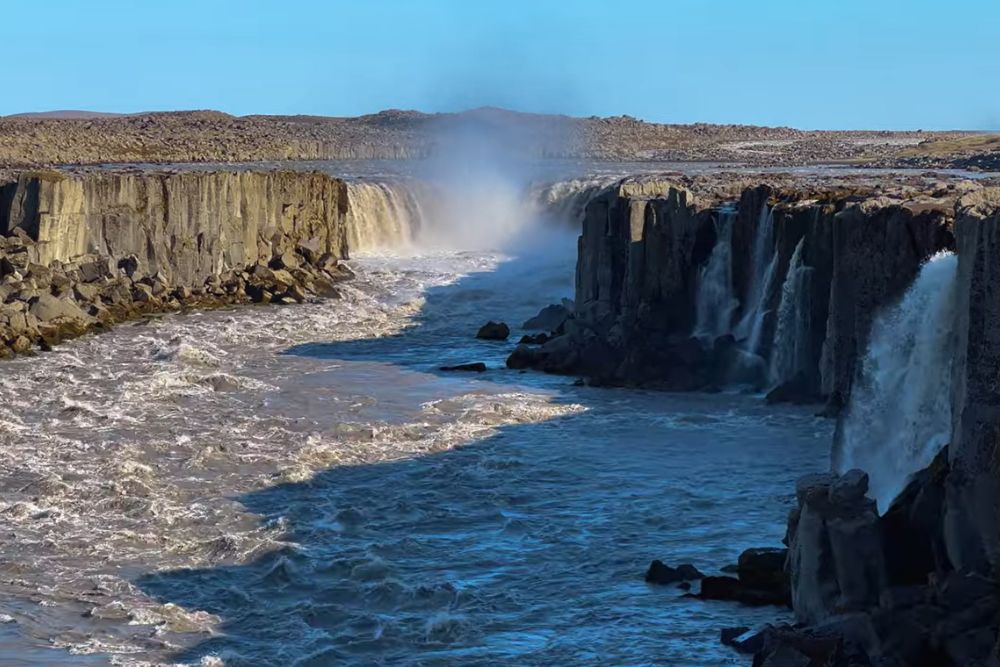
Most visitors stop at Dettifoss and turn back. Few walk the 1.5 kilometers upstream to Selfoss, a broader, shallower cascade where the river spreads across a wide basalt shelf before gathering itself for the main drop. Selfoss feels quieter and more intimate, the kind of place where you can actually hear yourself think.
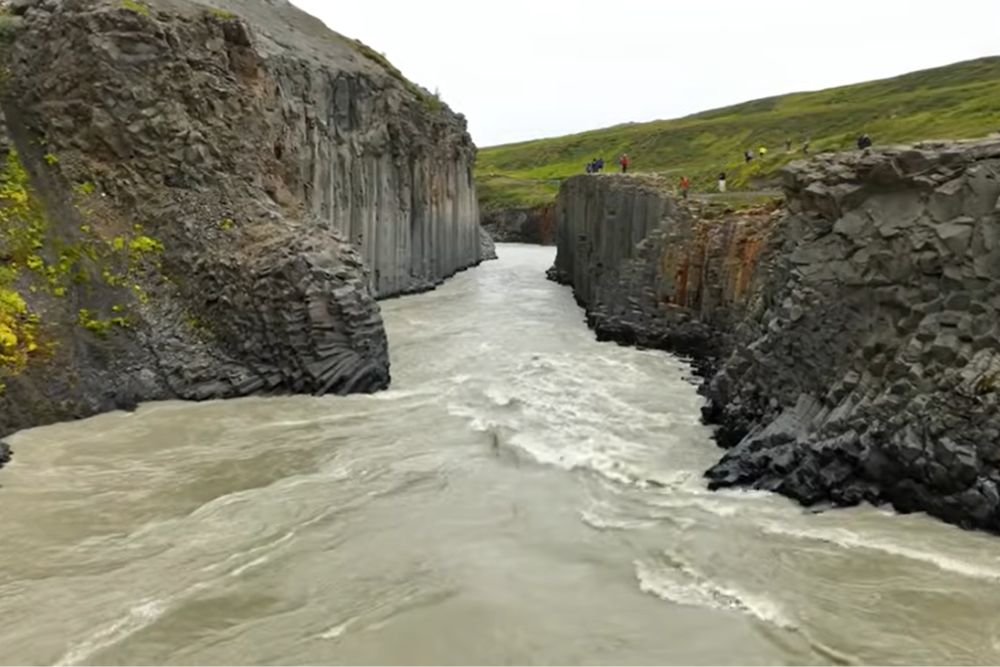
Downstream, Hafragilsfoss is smaller but sits inside the narrowest and deepest section of the canyon, where the basalt walls close in and the scale becomes almost architectural. The three falls together tell the full story of what this river has been doing to this landscape for thousands of years.
What this place teaches
The geological lesson
Water is the most patient force on Earth. Given enough time, it reshapes anything.
For young explorers
Look at the color of the water and the canyon walls. Can you figure out where the grey sediment in the river comes from? What does it tell you about what’s happening upstream?
The deep time angle
Jökulsárgljúfur canyon is less than 10,000 years old. On a geological timescale, it is brand new. Dettifoss built it in what amounts to an afternoon.
Further reading
The geological history of Jökulsárgljúfur is documented through the research of the Nordic Volcanological Center at the University of Iceland, which tracks both volcanic and glacial flood events across the region.
Practical information
East rim vs west rim: The west rim (road F862, unpaved) brings you closest to the falls and is the most dramatic viewpoint. The east rim (road 864, partially paved) offers a different perspective and easier access to Selfoss. Both are accessible by 4WD in summer.
When to go: July and August offer the best access and highest water levels. The canyon road closes in winter. June can still have snow on the paths.
Time needed: Allow two to three hours to see Dettifoss, Selfoss, and Hafragilsfoss properly.
From Mývatn: Dettifoss is roughly one hour east of Lake Mývatn, making it a natural addition to any route through the north.
The Snaefellsnes peninsula offers a completely different kind of geological story: an extinct volcano, ancient lava fields, and the landscape that inspired Jules Verne. Read it here: Snaefellsnes.