Jules Verne sent his characters underground through a crater in Snaefellsnes. Most readers assume he picked Iceland for dramatic effect. He didn’t. He picked this peninsula because, geologically, it is one of the most layered and legible places on Earth. The lava tubes, the basalt columns, the glacier sitting on top of a dormant volcano: all of it is real, and all of it is still there.
A volcano wearing a glacier
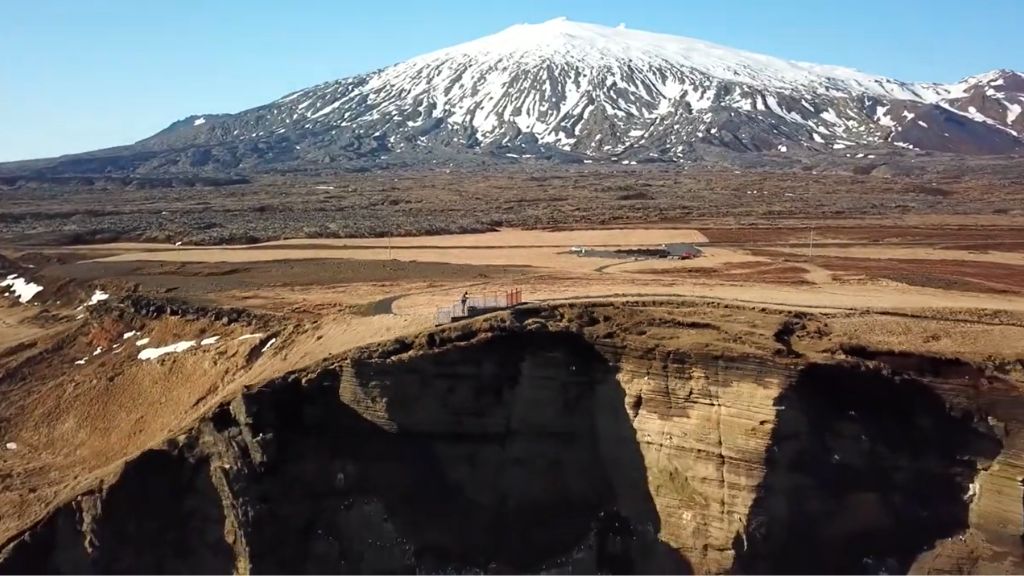
Snaefellsjökull is a stratovolcano, the same category as Mount St. Helens or Vesuvius: built up over thousands of years through alternating lava flows and explosive eruptions. It last erupted around 1,800 years ago. Since then, it has been dormant, and a small ice cap has formed on its summit.
That combination, glacier on top of dormant volcano, is geologically uncommon. It means the mountain holds two competing processes in suspension: the heat of a volcanic system that never fully switched off, and the slow accumulation of ice that responds to every shift in climate. The Icelandic Met Office and the University of Iceland monitor the volcano continuously, and Snaefellsjökull is classified as a potentially active system.
The Institute of Earth Sciences at the University of Iceland maintains the most current data on its status.
For a more extreme version of this coexistence, the article on Vatnajökull covers what happens when a much larger glacier sits above a far more active volcanic system.
What Verne actually described
In Journey to the Center of the Earth, published in 1864, Verne describes the descent through a basalt corridor inside the volcano. His characters navigate long tubular passages, dark and smooth-walled, shaped by cooling lava. This is not invention. It is a description of a lava tube.
Lava tubes form when the outer layer of a lava flow cools and solidifies while molten rock continues to flow inside. When the eruption ends, the liquid drains out and leaves a hollow channel. The Snaefellsnes peninsula has several accessible lava tubes that match Verne’s descriptions closely enough to suggest he had either visited or spoken to someone who had.
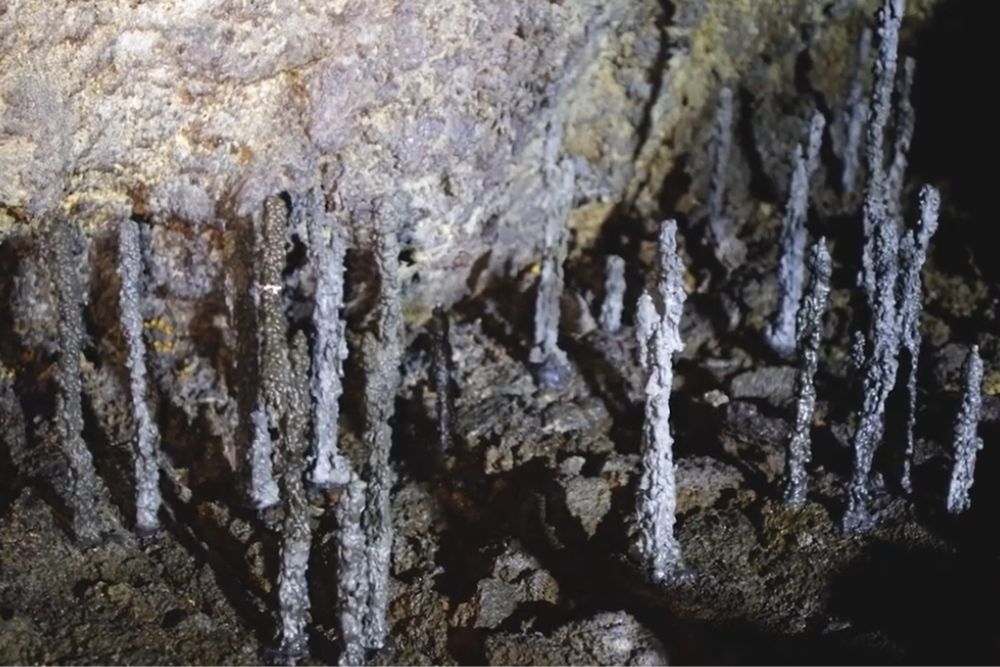
Vatnshellir is the most visited of these, a 200-meter tube near the southern coast of the peninsula that drops eight meters below the surface. The walls show clear flow markings, lava stalactites and the smooth, rounded profile that forms only inside a moving lava stream. Leiðarendi, further east, is longer and less developed, preferred by those who want something closer to genuine exploration.
Reading the surface before going underground
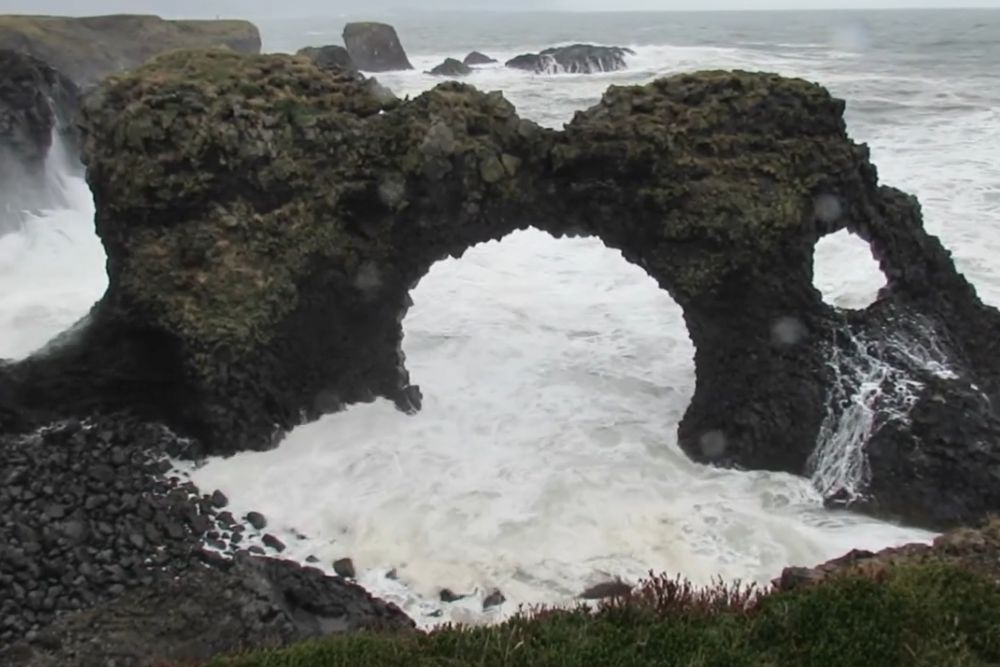
The peninsula itself is a geological cross-section of Iceland’s western volcanic history. The southern coast between Arnarstapi and Hellnar exposes some of the most striking basalt formations in the country: columnar joints, sea arches, and cliffs where you can count the individual lava flows like pages in a book.
The black pebble beaches here are not sand in any conventional sense. They are basalt ground down by wave action, sharp-edged and heavy, completely unlike the fine volcanic sand of the south coast. The difference in texture tells you something about the age and hardness of the rock and about how long it has been exposed to the sea.
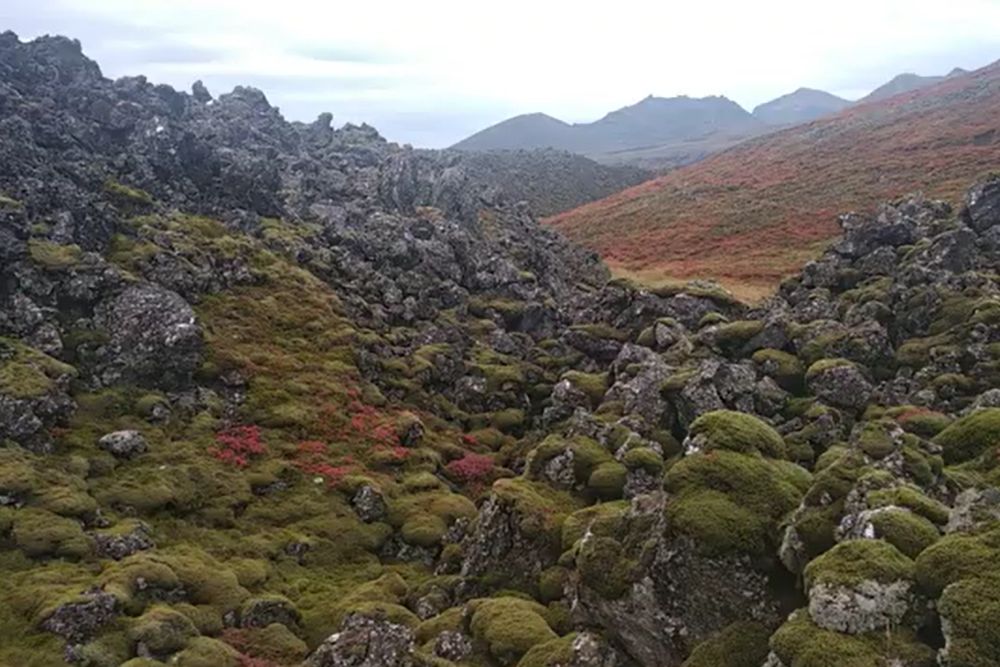
Inland, the lava fields of Berserkjahraun cover a large section of the peninsula’s northern side. The surface is rough, clinkery aa lava, difficult to walk on without trail shoes, and still largely unvegetated in the older sections. Moss has colonized the younger edges. The boundary between bare rock and living ground is visible from the road.
How to visit
The lava tubes: Vatnshellir requires a guide and runs tours throughout the summer. Helmets and lights are provided. The temperature inside stays around 2°C year-round. Leiðarendi is accessible independently but requires caving lights and warm layers.
The coastal walk: The path between Arnarstapi and Hellnar is 2.5 kilometers and takes about an hour. It passes directly beneath the basalt cliffs and gives close access to several sea arches. This is the best introduction to the peninsula’s geology for travelers without specialist equipment.
The summit: Snaefellsjökull’s glacier is accessible by snowmobile or with a mountain guide in summer. Guided glacier walks are available from Arnarstapi and offer the most responsible way to access the ice.
When to go: The peninsula is accessible year-round, but the coastal walk and lava tube visits are best from May to September. The mountain road to the glacier closes in winter.
Getting there: Snaefellsnes is a three-hour drive from Reykjavik. A full day is the minimum; two days allows you to cover both the southern coast and the northern lava fields properly.
For the geological story of Iceland’s north, the article on Dettifoss covers a completely different kind of landscape: a canyon carved by glacial floods in less than 10,000 years.
For a full geology road trip itinerary across Iceland,