

Iceland geology for kids doesn’t require a homeschool curriculum. This is a practical guide for parents who want their children — aged 6 to 14, on any kind of trip — to read the landscape with their own eyes. If you’re looking for a structured 10-day school program instead, see our Iceland Homeschool Curriculum guide.
The best souvenir a child can bring home from Iceland is not a toy puffin from the airport gift shop. It’s a question they asked themselves standing in front of a lava field, a glacier, or a black sand beach. Something like: why is the sand black here and not at home? Or: how did this hole get so perfectly round? Those questions don’t come from a tour guide. They come from a child who has learned to look.
Iceland is one of the few places on Earth where geology is impossible to ignore. The evidence is everywhere, on the surface, recent enough to be dramatic, simple enough to explain without a degree. For families traveling with children, that’s an unusual opportunity. -family geology guide to Iceland-
Iceland Geology for Kids: Why Iceland Works
Most geological processes happen underground or over timescales that make them impossible to observe directly. Iceland is different. Lava fields are recent enough that some are still warm. Glaciers are visible from the road. Geysers erupt on a schedule. Fissures cut straight lines across the landscape that children can walk along and touch.
The Icelandic Institute of Natural History documents how Iceland’s landscape is still actively forming, with new lava added to the island’s surface almost every year. That’s not an abstraction for a ten-year-old. That’s a fact they can hold in their hand when they pick up a piece of fresh basalt and feel how light it is.
The key is giving children a framework before they arrive, not a lecture, just enough vocabulary and a handful of good questions to make the landscape legible.
Five Iceland Geology Stops Perfect for Curious Kids
Activities and vocabulary work better when paired with specific places where the geology is obvious. These five stops along or near the Ring Road are forgiving with children, photogenic enough to hold attention, and each one teaches a different chapter of Iceland’s geological story.
Reynisfjara Black Sand Beach (south coast). The basalt columns at the eastern end of the beach are hexagonal — six-sided, machine-perfect, formed when thick lava cooled slowly and contracted. Ask your child to count the sides of one column. The answer is almost always six, sometimes five or seven. The why involves cooling cracks at 120-degree angles, which is a satisfying piece of physics for anyone aged eight and up. Stay well back from the sneaker waves: they kill multiple visitors each decade. See our guide to Iceland’s volcanic rocks for the chemistry behind basalt.
Strokkur Geyser (Haukadalur valley). Strokkur erupts every five to ten minutes, sending a column of boiling water 15 to 20 metres high. Give your child a stopwatch and ask them to time three eruptions in a row. They will discover what no textbook conveys: geological processes have rhythm. The eruption is preceded by a blue dome of water swelling on the surface — point this out and they will catch the next one on camera. Read more about how Strokkur actually works.
Þingvellir National Park (Almannagjá fissure). Walk the boardwalk through the Almannagjá fissure and you are literally walking between two continental plates: North American to the west, Eurasian to the east. The rift widens by about two centimetres each year. For a child, the abstract idea of plate tectonics becomes a wall they can touch on both sides. Pair the visit with our piece on standing on two continents at Silfra for the underwater version of the same fissure.
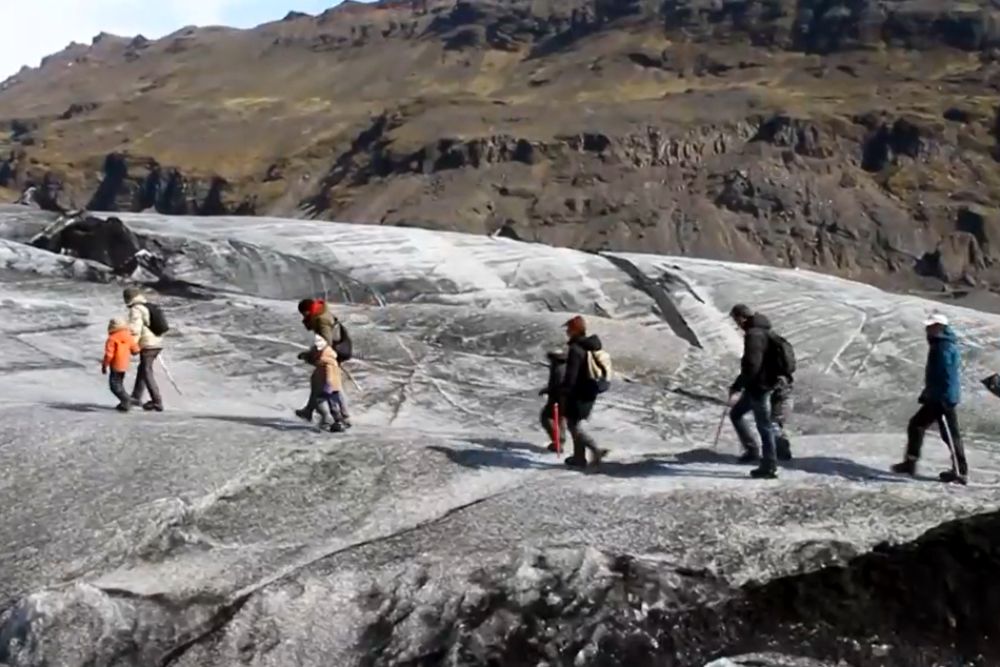
Sólheimajökull Glacier (south coast). Unlike the larger Vatnajökull, Sólheimajökull has an accessible tongue that descends close to the parking area. The walk from car to glacier edge takes about fifteen minutes on a clear path. Look for the dark stripes in the ice: those are volcanic ash from past eruptions trapped between annual layers, like tree rings made of ice. Each stripe is a year. Our Vatnajökull article explains the glacier-volcano interaction at scale.
Dettifoss Waterfall (north Iceland). Dettifoss is Europe’s most powerful waterfall by volume of water moved per second. The water is grey because it carries glacial flour — pulverised rock so fine it stays suspended in the flow. Ask your child why the water at home looks blue and Dettifoss looks like wet concrete. The answer leads naturally to erosion, sediment transport, and the speed at which a landscape changes. Full details in our Dettifoss geology piece.
Iceland Geology for Kids: Ages 6 to 9
At this age the goal is observation, not explanation. Children this age are naturally drawn to texture, color, and scale. Iceland plays to all three.
Rock Spotting Without Collecting. Before the trip, show them photographs of basalt, obsidian, and rhyolite. Give them a simple field sheet with the three images and ask them to find each one during the trip. The rule: look closely, photograph if you want, leave everything where it is. Taking rocks from Iceland’s nature reserves is illegal and explaining why, the slow formation, the fragility of the ecosystem, tends to land better than a simple prohibition.
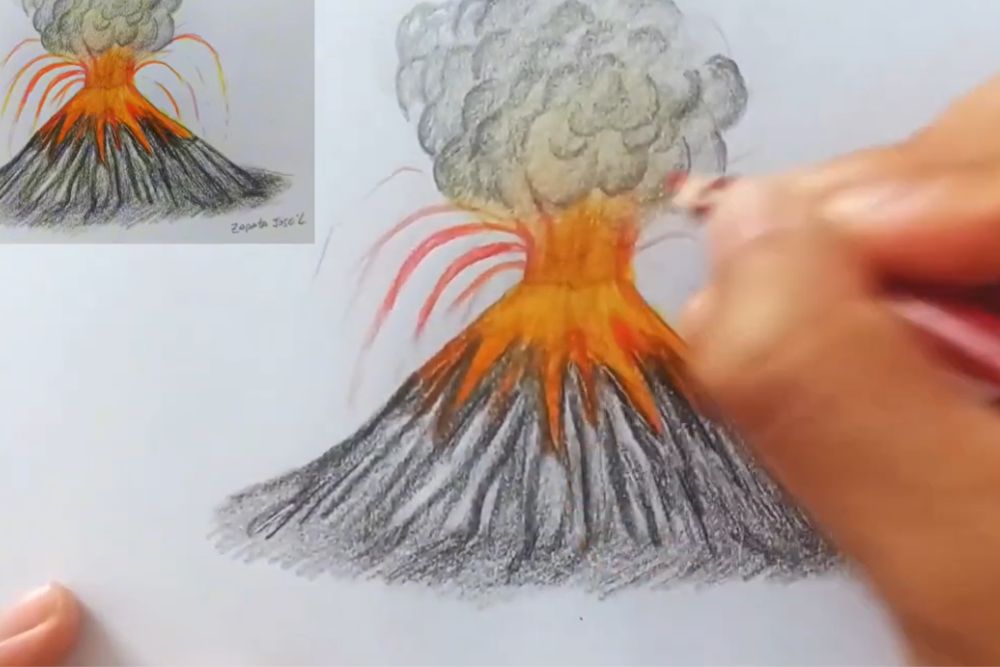
Landscape Drawing. Pack a small sketchbook. At each major stop, give them five minutes to draw what they see before taking any photos. Drawing forces observation in a way that pointing a camera does not. Ask one question while they draw: what do you think made this shape?
Scale Games. Stand a child next to a basalt column and photograph them. Ask: how many of you would fit from the bottom to the top? This kind of physical comparison makes geological scale concrete in a way that numbers rarely do.
For Older Children: Ages 10 to 14
Older children can handle the full loop of scientific thinking: observe, hypothesize, check.
The Field Notebook. A proper field notebook works differently from a travel journal. Each entry has a location, a sketch or photograph reference, an observation, and a question. The question is the most important part. At Dettifoss, the observation might be: the water is grey, not blue. The question: where does the color come from? That question leads directly to Vatnajökull, glacial flour, and the physics of suspended sediment.
Rock Classification. Bring a simple pocket guide to Icelandic rocks. At each stop, ask them to identify the dominant rock type and explain, in their own words, how it formed. Basalt from slow lava cooling. Obsidian from fast cooling. Rhyolite from a different magma composition entirely. Getting it wrong is fine. The reasoning matters more than the answer.
Hypothesis Testing. Before arriving at a new landscape, ask: based on what we’ve seen so far, what do you think formed this place? Then visit, observe, and revise. This is how science actually works, and Iceland provides enough variety to run the loop six or seven times in a single trip.
Safety and Practical Tips for Iceland Geology with Kids
Iceland is forgiving for prepared families and unforgiving for unprepared ones. The risks here are different from a typical European holiday, and children need clear rules before they arrive.
Footwear. Waterproof hiking boots with ankle support, not sneakers. Lava fields are razor-sharp basalt scoria that destroys soft shoes in an afternoon. Pack two extra pairs of wool socks per child.
Layering. Summer temperatures range from 5°C to 15°C, but wind chill is constant and rain is unpredictable on any given day. A waterproof shell over a fleece over a base layer covers most conditions.
Geothermal areas. Stay on marked paths at all geothermal sites. The crust around fumaroles and hot springs can be only a few centimetres thick over water at 100°C. A child who steps off the boardwalk at Hverir or Geysir is at real risk of severe burns. Make this rule explicit before you arrive, not on the spot.
Hike length. Children aged 6 to 9 manage 2 to 3 kilometres before complaint. Ages 10 to 14 can handle 5 to 6 kilometres with modest elevation. Plan accordingly and pack snacks every stop.
Driving. A standard rental car is fine for the Ring Road (Route 1) and most southern attractions. A 4×4 is mandatory for F-roads in the highlands. The full road trip planning guide covers seasonal access and what each road actually demands.
Ten Words To Learn Before the Trip
These are enough to make any landscape readable without overwhelming anyone.
Lava, basalt, crater, glacier, erosion, fissure, eruption, plate, magma, rift.
Each word takes two minutes to explain with a photograph. Ten minutes of preparation before departure is enough. The landscape does the rest.
The Questions That Open Everything Up
The best geological conversations on a family trip start with one of these:
Why is the sand black here? Why does the ground steam? How did the glacier get there? Why does the lava have holes in it? How long did it take to make this canyon? Could this volcano erupt while we’re standing here?
None of these require a scientific answer on the spot. They require curiosity and the willingness to say: that’s a good question, let’s think about it. Most of the answers are findable on the road, in the landscape itself, if you know what to look for.
The article on Iceland’s arctic moss is worth reading with older children before the trip. The idea that the ground cover beneath their feet is older than most medieval buildings tends to change how they walk. And a child who understands why the moss is fragile, not because someone told them the rules but because they understand the biology, will stay on the path without being reminded.
For broader context on how tourism affects these landscapes, the piece on Iceland’s overtourism problem covers what happens when too many visitors arrive without that kind of preparation.
A full homeschool curriculum built around Iceland travel is coming in a future article. Iceland for homeschoolers
What They’ll Remember
Children who travel geologically come home with something different from children who collect photographs. They come home with a way of reading the world. The black beach at home, the volcanic rock in a city wall, the hill that turns out to be a drumlin. Once you’ve learned to ask why a landscape looks the way it does, you can’t stop asking.
That’s not a lesson Iceland teaches. It’s a habit Iceland makes possible.
Frequently Asked Questions
Common questions from families planning a geology-focused trip to Iceland.
What is the best age to take kids to Iceland for geology?
Eight to twelve is the sweet spot. Younger children enjoy the spectacle but tire quickly on the long drives between sites. Teenagers can manage everything an adult does but need genuine intellectual hooks — the field notebook approach described earlier in this guide works particularly well at that age.
Is Iceland safe for young children?
Yes, with one strict rule: stay on marked paths at any geothermal site and well back from cliff edges and breaking waves. Iceland’s hazards are clearly signposted but they do not forgive a wandering toddler. Strollers are not workable on most geological sites — bring a hiking carrier instead.
Can my kids collect lava rocks or basalt to take home?
No. Collecting rocks, moss, or any natural material from Iceland’s nature reserves and protected sites is illegal. Photograph instead. Most airports also screen for organic material on departure. The “look but don’t take” rule is part of why Iceland’s landscapes remain intact.
Do we need a private geologist guide?
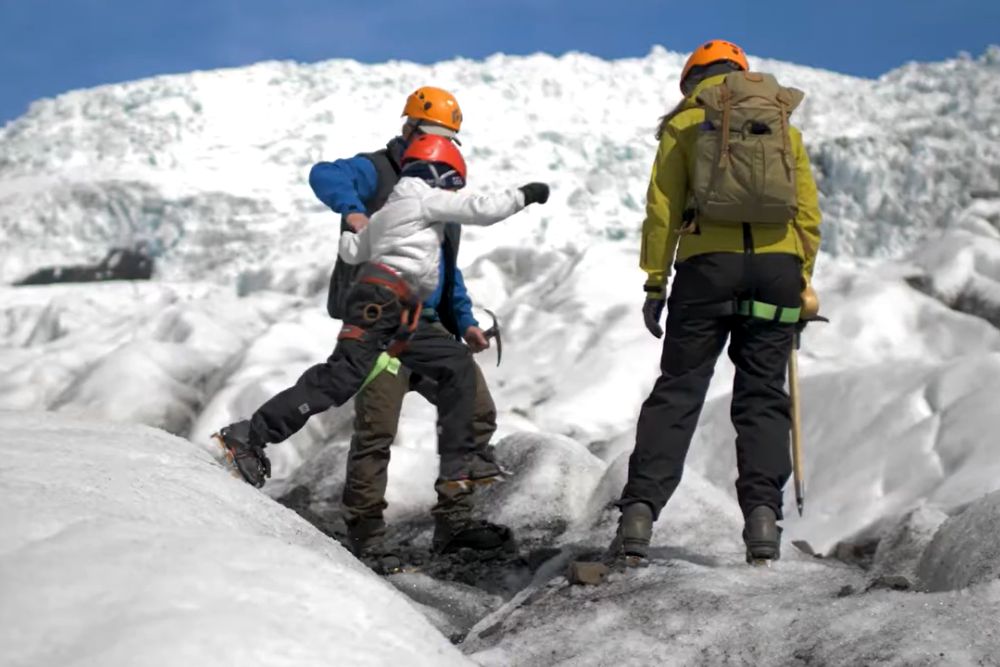
Not for most stops. The road-accessible sites along the Ring Road are self-guided with clear interpretive signage. Hire a certified guide only for glacier walks, ice caves, and highland excursions, where the safety stakes are real. See our piece on Vakinn-certified operators for vetted choices.
How does Iceland compare to other geological destinations for families?
Iceland is more compact and more visible than Hawaii or Yellowstone for the same kinds of features. Children see basalt columns, glaciers, geysers, and a rift zone within a week of driving rather than across a continent. The geology is also fresher — most landscapes are less than 10,000 years old, which makes them easier to read.
What is the best month for family geology travel in Iceland?
June and July offer near-24-hour daylight, the most accessible roads, and the warmest temperatures. September has thinner crowds and the chance of early aurora viewing. Avoid November to March for family trips: short days, ice on the roads, and many sites are closed.
Pingback: Iceland Homeschool Curriculum: One Road Trip, All Subjects
Pingback: Iceland Eco Tours Certified: The Vakinn Label Explained