
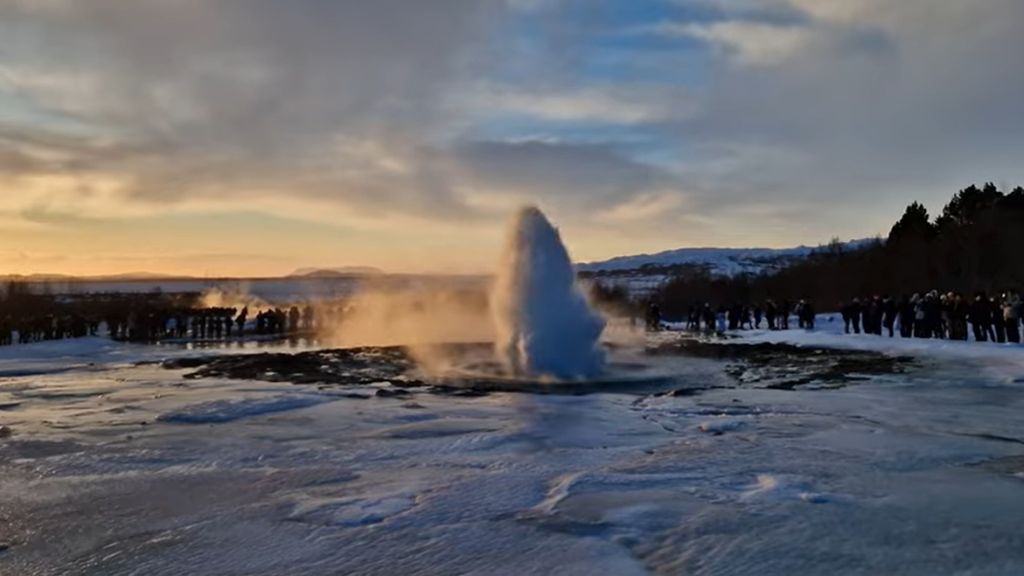
Iceland has 370,000 inhabitants. Last year, roughly 2 million people visited. Do the math, and then ask yourself: what happens to a landscape when it receives six times its population every single year?
That is not an accusation. Most people who visit Iceland come because they genuinely love wild places. They want to stand at the edge of something ancient and feel its scale. The problem is not the intention. It is the arithmetic.
responsible travel Iceland is not about going less far or enjoying less deeply. It is about understanding what you are actually walking on, and letting that understanding change how you move through it. This guide is built on that idea.
When Too Many Feet Walk the Same Path
The damage is not dramatic. It does not look like a disaster. It looks like a faint trail cutting through moss beside the official path. It looks like a bootprint pressed into fresh lava. It looks like a parking area where the ground has turned to dust.
Iceland’s volcanic moss — Racomitrium lanuginosum and its relatives — grows at roughly 1 millimeter per year. A single footstep off a marked trail compacts the structure underneath, breaks the surface layer, and stops growth in that spot for decades. Some estimates put the recovery time at 50 to 100 years for heavily trampled areas. The moss you might step over without thinking could be older than the United States. For more on why this matters, the article on Iceland’s arctic moss covers the biology in full.
On the Reykjanes Peninsula, where lava has been flowing since 2021, bootprints pressed into the cooling crust leave permanent marks. Basalt records pressure. A footprint made today in semi-solidified lava will still be there in a thousand years, as legible as a fossil.
At Silfra, the glacial fissure where divers and snorkelers pass between tectonic plates, the delicate algae colonies on the walls are disturbed by fin contact and wetsuit friction. At Seljalandsfoss and Skógafoss, the paths around the falls have eroded so severely that the original trail surface is gone in places, and the unofficial shortcuts people cut through the vegetation extend the damage outward each season.
According to a 2023 report by Umhverfisstofnun, the Icelandic Environment Agency, 47 percent of Iceland’s protected natural areas show measurable signs of tourism-related degradation. That figure covers everything from soil compaction to vegetation loss to contamination of water sources near campsites. The number is not a verdict. It is a starting point for a different kind of traveling.
Five Principles for Traveling Iceland With Respect
These are not rules imposed from outside. They are logical consequences of understanding what Iceland is made of. responsible travel Iceland
1. Stay on the Path
Marked trails in Iceland exist because the ground beside them cannot absorb foot traffic. It is not bureaucratic caution. It is geology. The moss, the lichen, the thin soil crusts over lava — all of it is extraordinarily slow to form and extraordinarily fast to destroy. The overtourism article maps out the sites where trail erosion is most visible right now, and why some of Iceland’s most photographed places are quietly disappearing beneath the feet of the people who love them.
2. Leave No Geological Trace
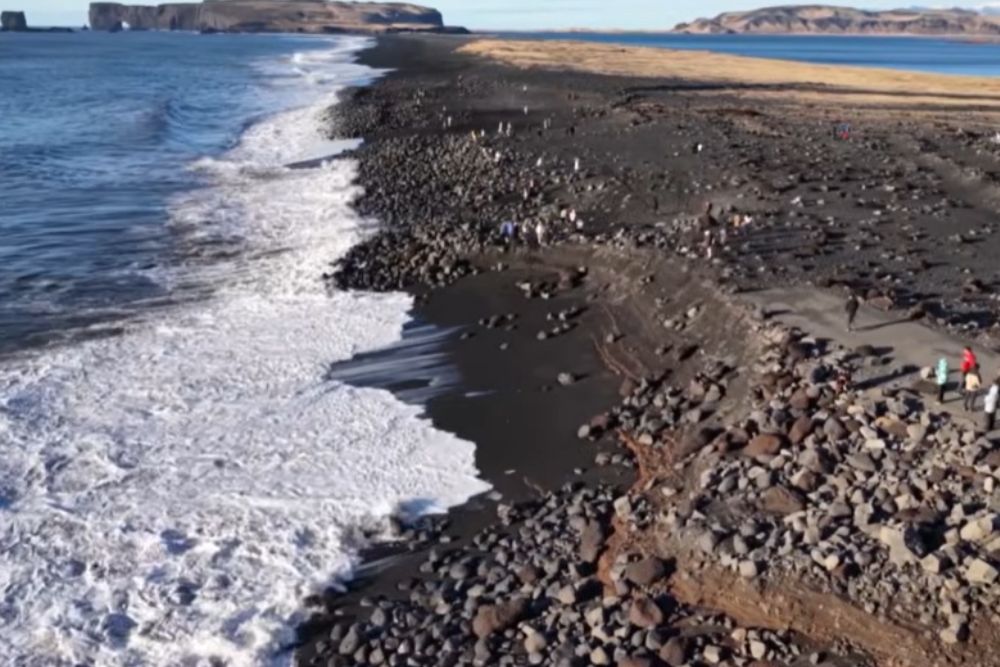
Iceland’s black sand beaches, obsidian fragments, basalt columns, and lava rocks look abundant. They are. But they are also part of active geological systems, and their removal, even one stone per visitor, adds up across 2 million annual trips. Icelandic law prohibits removing geological material from nature reserves. Beyond the legal aspect, there is a simpler argument: the rock you pocket was there before you arrived, and it should be there after you leave. It belongs to the sequence, not to your shelf.
3. Travel Off-Season or Off the Beaten Track
July and August concentrate the majority of Iceland’s 2 million annual visitors into roughly eight weeks. The same roads, the same waterfalls, the same parking areas. June and September offer nearly identical light and landscape with significantly less pressure on the most fragile sites. The interior highlands, accessible only from late June to early September, remain relatively uncrowded throughout the season because they require a 4WD vehicle. The Westfjords attract a fraction of the visitors that the south coast does, yet offer geological and ecological complexity that rivals anything on the Ring Road.
4. Choose Operators Who Are Certified
The Vakinn quality label, issued by Icelandic Tourist Board, is Iceland’s official certification for tourism operators who meet verified standards for environmental practice, safety, and service quality. Certified operators limit group sizes, brief participants on responsible behavior before entering sensitive areas, and carry waste out rather than leaving it. When you book with a Vakinn-certified company, you are not just buying a tour. You are supporting an operating model that protects the sites it depends on. A dedicated guide to the best certified operators in Iceland is coming soon.
5. Offset Intelligently
A return flight from New York to Reykjavik produces roughly 1.2 tonnes of CO₂ per passenger. That number is real and worth acknowledging. Carbon offset programs vary enormously in quality. The Gold Standard and Verified Carbon Standard (VCS) certifications indicate that offset projects have been independently verified and that the emissions reductions they claim are real and additional. Buying a cheap, unverified offset does not reduce your footprint. It purchases a feeling. The more honest version of this conversation is: fly less often, stay longer, and go deeper when you go.The Invisible Architecture of Iceland’s Wilderness
What looks like an empty field of green is actually a structure that took centuries to build. Iceland’s mosses and lichens are the first organisms to colonize bare lava after an eruption. They break down rock, accumulate organic matter, and create the thin layer of soil that everything else depends on. Without them, the landscape stays barren. With them, it slowly becomes habitable.
The marked paths running through Icelandic moss fields are not restrictions on your experience. They are agreements with the place. They say: here is where human traffic is absorbed, and here is where it is not. The view from the path is the same view you would have three meters off it. What changes is not your experience but the trajectory of what you are standing on.
If you are traveling with children, the article on teaching kids to read rocks has a practical section on how to explain the moss and its fragility in terms that make sense to younger travelers. A child who understands why the rule exists will not need to be told twice.
How to Choose a Tour Operator Who Shares Your Values
The Vakinn label is a reasonable starting point, but it is not the only signal. Before booking any guided experience in Iceland, three questions are worth asking directly.
How large is the group? Smaller groups cause less physical impact on sensitive sites and allow guides to give meaningful environmental briefings. Any operator unwilling to give you a clear number is telling you something.
How do you handle waste in the field? Pack-in, pack-out is the standard for responsible operators. If the answer is vague, assume the answer is not what you want it to be.
Are your guides trained in the geology and ecology of the sites you visit? A guide who understands why Silfra’s water is that color, or why the moss beside the trail is that old, is a guide who passes that understanding on. That knowledge changes how a group moves through a landscape.
A full breakdown of certified operators across different activity types, from geology-focused hikes to family tours and small-group kayaking, is coming as a dedicated article.
The Carbon Conversation
Getting to Iceland from North America means flying. There is no honest way around that. A return flight from New York to Reykjavik produces roughly 1.2 tonnes of CO₂ per passenger, which is significant but comparable to many long-haul leisure trips.
What you do with that number matters more than whether you feel bad about it. Gold Standard and VCS-certified offset projects fund verified emissions reductions in renewable energy, forest protection, and clean cooking infrastructure in the developing world. They are not perfect instruments, but they are the closest the voluntary carbon market currently has to reliability.
The more durable version of this conversation is simpler: travel less often, stay longer when you go, and make the depth of the experience worth the distance. Iceland rewards that approach. A week of slow, attentive travel through one region teaches more, causes less impact per day, and leaves a different kind of memory than ten days of maximum coverage.
The rock you are looking at has been there for 10 million years. The moss beneath your feet may be 1,000 years old. The canyon that stole your breath took 10,000 years to form. You, in all likelihood, have 10 days. That ratio is not an argument for humility. It is an invitation to attention.
Responsible travel in Iceland is not a checklist. It is a posture. It asks you to arrive knowing something about what you are walking into, and to let that knowledge shape every small decision you make while you are there. The homeschool curriculum on wheels takes a similar approach for families: understanding the place deeply is itself the most respectful thing you can do with it.
Frequently Asked Questions
Is it illegal to walk off the trails in Iceland?
In designated nature reserves and protected areas, yes. Iceland’s Nature Conservation Act prohibits off-trail travel in most protected zones, and fines can reach up to 1 million ISK. Outside protected areas, the legal picture is more nuanced, but the environmental argument applies regardless of legal status. The moss does not know where the reserve boundary is.
Can I pick up rocks or volcanic sand in Iceland?
Removing geological material from nature reserves and national parks is prohibited by law. Outside protected areas it is technically permitted but widely discouraged. Iceland’s geological features, including black sand beaches, are actively eroded and redistributed by natural processes. Human removal adds a one-way pressure that nature cannot offset. The practical answer is: photograph it, leave it.
What is the best way to reduce my carbon footprint when visiting Iceland?
Book a direct flight where possible, as layovers add emissions. Choose Gold Standard or VCS-certified offsets for the unavoidable flight emissions. Once in Iceland, rent an electric or hybrid vehicle, which is increasingly straightforward given the country’s charging infrastructure. Eat locally produced food, which in Iceland often means lamb, fish, and dairy from farms with a very short supply chain. And stay longer rather than rushing: fewer trips with more depth is always the lower-impact approach.
What does ‘responsible tourism’ actually mean in practice?
It means arriving informed. Knowing that the moss takes a century to recover from a single footprint changes whether you step on it. Knowing that the black sand is a living beach system changes whether you pocket a handful. Responsible tourism is not a set of prohibitions. It is the natural consequence of actually understanding what you are looking at. That is what this site is for.