
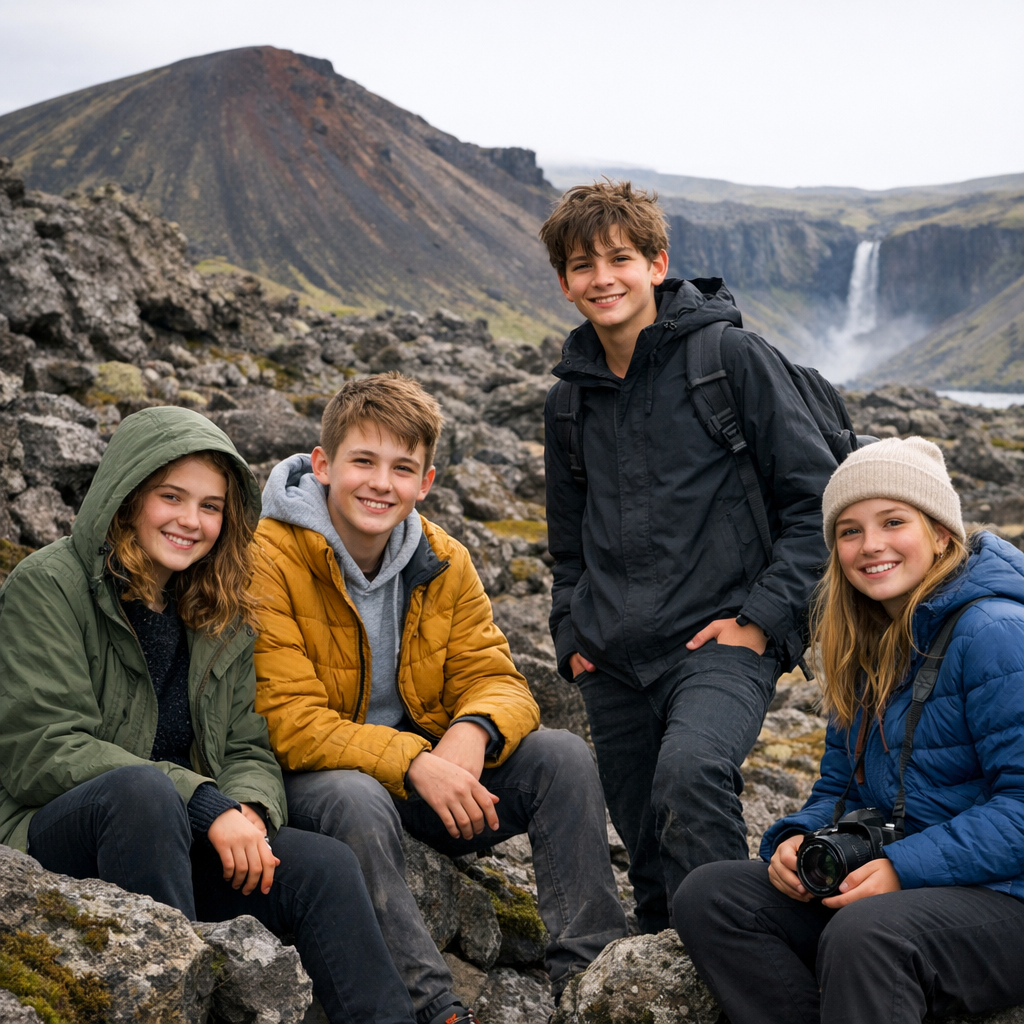
Ten days in Iceland can cover more ground than a full school semester. Not metaphorically.This iceland homeschool curriculum is built around that idea. A family driving the Ring Road passes through active volcanic zones, glacial landscapes, geothermal fields, Viking-age historical sites, and one of the world’s oldest functioning democracies. Every landscape is a lesson. Every stop raises a question worth pursuing.
This is a practical framework for families who want to travel Iceland with intention, not just inspiration.
Why Iceland Works as a Classroom
Most school subjects ask children to imagine what they cannot see. Iceland removes that problem entirely. The geological processes are visible, recent, and dramatic enough to hold a twelve-year-old’s attention without effort. The history is layered but accessible. The biology is strange enough to be genuinely interesting.
The Icelandic Institute of Natural History has documented over 1,300 protected natural features across the island, from lava tubes to moss-covered plains. Many are roadside. Most are free. The density of learning opportunities per kilometer of driving is unlike anywhere else in the world.
The key is arriving with a structure. Not a rigid schedule, but a framework that gives each day a discipline, a question, and a method of documentation.
The 10-Day Iceland Homeschool Curriculum
Geology: Reading the Land
Iceland’s geology is the spine of any homeschool trip. Days one through three, based around the Reykjanes Peninsula and the Golden Circle, cover the fundamentals: tectonic plates, volcanic rock types, and geothermal activity.
At Þingvellir, the rift valley is visible from above and walkable at ground level. Ask your student to sketch the two fault walls and label which plate is on each side. At Geysir, the mechanism of a geyser, water, heat, pressure, and release, can be explained in ten minutes and observed in five. At the lava fields of Reykjanes, have them compare the texture of aa lava with pahoehoe and write one sentence explaining the difference in cooling speed.
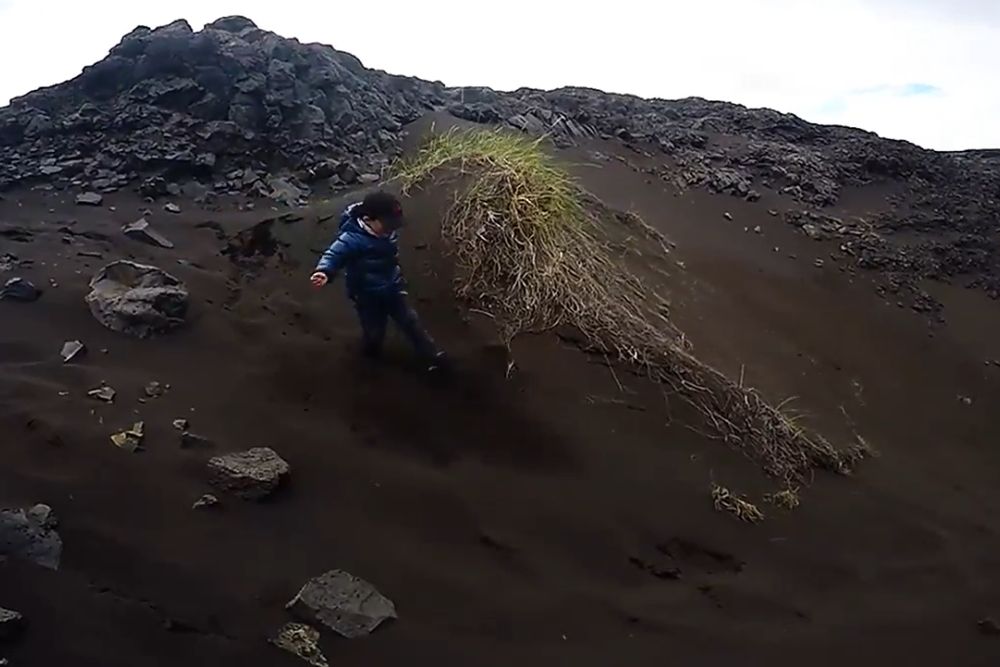
By day five, near Vatnajökull, the lesson shifts to glaciology. The article on Iceland’s arctic moss pairs well here: the ecosystem around the glacier’s edge shows how slowly life returns after ice retreats.
Biology: Life in Extreme Conditions
Iceland’s biology is built around extremes. The geothermal pools near Mývatn support organisms that exist almost nowhere else on Earth. The bird cliffs at Látrabjarg host millions of seabirds in a space that makes population density and nesting behavior immediately observable.
For younger students: count species at each stop and keep a running list. For older students: research one organism per day and explain in writing how its biology is adapted to volcanic or arctic conditions. The Arctic tern, which migrates from pole to pole, is a reliable conversation starter about navigation, endurance, and scale.
History: The World’s Oldest Parliament
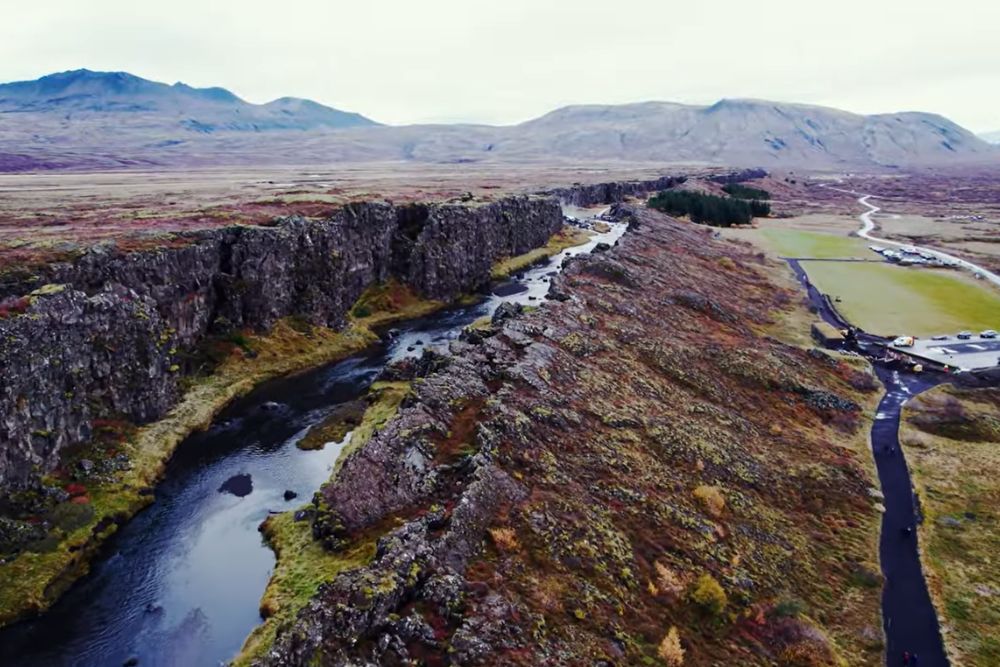
Iceland’s human history is short by geological standards but rich by any other measure. The Althing, established at Þingvellir in 930 AD and recognized by UNESCO as a World Heritage Site, is considered one of the earliest parliamentary institutions in the world.
For a homeschool trip, Þingvellir works on two levels simultaneously: geological (the rift valley, the fissures, the basalt) and historical (the assembly site, the law rock, the original democratic process). That overlap is rare and worth spending a full day on.
Ask your student to compare the Althing with whatever democratic institution exists in your home country. When was it founded? What problems was it designed to solve? How has it changed?
Mathematics: Numbers the Landscape Provides
Iceland provides real numbers worth calculating. Dettifoss moves roughly 193 cubic meters of water per second at average flow. How much is that per hour? Per day? The canyon of Jökulsárgljúfur is approximately 28 kilometers long and formed in roughly 10,000 years. How many meters per year did it grow? How many centimeters per month?
These are not invented word problems. They are measurements of things your student is standing next to. That changes the relationship to the calculation entirely.
Geography: Coordinates, Topography, and Scale
Iceland sits almost exactly on the Arctic Circle. Grimsey Island, 40 kilometers off the north coast, straddles it precisely. On a map exercise, have your student locate the major geological zones, mark the plate boundary, and calculate the straight-line distance between the southernmost and northernmost points of the island.
For older students, introduce topographic maps and ask them to identify, from the contour lines alone, which areas are likely to be lava fields, which are glaciated plateaus, and which are river valleys.
How to Document the Trip
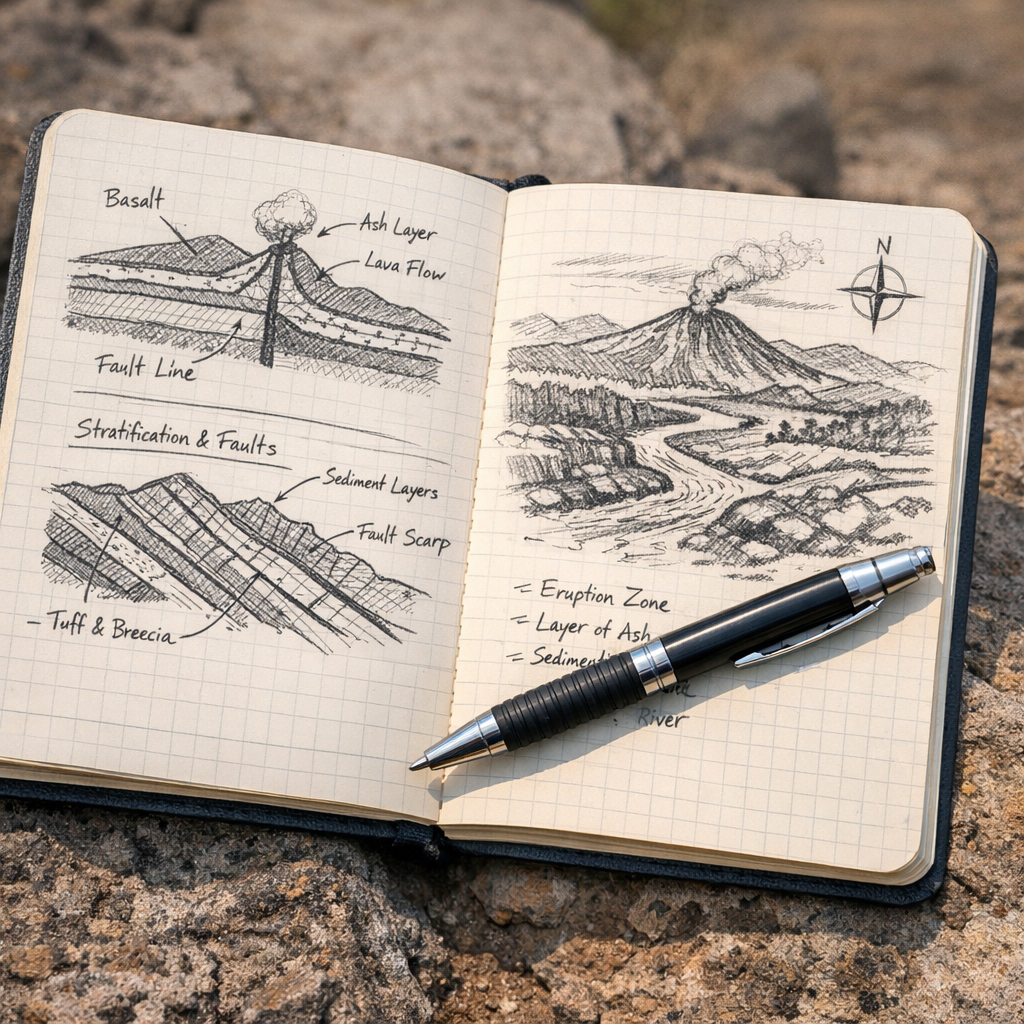
A field notebook is the core tool. Each entry should have four elements: location and date, a sketch or photograph reference, one observation stated as a fact, and one question the observation raises.
The question column is the most important. It keeps the learning active after the landscape has passed. A student who writes “why does the glacier look dirty at the edges?” on day four will find the answer, glacial moraine, sediment transport, the mechanics of ice movement, before day six if you give them the space to look.
Photography works best when it has a purpose. Assign a daily photo brief: today we are documenting rock textures. Today we are documenting evidence of water erosion. Today we are photographing things that show the passage of time. This produces a visual record that is genuinely useful for review and presentation after the trip.
Resources Worth Bringing
For geology, Volcanoes of Iceland by Ármann Höskuldsson is accessible for students aged twelve and up. For history, the Icelandic Sagas in a children’s edition provide narrative context for every major historical site. The Veðurstofa app (Icelandic Met Office) teaches students to read weather and volcanic alert systems in real time.
The family guide to teaching kids to read rocks covers the foundational vocabulary and observation techniques worth establishing before departure. And for the broader question of how to travel these landscapes responsibly, the piece on Iceland’s overtourism problem is worth reading with older students as a lesson in human geography and environmental ethics.
A full responsible travel guide for Iceland is coming. [Placeholder: pilier Ecotravel]
What Comes Home
A homeschool trip to Iceland doesn’t end at the airport. The field notebooks, the photo archive, the species list, the calculations: these are the raw material for a post-trip project that can run for weeks. A student who spent ten days reading Iceland’s landscape will write differently about geology, history, and biology than one who read about them in a textbook.
That’s the real iceland homeschool curriculum. Iceland just provides the classroom.