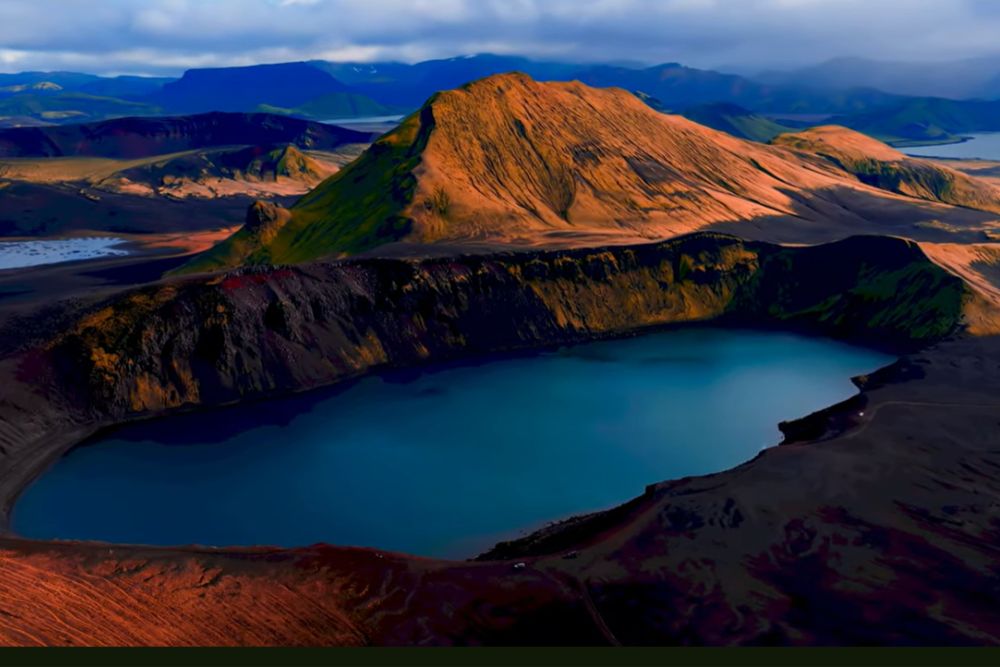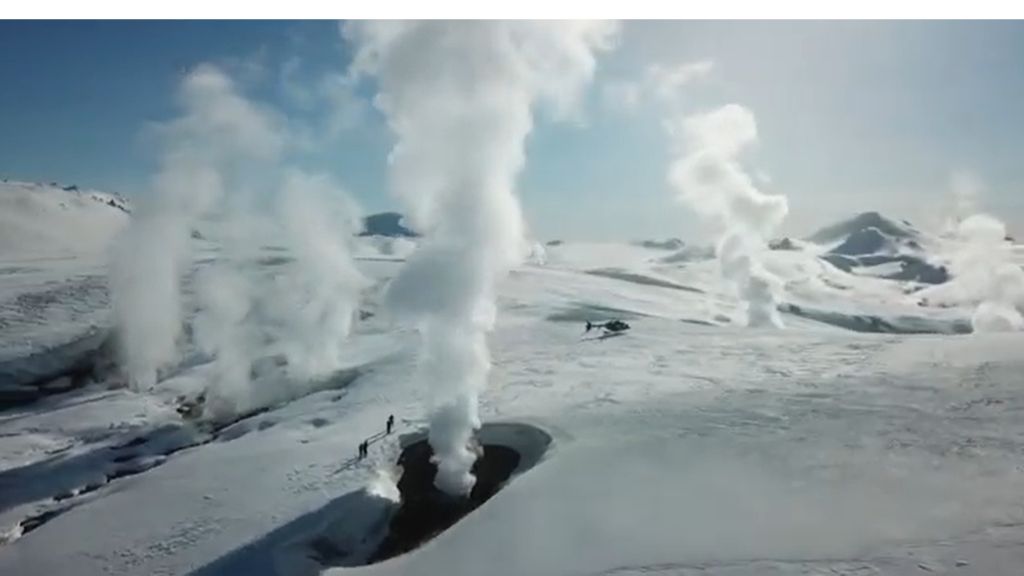
You don’t need to go to Iceland to understand what it teaches.
Everything the island shows you in plain sight, tectonic plates pulling apart, glaciers sitting above volcanoes, a canyon built in ten thousand years, a moss that grows a millimetre per year: the Earth is doing all of this everywhere, all the time. Iceland just makes it impossible to look away.
Iceland nature philosophy is not a niche interest. It is the oldest conversation the planet has been having. Most of us stopped listening somewhere along the way. Iceland is the place where the volume gets turned back up.
Lesson 1: Iceland Teaches You Are a Geological Footnote
The lava that erupted on the Reykjanes Peninsula in 2021 is younger than most people reading this. The moss growing on the lava fields nearby may be older than any living person. The canyon at Dettifoss took ten thousand years to form. The glacier at Vatnajokull has been suppressing the volcanoes beneath it for millennia.
These numbers do not mean that your life is unimportant. They mean that the frame you use to measure importance shifts when you stand inside a landscape that operates on a different clock. The rock beneath your feet was liquid within living geological memory. The glacier you are looking at will not exist in its current form in a few centuries.
That perspective is difficult to hold in daily life. In Iceland it becomes physical. The moss beneath your feet that took a millennium to grow can be destroyed in a single step. The consequence and the timescale are both visible at once. That is rare.
Deep time is not an abstraction. It is the context within which everything you have ever done or will do takes place. Iceland makes you feel that context rather than simply know it.
Lesson 2: Iceland Teaches Fragility of Beauty
The landscapes that draw two million visitors to Iceland every year are extraordinary precisely because they are young, active, and unstable. A moss field that looks ancient is fragile because the volcanic soil beneath it is thin and slow to recover. A lava field that glows at night is dangerous because it is unfinished.
This is not a coincidence. The same forces that produce the spectacle produce the vulnerability. Geologically young landscapes have not had time to develop the resilience of older ones. There is no deep organic layer to absorb impact, no centuries of root systems to stabilize the slope, no ecological buffer between what you do and what happens to the ground.
The overtourism problem in Iceland is not primarily a problem of numbers. It is a problem of mismatch: a landscape operating on a geological timescale receiving two million visitors in an eight-week season. The moss does not know it is July. It just knows the pressure.
This lesson transfers. The most biodiverse ecosystems on Earth, coral reefs, old-growth forests, high-altitude wetlands, share the same characteristic: they are spectacular because of conditions that also make them easy to damage. Knowing that changes how you move through them.
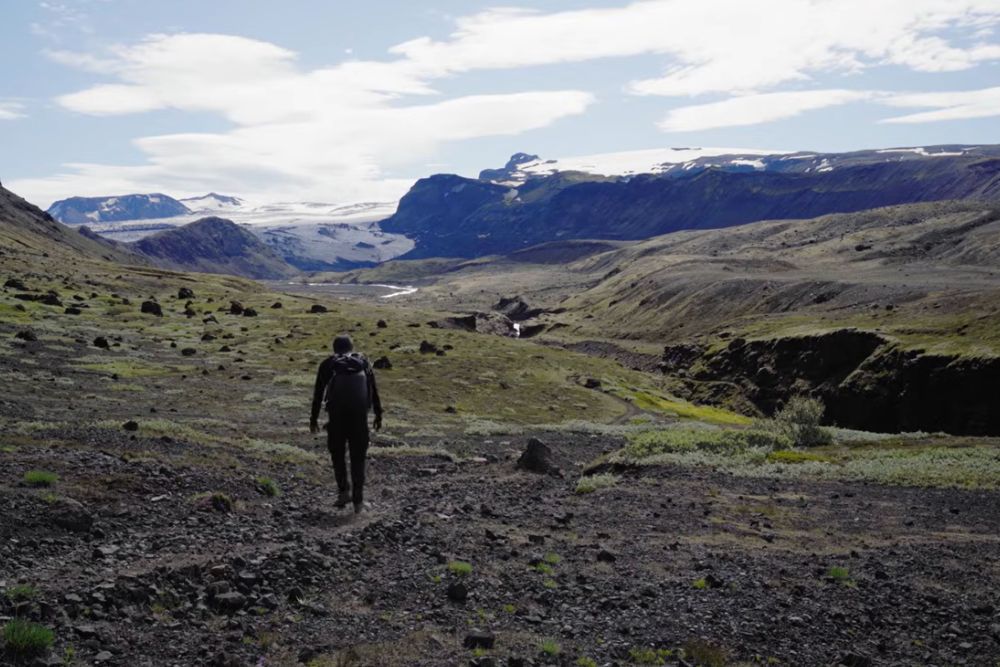
Lesson Three: The Earth Is Not a Backdrop. It Is a Process.
Most landscapes encourage you to think of the Earth as a stage: something that exists in order for events to happen on top of it. Iceland actively refuses this interpretation. The ground erupts. The glaciers calve. The geysers keep their own schedule. The tectonic plates move beneath you at a rate you can measure.
The Icelandic Meteorological Office publishes real-time seismic data that shows Iceland’s ground moving in ways that are often invisible to visitors but constant. On any given day, dozens of small earthquakes occur across the island. Magma shifts. Pressure builds. The system is never at rest.
Once you understand Iceland as a process rather than a place, the rest of the planet looks different. The hill behind your house is a process. The coastline you grew up beside is a process. The river in your city is reshaping its banks right now. The frame that responsible travel in Iceland asks for, arriving with attention rather than just ambition, is the same frame that makes the rest of the world legible.
Lesson Four: There Is a Difference Between Seeing and Reading
You can take a photograph of Dettifoss and understand nothing about it. You can also stand at the same edge and follow the water back two hundred kilometres to the glacier that feeds it, forward to the coast it is carving toward, and downward to the basalt it is dismantling block by block. The photograph is the same. The experience is entirely different.
This distinction is what Geonatra exists to support. Teaching children to read rocks is not a pedagogical exercise. It is an early introduction to the habit of asking what made this, and how long it took, and what will happen next. That habit, once formed, does not stay in Iceland. It follows you home.
A child who has stood in front of a glacier and understood that it is retreating, or who has stepped around moss because they know it is older than their grandparents, carries something that has nothing to do with Iceland specifically. They carry a way of seeing the ground they stand on wherever they are. The homeschool curriculum on wheels is built on exactly this premise: that the landscape is the lesson, and the lesson does not end at the border.
In March, this season began with lava moving toward a town on Iceland’s southwestern coast. In April, it became a road trip across five geological worlds. In May, it asked what it means to travel a fragile landscape with the attention it deserves.
That is the arc of a season. But it is also the arc of what Iceland teaches anyone who pays attention: first the fire, then the scale, then the responsibility. Not as a sequence of arguments but as an experience that accumulates.
The planet has other places where that experience is available. Some are colder, some drier, some older. The next season will go looking for them.