
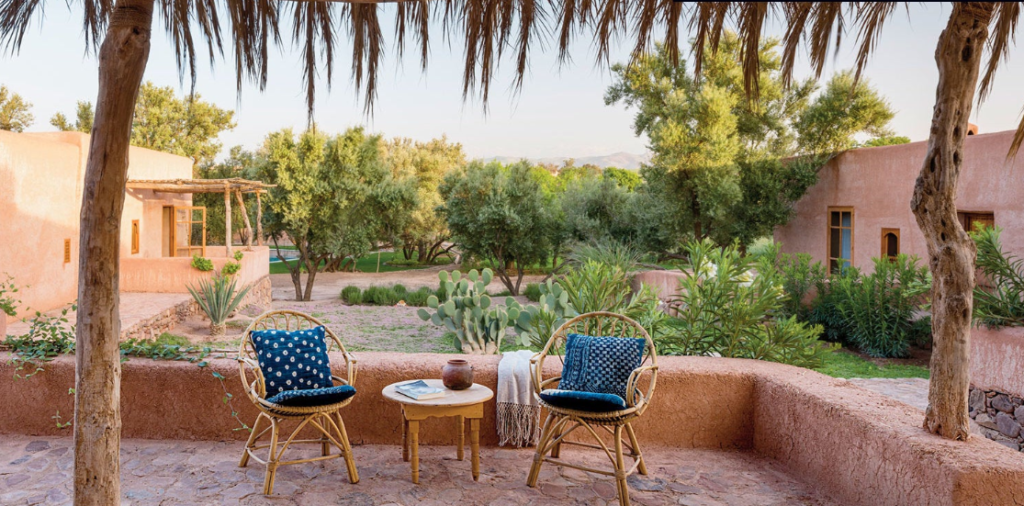
Most travellers looking for the best eco lodges Morocco offers end up reading the same Marrakech and Fez recommendations they read everywhere else. The country’s real eco-tourism heart is harder to find. It sits 500 kilometres south of the imperial cities, in the Anti-Atlas, a Pan-African mountain belt of granite, schist, and quartzite that has been weathering since long before the High Atlas range existed.
Up here, mass tourism never quite took hold. The properties that did open are smaller, family-run, and built into the geology rather than dropped on top of it. This guide selects five of them, each in a different geological pocket of the Anti-Atlas, each verified as currently bookable on Booking.com. They are not flawless, eco-tourism in Morocco rarely is, but they are honest, and they reward visitors who arrive curious.
This guide contains affiliate links to Booking.com. If you book through them, Geonatra may earn a small commission at no extra cost to you. See our affiliate disclosure for details.
The Best Eco Lodges in Morocco’s Anti-Atlas at a Glance
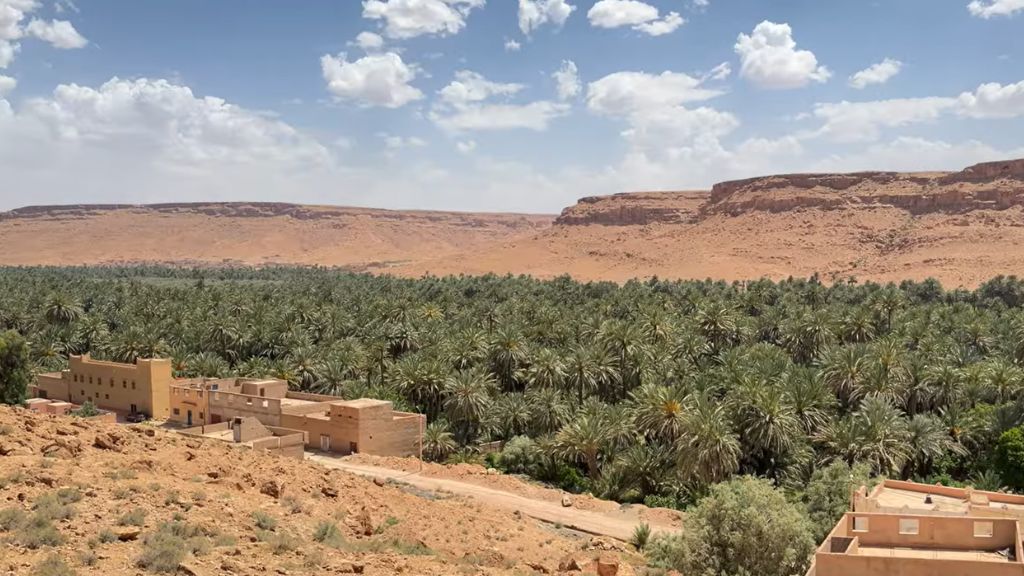
The five best eco lodges Morocco’s Anti-Atlas offers, ordered west-to-east from the Atlantic foothills to the Saharan edge, are Ecolodge Atlas Kasbah (Tiznit–Agadir piedmont), Tizourgane Kasbah (Aït Baha route), Azur Tafraout (Painted Rocks granite country), Siliya Rooms Heart Ameln Valley (palm valley), and Dar Infiane Tata (oasis edge of the Sahara).
What Counts as a Real Eco-Lodge in the Anti-Atlas
The word “eco” has been worn smooth by overuse, especially in Morocco. Before recommending these five properties, here is the checklist Geonatra applies, a practical one, not a bureaucratic one.
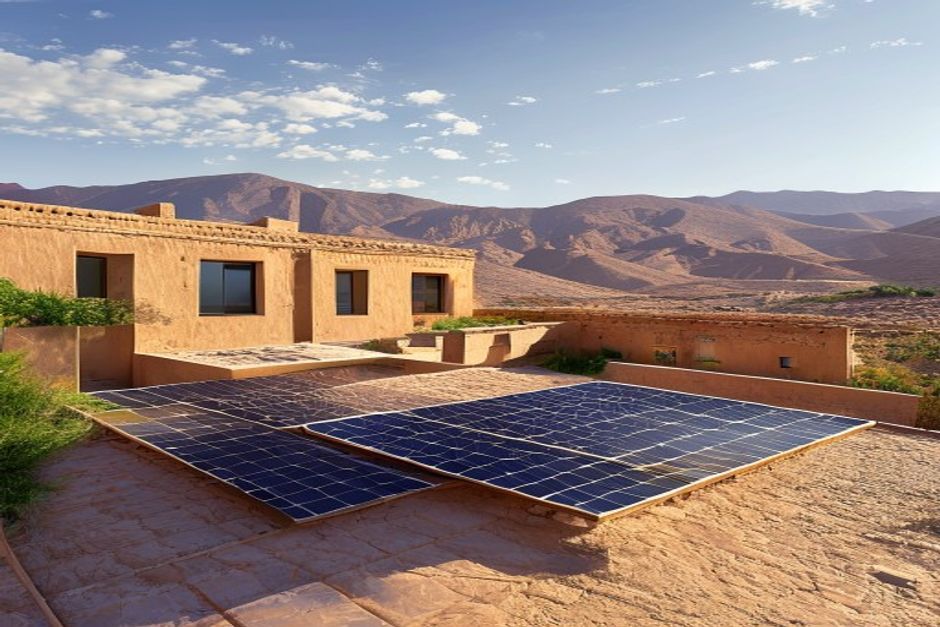
Energy. Solar power for hot water and lighting is now affordable enough that any lodge claiming sustainability without it is making a claim it cannot defend. Properties in the Anti-Atlas have year-round sunshine; there is no excuse for diesel generators.
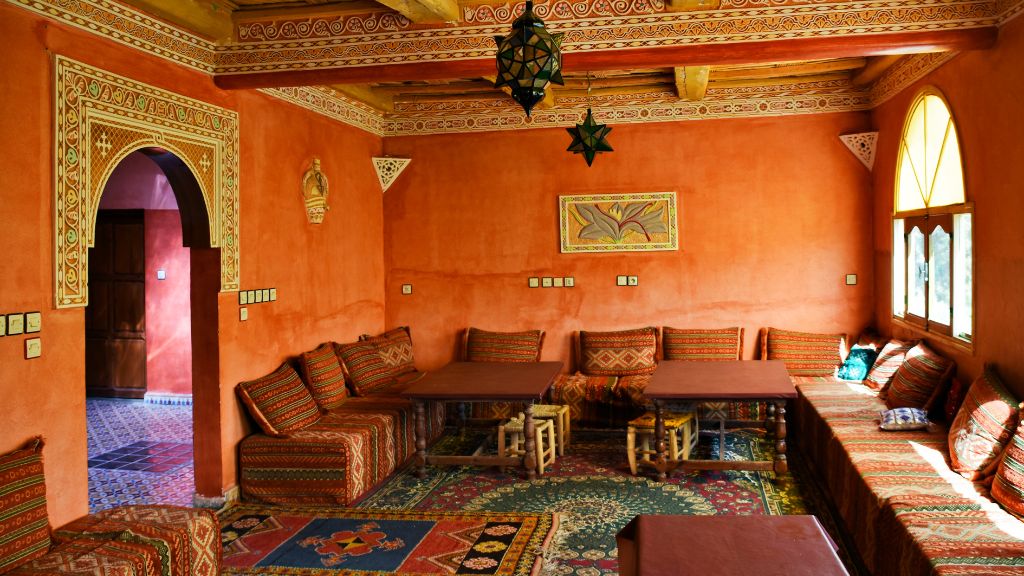
Materials. Real eco-lodges use local pisé (rammed earth), stone, and timber rather than concrete trucked in from Casablanca. Pisé walls insulate against both the 45°C summer heat and the near-freezing winter nights without air conditioning. The traditional Berber architecture of the region was always low-carbon by design; the lodges below mostly preserve or restore it.
People. The most credible signal is who works at the property and what they earn. Family-run guesthouses with staff from the same village pass the test more reliably than chains that import seasonal labour. Ask before you book.
Landscape integration. The Anti-Atlas is a geologically singular region, with Pan-African ophiolites, Reguibat Shield outcrops, and granite domes. A real eco-lodge sits within this geology, not on top of it. For an international reference on what qualifies as sustainable tourism, the GSTC criteria remain the cleanest baseline.
The Five Eco-Lodges Worth Booking
Each of these properties is currently bookable through Booking.com, has at least one strong sustainability signal, and sits within a recognisable geological pocket of the Anti-Atlas. We have ordered them west-to-east, mirroring the geological transition from Atlantic-influenced foothills to Saharan-edge oases.
1. Ecolodge Atlas Kasbah, Tiznit–Agadir Argan Piedmont
The benchmark for the country. Built in pisé in the argan forest near Agadir, Atlas Kasbah operates on photovoltaic solar, treats wastewater through aquatic-plant filtration, runs a salt-purified pool, and uses only homemade chemical-free cleaning products. It is the first eco-friendly guesthouse of North Africa and a winner of the World Responsible Tourism Award.
Best for: travellers who want eco-tourism credentials without compromise. Geological angle: the argan forest sits on the Atlantic-facing piedmont where the Anti-Atlas meets the coastal plain. Book: Check current rates on Booking.com.
2. Tizourgane Kasbah, Aït Baha Route of Kasbahs
A 13th-century Berber fortress restored over twelve years, perched on a rocky promontory between Aït Baha and Tafraout. Nineteen rooms, all with exposed wooden beams and traditional furniture. Staff are entirely local; meals are cooked from regional produce in the on-site restaurant and tea house. The location score on Booking is 9.7 out of 10, meaningful because location here means the kasbah is genuinely embedded in the surrounding Pan-African landscape.
Best for: travellers drawn by heritage architecture and the silence of the high plateaus. Geological angle: quartzite and schist hills of the central Anti-Atlas, with views over the surrounding valleys. Book: Check current rates on Booking.com.
3. Azur Tafraout, Granite Country and the Painted Rocks
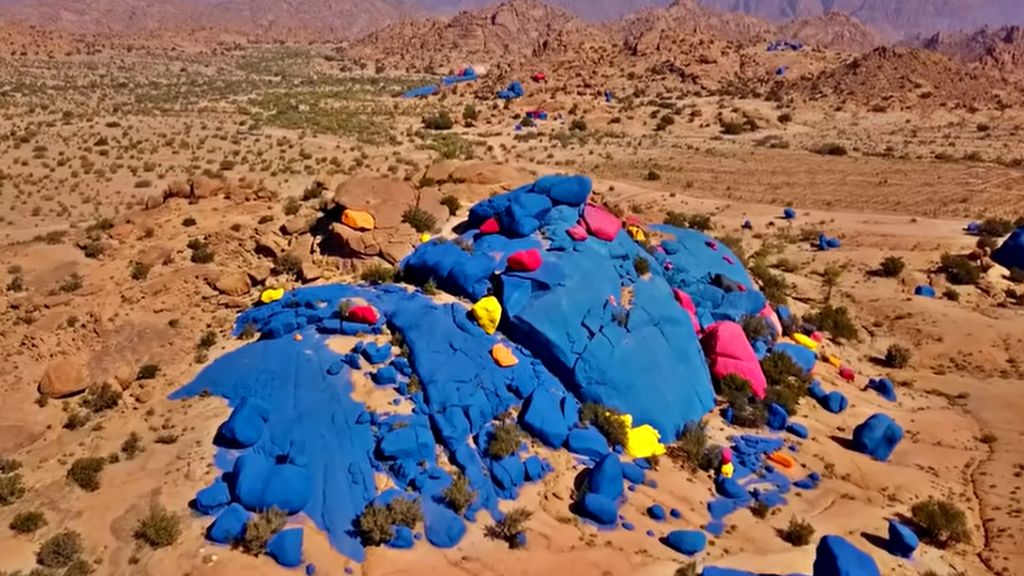
A family-run guesthouse just under three miles from the Painted Rocks of Aguerd Oudad, the iconic painted granite formation of the central Anti-Atlas. Garden and terrace overlooking the surrounding pink inselbergs. Continental breakfast included. No greenwashing here: Azur Tafraout does not claim more than it is, which is precisely what gives it credibility.
Best for: travellers focused on the granitic geology of Tafraout and the surrounding jbel hikes. Geological angle: Precambrian pink granite domes and inselbergs, the most photogenic outcrop of the central Anti-Atlas. Book: Check current rates on Booking.com.
4. Siliya Rooms Heart Ameln Valley, Palm Oasis Stays
Set in the heart of the Ameln Valley, the long palm-and-argan corridor running parallel to Tafraout’s granite ridge. Twenty-six Berber villages line the valley, and Siliya gives access to most of them on foot or by bicycle. Garden, terrace, and restaurant on site. The Ameln Valley is the easiest place in the Anti-Atlas to spend three days walking between villages without ever needing a car.
Best for: slow travellers and walkers. Geological angle: tectonic palm corridor running at the foot of the Tafraout granite massif, a textbook example of fault-controlled valley morphology. Book: Check current rates on Booking.com.
5. Dar Infiane Tata, Saharan-Edge Oasis
A restored kasbah on a hilltop above the Tata oasis, on the southern edge of the Anti-Atlas where the mountain belt yields to the Sahara. Ecological management of the building (passive cooling, traditional materials), bicycle rental for the palm groves, and direct access to the Wadi and the surrounding Reguibat Shield outcrops.
Best for: travellers willing to drive deep south for the geological transition between mountain and desert. Geological angle: the southern margin of the Anti-Atlas where Pan-African basement gives way to the Reguibat Shield, one of the oldest exposed cratons on the planet. Book: Check current rates on Booking.com.
How to Combine These Stays with Anti-Atlas Geology
A seven-day Anti-Atlas itinerary built around these five lodges naturally follows the geology. Start at Ecolodge Atlas Kasbah for one night to acclimatise from the Atlantic coast and the argan piedmont. Drive east-and-up to Tizourgane Kasbah for the kasbah route through quartzite and schist hills; two nights here lets you walk the surrounding plateaus.
Continue south to Azur Tafraout for the granite domes and the Painted Rocks of Aguerd Oudad, one night. Move just north into the Ameln Valley for Siliya Rooms for one or two nights of village walking among the palm groves. Finally, push southeast to Dar Infiane Tata for one night at the Saharan threshold, where the Anti-Atlas geology gives way to the Reguibat Shield outcrops described in our Anti-Atlas Pan-African overview.
The detailed driving directions for this route are in our seven-day Anti-Atlas road trip article. A four-wheel-drive is not required for any of these five stops; a standard rental car handles them all if you stick to paved and well-graded roads.
Frequently Asked Questions
Do I Need a Four-Wheel-Drive to Reach These Eco-Lodges?
No. All five lodges in this guide are reachable on paved or well-graded roads with a standard rental car. Four-wheel-drive becomes necessary only if you leave these properties for off-road excursions into the Anti-Atlas highlands or the deeper piste routes south of Tata.
What is the Best Season for an Anti-Atlas Eco-Lodge Trip?
October to April. Summer temperatures inland routinely exceed 40°C, which makes hiking and exploration unpleasant for most travellers. The almond-blossom season in February around Tafraout is one of the most photogenic windows of the year. Avoid July and August unless you stay strictly in the coastal piedmont near Agadir.
Are These Lodges Family-Friendly and Halal-Respectful?
Yes to both. Family rooms are available at Atlas Kasbah, Tizourgane Kasbah, and Dar Infiane. All five properties serve Moroccan cuisine that is naturally halal, and none serve pork. Alcohol availability varies: Atlas Kasbah serves wine; the smaller family-run guesthouses generally do not.