
DIRECT ANSWER
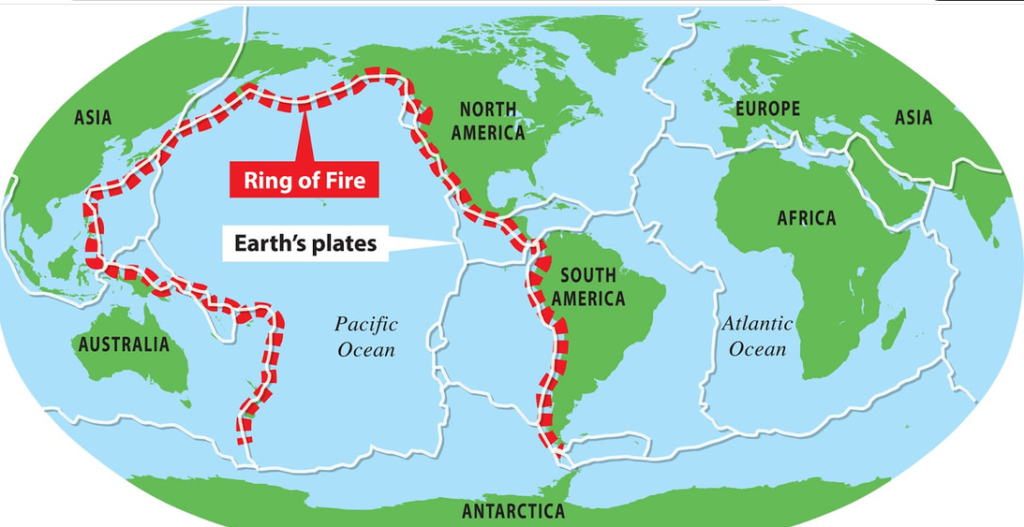
The Ring of Fire is a horseshoe-shaped belt circling the Pacific Ocean, home to 75% of the world’s active volcanoes and 90% of its largest earthquakes. Japan sits at its most complex point, where four tectonic plates converge. The ring of fire japan tectonic system here is not a single fault line but an overlapping network of subduction zones found nowhere else on Earth.
Open a map of the Pacific. Trace the edges of the ocean. You will find, almost perfectly following that outline, a chain of volcanoes, trenches and seismic zones stretching from New Zealand to Chile, from the Philippines to Alaska. Scientists call it the Ring of Fire. Japan sits near its western peak, not as a passive observer but as one of its most geologically complex nodes.
Ring of Fire Japan: A Circle of Creation
The name sounds like a warning. It is not. The Ring of Fire has destroyed cities, yes. It has also built continents, raised mountain ranges, and produced some of the most fertile soils on Earth. The volcanic ash that periodically falls across Japan’s farmlands is the same material that makes them productive. Around 4 billion people live within the Ring of Fire’s zone of influence, and they are not there by accident. They are there because volcanic landscapes offer elevation, water, minerals and soil.
The Ring of Fire is the planet’s most active geological system. It produces roughly 1,500 earthquakes per year strong enough to be felt by people. It contains approximately 452 volcanoes, most of them along subduction margins. It is not a sign of instability so much as a sign that the Earth is still working.
Why It Forms a Ring
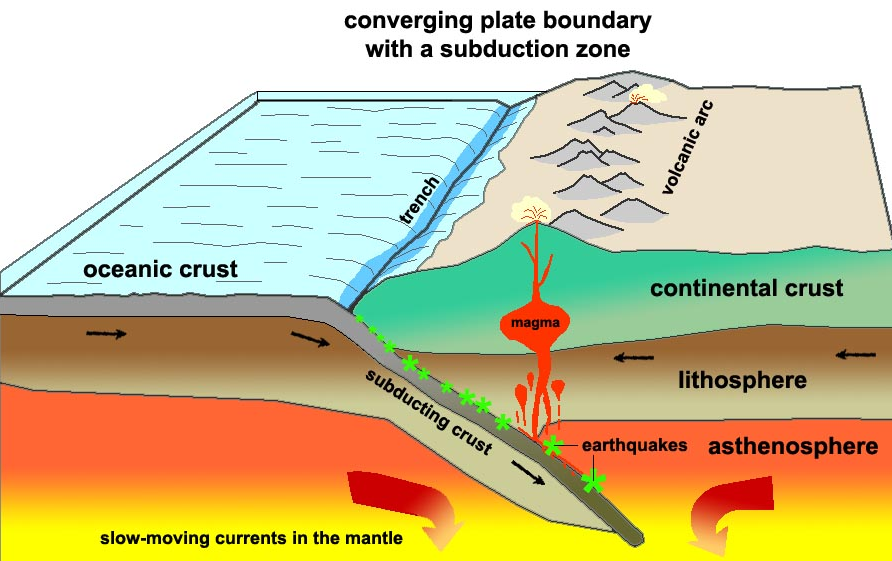
The shape comes from the Pacific Plate. This enormous slab of oceanic crust is slowly being consumed. As it moves, its edges sink beneath the surrounding continental and oceanic plates in a process called subduction. Where one plate dives under another, the descending slab releases water into the mantle above it. That water lowers the melting point of the rock. Magma forms. Volcanoes rise.
Because the Pacific Plate is roughly circular, subduction happens all the way around its perimeter, creating the horseshoe shape visible on any geological map. The ring is not a single crack but a series of distinct subduction zones and transform boundaries, each with its own character.
This is the same mechanism that shapes Japan’s geology at its core, as explored in the article on reading the rocks of a subduction zone.
Ring of Fire Japan: 4 Plates, 1 Archipelago
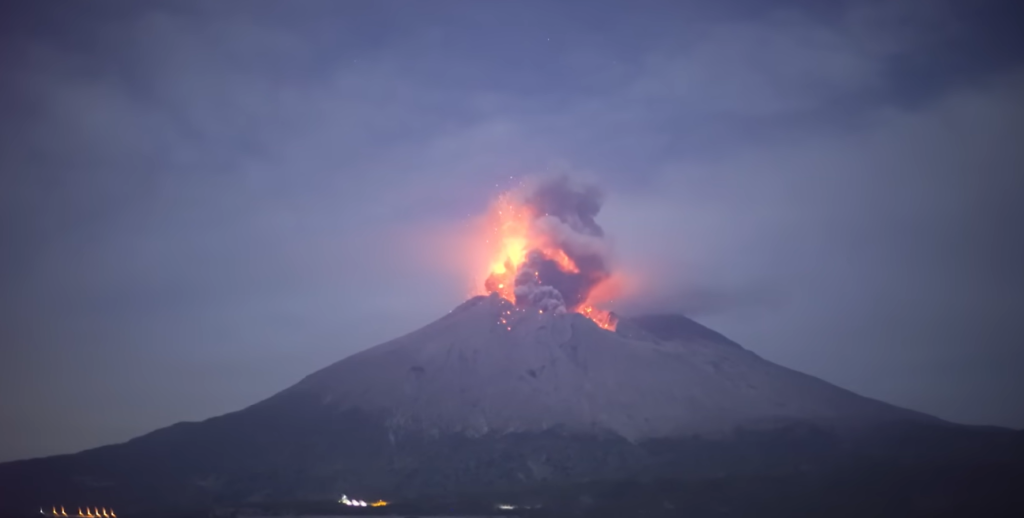
Most countries in the Ring of Fire deal with one or two plate boundaries. Japan deals with four. The Pacific Plate subducts beneath the Okhotsk microplate along the Japan Trench, off the eastern coast of Honshu and Hokkaido. The Philippine Plate dives beneath the Eurasian Plate along the Ryukyu Trench and the Nankai Trough to the south. That collision surfaces most visibly on Kyushu, where Aso’s caldera and the near-daily eruptions of Sakurajima make the mechanics of the Ring of Fire impossible to ignore, as explored in our closer look at Japan’s most active island. The Amur Plate and Okhotsk microplate meet beneath central Honshu, pushing up the Japanese Alps.
The ring of fire japan tectonic configuration is, in this sense, uniquely dense. No other country sits at the convergence of four active plate boundaries. The result is a geography shaped entirely by collision: volcanic arcs, deep ocean trenches, mountain ranges thrown up by compression, and a seismic network so active that Japan records around 1,500 earthquakes per month, as detailed in the article on why Japan shakes so frequently.
The Other Members of the Ring
Japan is not alone. The Ring of Fire is a shared address. Along its eastern margin, the Cascade Range in the United States carries volcanoes like Mount St. Helens and Mount Rainier, fed by the subduction of the Juan de Fuca Plate. Further south, the Andes run the full length of South America, built by the Nazca Plate sinking beneath the South American continent. In the southwest Pacific, New Zealand sits on the boundary between the Australian and Pacific plates. The Kamchatka Peninsula in Russia produces some of the world’s most active eruptions. The Philippines, Indonesia and Papua New Guinea are all members of the same circle.
What makes Japan distinct among these is not just its position but the density of its plate interactions. Most Ring of Fire countries face one dominant subduction direction. Japan faces several simultaneously, from different angles and at different velocities.
Living With the Ring
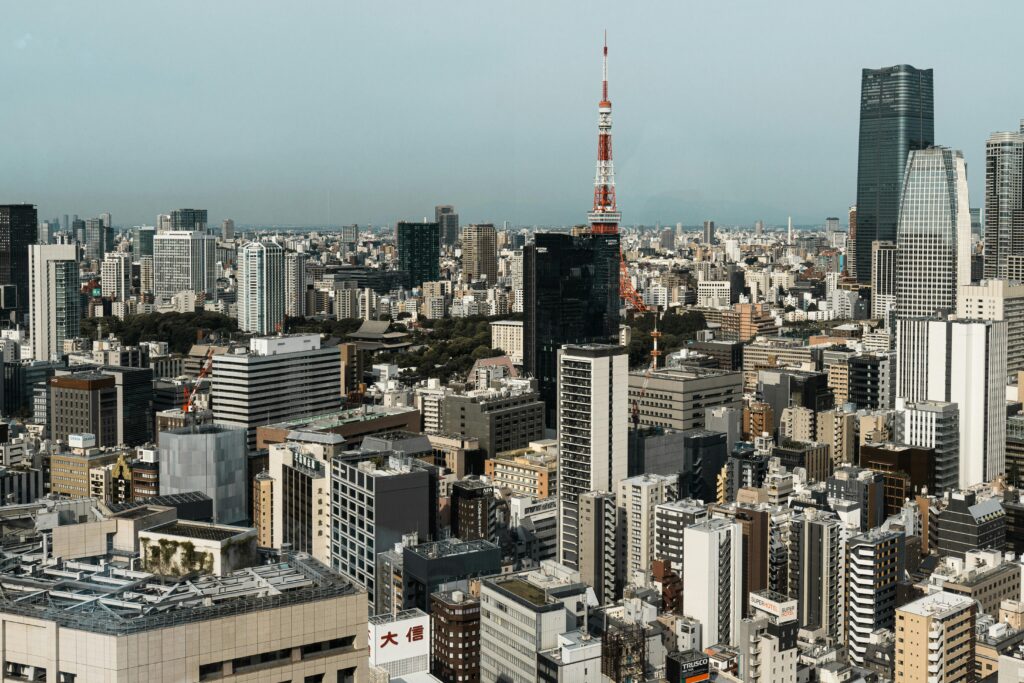
Japan has not resisted the Ring of Fire. It has adapted to it. Building codes developed after the 1923 Great Kanto Earthquake and refined following the 2011 Tohoku event are among the most stringent in the world. According to the
According to the USGS Volcano Hazards Program, Japan’s multi-layered monitoring infrastructure is a global model for living alongside active geology. The early warning system operated by the Japan Meteorological Agency can alert millions of people within seconds of a major tremor. Evacuation routes are mapped into the architecture of cities.
The onsen, the hot spring baths that define Japanese bathing culture, are a direct product of the same geothermal system that powers the volcanoes. The ring of fire japan tectonic forces that make the ground shake are the same ones that heat the water in a ryokan bath to 42 degrees.
Living with active geology does not mean living in fear. It means building a civilization that understands what the ground beneath it is doing.
Frequently Asked Questions
What exactly is the Ring of Fire?
The Ring of Fire is a horseshoe-shaped zone encircling the Pacific Ocean where tectonic plates meet, producing the majority of the world’s volcanic eruptions and earthquakes. It spans roughly 40,000 kilometers and includes over 450 active volcanoes.
Is Japan the most dangerous country in the Ring of Fire?
Japan is not necessarily the most dangerous, but it is the most geologically complex. Four tectonic plates converge beneath the archipelago, a configuration found nowhere else on Earth. This produces high seismic activity and 110 active volcanoes, more than any other country proportionally.
Can the Ring of Fire cause a global catastrophe?
A single event within the Ring of Fire cannot trigger simultaneous eruptions worldwide. Each subduction zone operates independently. What the Ring of Fire does produce are large regional events with global effects, like the 2011 Tohoku earthquake, which shifted Earth’s axis by a measurable amount.
ABOUT THE AUTHOR
Daniel has traveled across four continents to read what landscapes have to say. A geotourism writer and field observer, he covers the intersection of Earth science and travel experience for Geonatra. His focus is on making geology legible for anyone willing to look at the ground beneath their feet.