
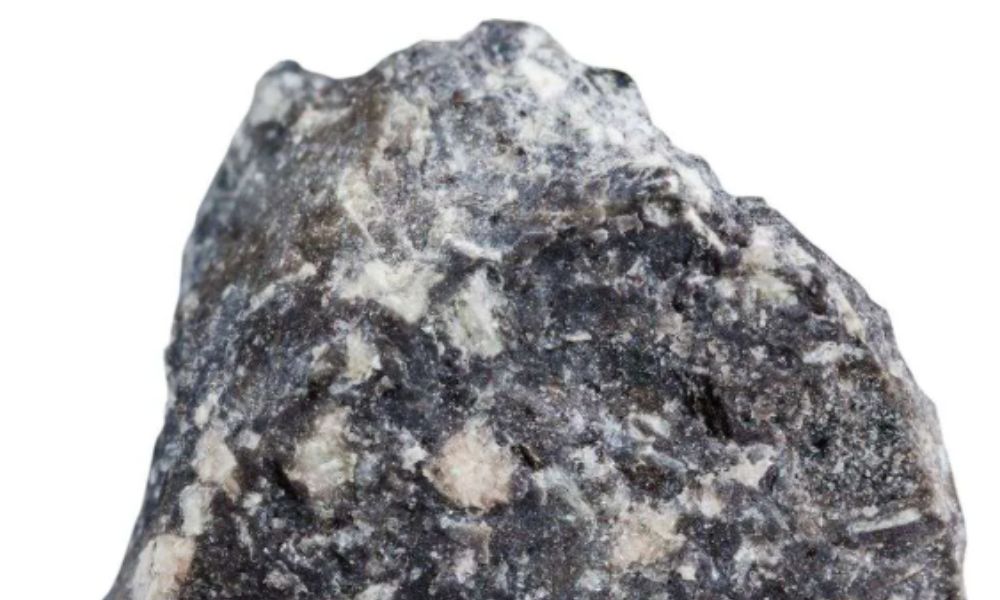
Japan’s volcanic rocks are dominated by three types: basalt, andesite, and obsidian. Each tells a different story about how and where magma forms. Andesite, which is rare in Iceland, is the signature of subduction. It explains why Japan’s volcanoes look and behave the way they do, and why Mount Fuji is grey rather than black.
A hiker on the slopes of Fuji notices that the rock underfoot is grey and rough, almost chalky in texture. Nothing like the black, glassy lava he had imagined. He picks up a fragment, turns it in his hand, and sets it back down without a second thought. That grey fragment has a name. It has an origin. And once you understand what it is, Japan’s entire volcanic landscape starts to make sense.
Japan Volcanic Rocks: A Quick Field Guide
The key to reading Japan’s geology is a rock called andesite. Named after the Andes mountains, where it is equally common, andesite is the signature rock of subduction zones. It forms when a dense oceanic plate dives beneath a lighter one, releasing water into the mantle above. That water lowers the melting point of rock, generating magma that is richer in silica than basalt.
In Iceland, the story is different. There, magma rises from a hotspot deep in the mantle, or from the spreading of the Mid-Atlantic Ridge. The result is basalt: dark, fluid, low in silica. If you have read about Iceland’s geology, you already know basalt well. Japan keeps it but adds something new. As the Geological Survey of Japan documents, andesite and its related rock types account for the majority of volcanic output across Japan’s arc system. Japan volcanic rocks geology, in short, is subduction geology. Same planet, opposite mechanism, different stone.
Recommended reading: [Japan’s Volcanoes: A Beginner’s Guide to Reading Earth’s Fire] — our full pillar on Japan’s tectonic story.
Why Fuji Is Grey, Not Black
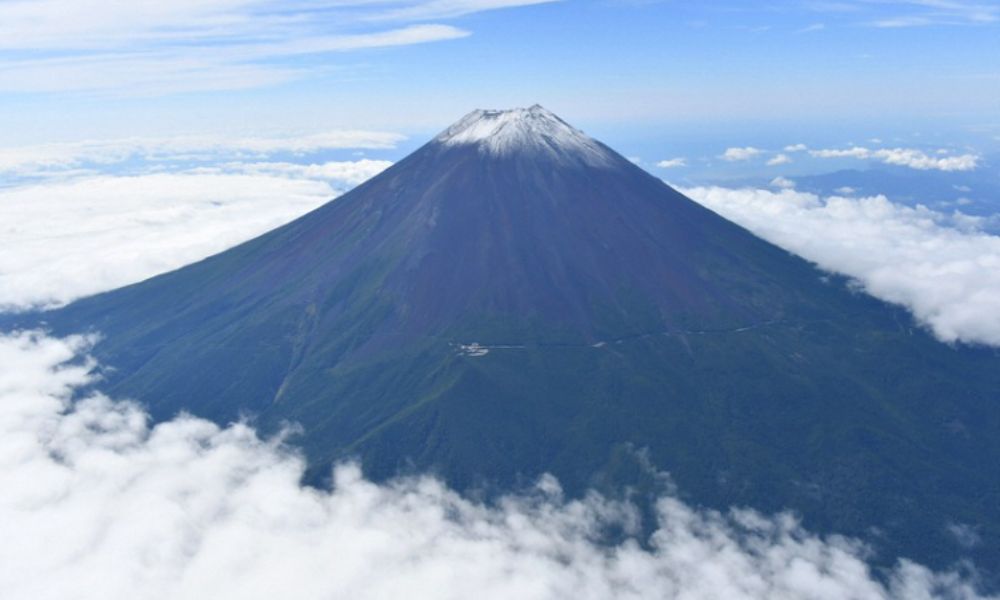
Mount Fuji is a stratovolcano. Its shape, that elegant symmetrical cone, is a direct consequence of the andesite it is made of. Because andesite has higher silica content than basalt, its lava is more viscous. It does not flow freely like the lava streams you see on Kilauea in Hawaii or on Iceland’s Reykjanes Peninsula. It piles up. It builds height. It creates steep flanks and, when pressure becomes too great, it erupts explosively.
That same viscosity is why Fuji is grey. Andesitic lava cools with a lighter colour than iron-rich basalt, which darkens as it solidifies. The contrast is visible from a distance. A basaltic volcano in Hawaii looks almost black at the summit. Fuji looks ashen, as if dusted with pale stone. Both colours are honest. They reflect exactly what is happening underground.
This also explains Japan’s eruption history. The country has had some of the most explosive volcanic events on record precisely because its magma carries so much gas and silica. When that mixture cannot escape easily, pressure builds until it does, violently. Understanding the rock means understanding the risk. And also the landscape, which would not exist without it.
For a closer look at how that tectonic force shapes the country, the article Why Does Japan Shake? covers the four-plate mechanism behind it all.
Obsidian, the Third Stone
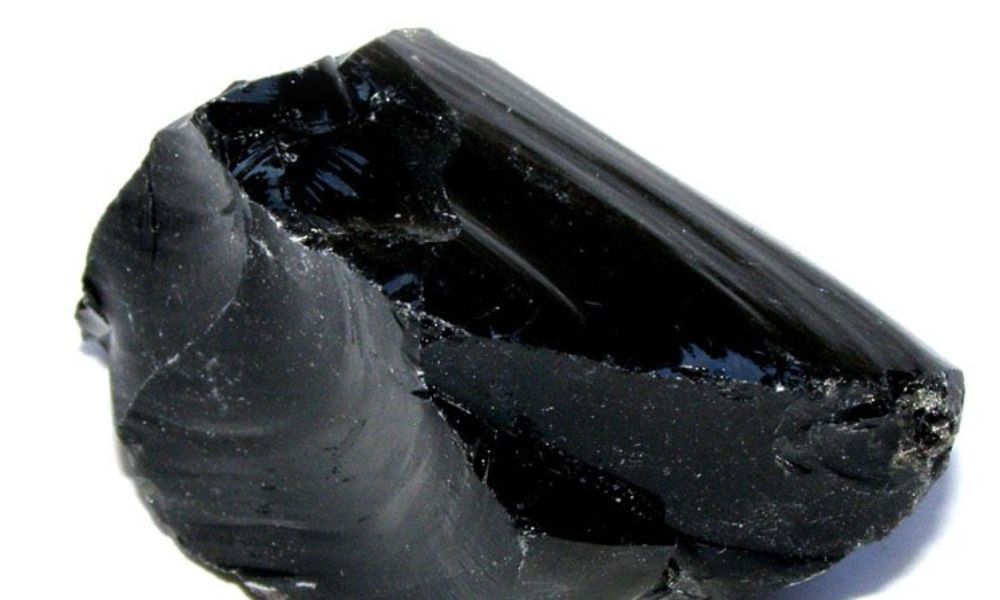
There is a third rock worth knowing: obsidian. It is not a mineral, technically, but a volcanic glass. It forms when silica-rich magma cools so rapidly that crystals have no time to grow. The result is a dense, jet-black material with a conchoidal fracture, meaning it breaks into smooth, razor-sharp edges.
In Japan, obsidian has been central to human life for at least 30,000 years. Jomon-period hunters shaped it into blades and arrowheads. Archaeological evidence shows that obsidian quarried in Hokkaido and the Izu peninsula was traded across networks stretching hundreds of kilometres, long before written history. The stone was that useful, and that rare in the right quality.
Today, obsidian outcrops exist in several places: around Shirataki in Hokkaido, in the Izu-Ogasawara arc, and in parts of Nagano. You will not pick one up to take home. Japan prohibits the collection of geological specimens from many protected areas. But you can find them in regional museums, and the weight of one in your hand, knowing it was shaped by the same volcanic forces visible from Fuji today, is an experience in deep time that no photograph replaces.
How to Read Japan Volcanic Rocks in the Field
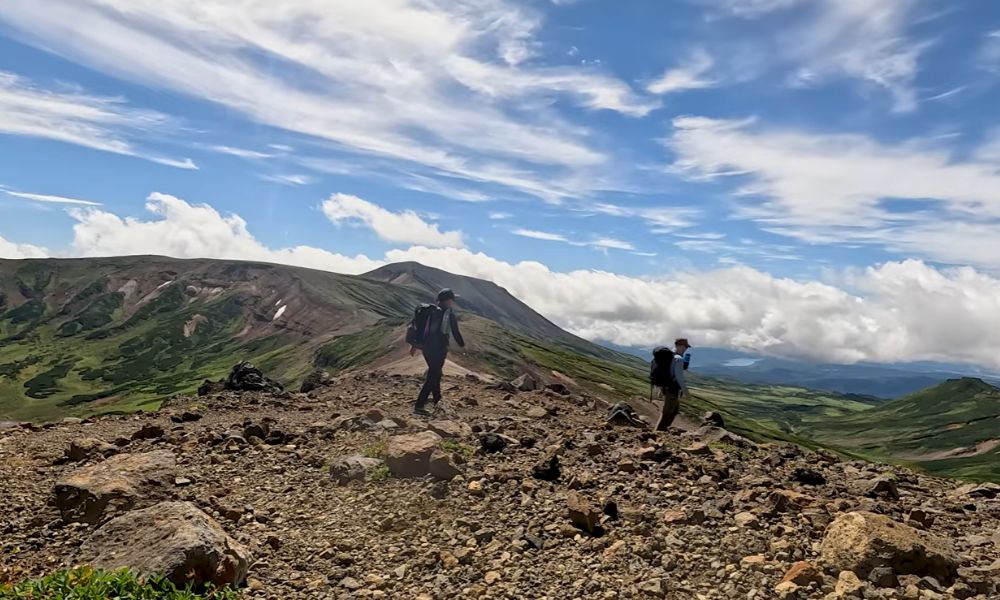
You do not need a geology degree to read a rock. Three questions are enough.
- Colour. Dark grey to black suggests basalt: low silica, formed from fluid magma, often near the ocean floor or a hotspot. Light grey, brown, or greenish tones point to andesite: subduction signature, common across Honshu and Kyushu. If the surface is glassy and black with visible conchoidal edges, you may be holding obsidian.
- Texture. A porous, bubbly surface (called vesicular) means the magma was gas-rich when it cooled. You see this often on Fuji’s upper slopes. A dense, fine-grained surface means faster cooling or lower gas content. A glassy, almost mirror-like surface means the cooling was extremely rapid, as with obsidian.
- Setting. Where does the rock sit? On a cliffside above a caldera, it tells a different story than a smooth river cobble worn down over millennia. Rock found on a volcano’s flank is likely to be younger than rock in a river valley, which may have been transported a long way from its origin.
These three questions will not give you a laboratory analysis. But they will change the way you walk through Japan. A grey hillside becomes a record of subduction. A black beach becomes evidence of a different kind of fire. The landscape stops being scenery and becomes text.
Frequently Asked Questions
What type of rock is Mount Fuji made of?
Mount Fuji is composed primarily of andesite, a volcanic rock produced by subduction. Its grey colour and steep symmetrical shape are both direct consequences of andesite’s high silica content and viscous nature. Some basalt is also present in the lower volcanic layers, from earlier eruptive phases.
Is obsidian common in Japan?
Obsidian exists in several regions of Japan, notably in Hokkaido and the Izu peninsula, but it is not widespread across the country. Its presence is tied to specific eruptive histories involving rapidly cooled, silica-rich magma. During the Jomon period, obsidian was one of the most valued materials in the archipelago and was traded across long distances.
What is the difference between Japanese and Icelandic volcanic rocks?
Iceland’s volcanoes are primarily basaltic, formed over a hotspot and along a mid-ocean ridge. Japan’s volcanoes are dominated by andesite, produced by subduction. Basalt is dark, fluid, and low in silica. Andesite is lighter in colour, more viscous, and more prone to explosive eruptions. Both tell the same story of a living planet, but through opposite geological chapters.