
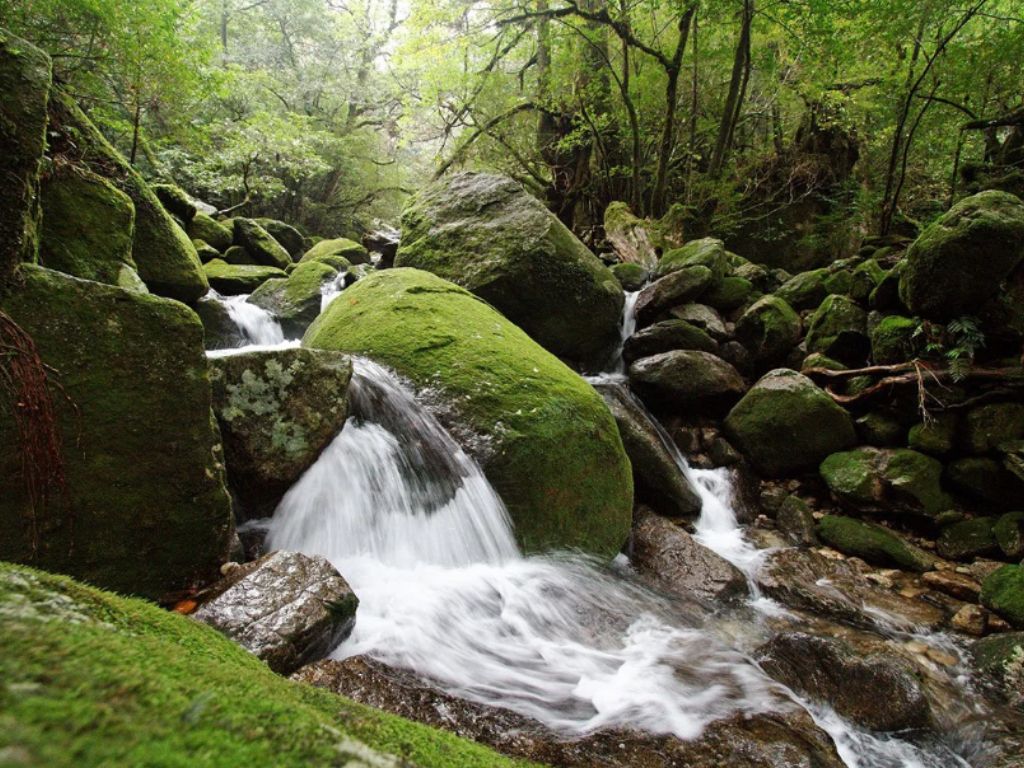
Place your hand on a wet stone in a Yakushima river. The granite under your palm cooled around fifteen million years ago, deep beneath what was not yet an island. A few hours of train and ferry later, the foot of Fuji appears at dawn. That cone is younger than human agriculture. Same country, two different times.
Travelers often picture Japan as ancient. Temples, pottery, calligraphy. The land itself tells a stranger story. Some Japanese rocks predate animals with backbones. Others are still cooling. So it is fair to ask, slowly: when did Japan actually become Japan?
Deep Time Japan: A Quick Geological Overview
Japan’s modern shape is young. The archipelago broke away from the Asian mainland between roughly twenty-five and fifteen million years ago, when the Sea of Japan opened behind it. Yet its bedrock carries fragments far older. Some Japanese rocks date back over two billion years, long before the islands existed.
When Japan Was Still Part of Asia
For most of Earth’s long story, the place we now call Japan was not a country and not even an archipelago. It was the eastern margin of the Asian continent, a coastline pressed against the Pacific. The crust there had collected its own slow inheritance: ancient gneiss, schist and granite assembled hundreds of millions of years before the first tremor of modern Japan.
Geologists call this older framework the basement. In the Hida belt of central Honshu, parts of this basement still surface as polished outcrops, quietly carrying mineral signatures from a continent. Some zircon crystals trapped inside these rocks have been dated to more than two billion years. the same plates still shaping the islands today had not yet drawn the modern map.
The Pacific was already pushing west. The front line of the action sat on the Asian margin, not on a separate island chain. There was no Sea of Japan. No Honshu silhouette. Just a long, restless coast.
The Sea of Japan Opens and the Islands Drift Away
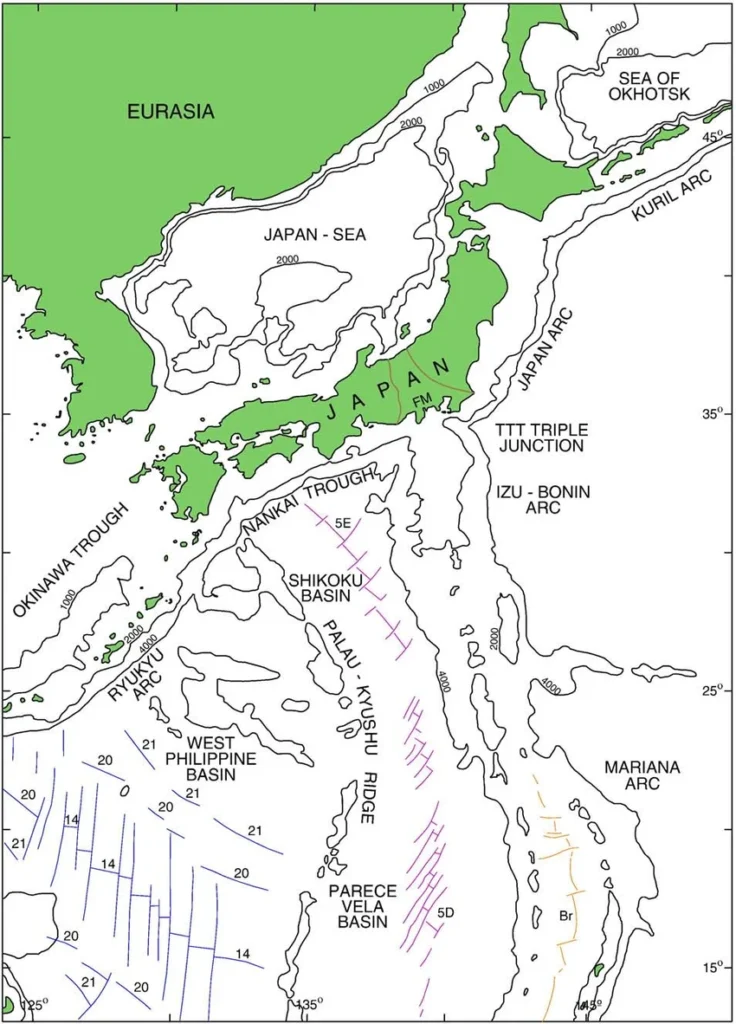
The transformation began in the Miocene, around twenty-five million years ago. Behind the subduction zone, the crust started to stretch. Hot mantle rose, the upper plate thinned, basins cracked open. This process, called back-arc rifting, slowly tore a strip of continent loose from Asia.Over the next ten million years, that strip drifted southeast and broke into two main blocks. Southwest Japan rotated clockwise. Northeast Japan rotated counterclockwise. In between, the new Sea of Japan filled with seawater. By around fifteen million years ago, the rough outline we recognise today was in place: an arc, an inland sea, a separation This was the moment Japan became Japan in any meaningful geographic sense. Not a slow drift of millimetres. A reorganisation of crust at the scale of a small ocean.
The same forces are still active. The plates that pulled the islands apart are the plates that compress them now. Volcanism, earthquakes, fast-rising mountains. Once you understand the opening, the rest of the geology stops feeling like a series of disasters and starts to read like a single conversation.
The Oldest Rocks: Deep Time Japan Paradox
Here is the paradox. The country is young, the rocks are not. Within the Hida-Oki and other inherited terranes, geologists have found minerals approaching 2.5 billion years old. These crystals formed when Earth had no land animals, no shelled life, almost no free oxygen in the atmosphere.
How did such ancient material end up inside such a young archipelago? When the Sea of Japan opened, it did not create new continental crust from scratch. It took an existing piece of Asia, stretched it, snapped it, and floated it offshore. The continent had a long memory. The islands inherited it.
Researchers at the National Museum of Nature and Science document these old terranes in detail, alongside the volcanic rocks that record the modern arc. Japan’s volcanic rocks tell the second half of the story, but the archive begins much earlier than basalt and andesite.
What the Modern Landscape Still Remembers
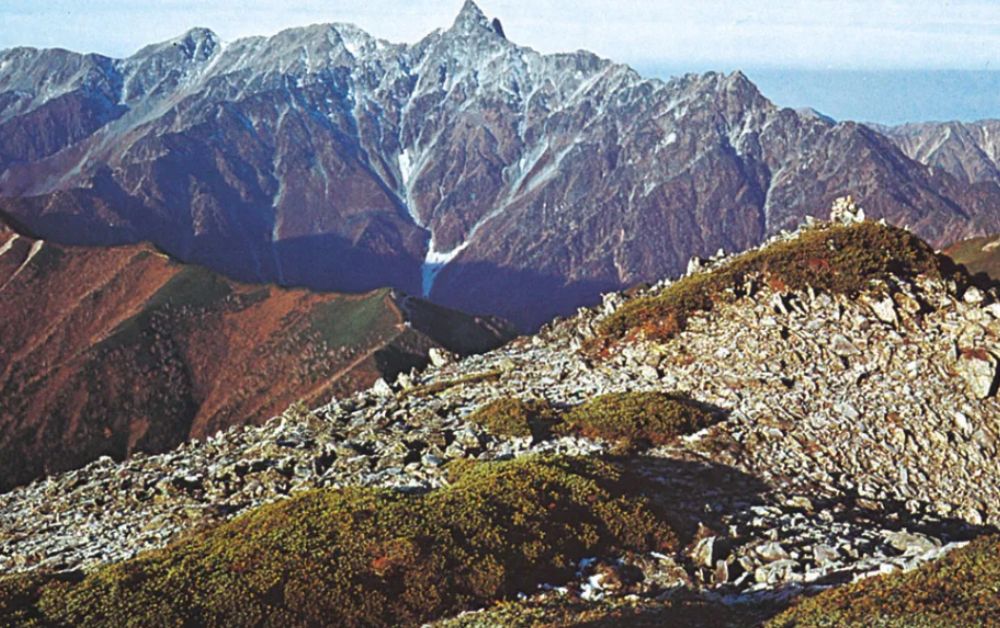
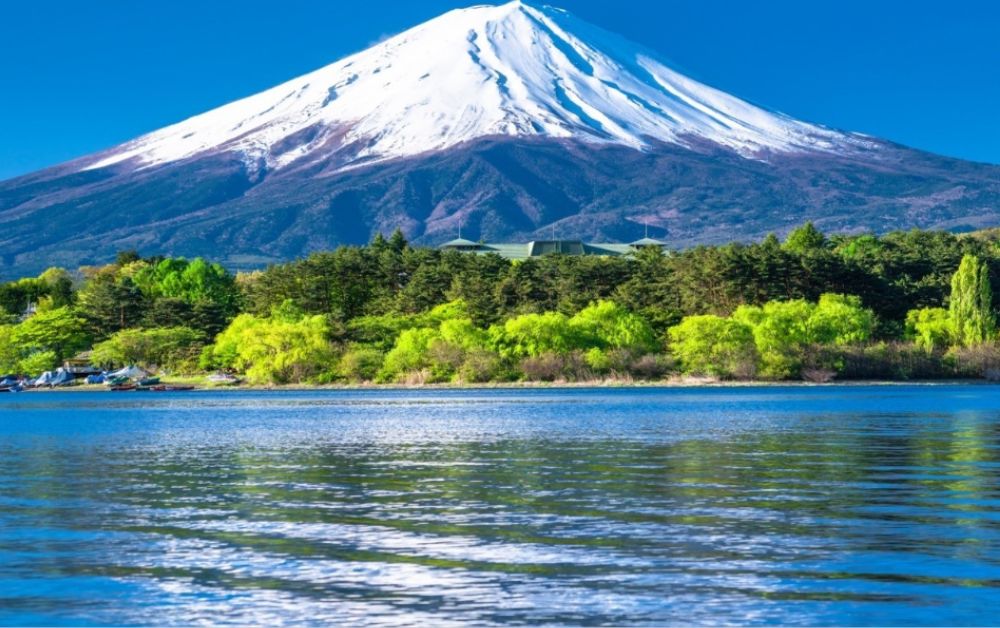
Look at Japan today and the contrast becomes visible. Mount Fuji is brand new. The current cone has built itself in less than 100 000 years, layer by layer, on top of older volcanoes. The Japanese Alps are rising as the Philippine Sea Plate drives into Honshu, a collision still sharpening peaks in real time. These are landscapes of last week, geologically speaking.
Then there is Yakushima. A small round island off the southern coast, covered in primary forest. The granite that holds the island up cooled around fifteen million years ago, almost exactly when the Sea of Japan finished opening. The trees on top, some over 2 000 years old, sit on a stage built by the same rifting that defined the country. Old basement, young arc, fresh volcano, ancient grove. Japan reads like a layered manuscript. Each landscape sits at a different moment. Japan’s place on the Ring of Fire keeps every page open at once.For the wider arc story, see the Japan’s Volcanoes guide.
Frequently Asked Questions
How old is Japan as a country geologically ?
Japan in its modern shape is around fifteen to twenty million years old. That is when the Sea of Japan finished opening and the archipelago settled into its current outline. As a population of rocks, the country is far older, with some basement minerals over two billion years.
What is the oldest rock found in Japan ?
The oldest dated material in Japan comes from the Hida and adjacent terranes in central Honshu. Zircon crystals there have been measured at more than two billion years, inherited from the Asian continent before the islands rifted away.
Will the Japanese islands keep changing ?
Yes. Subduction, collision and volcanism are all still active. New land is being raised in the Alps, and Fuji is still in its lifetime. The map will keep moving.
About the Author
Daniel writes for Geonatra from the field, reading landscapes the way others read libraries. His Japan notebooks were filled walking the foothills of Honshu, the granite coastlines of Yakushima and the volcanic ridges of Kyushu, with one quiet question in mind: how a country this young can carry such old stones.