
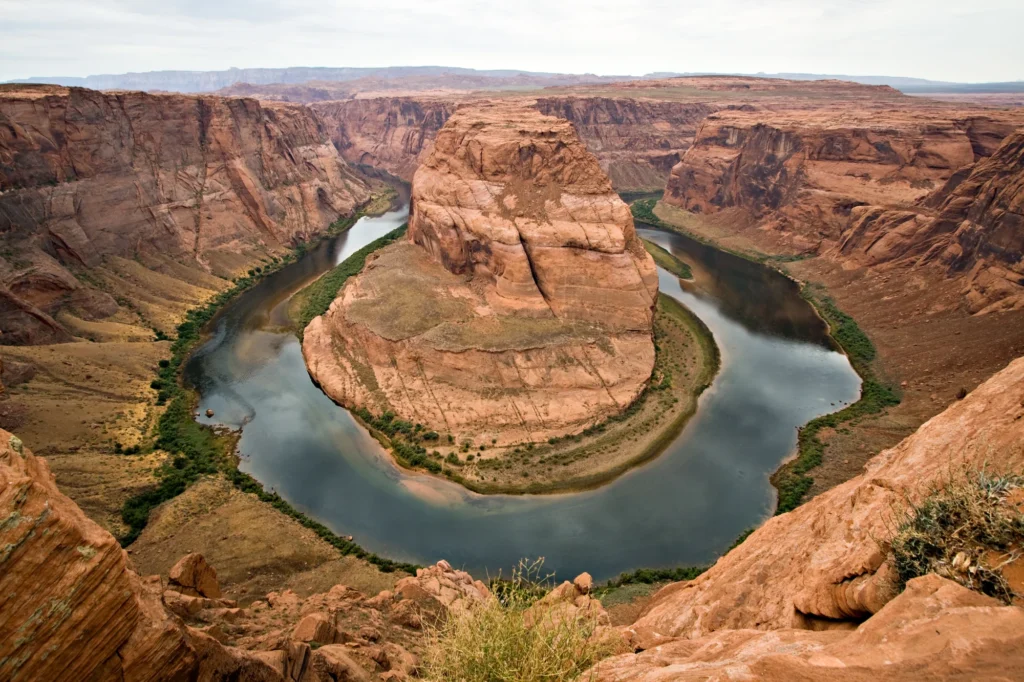
The road out of Page, Arizona ends in a parking lot that gives nothing away. From there it is about 1.2 kilometers of flat, dusty trail across a sandstone plateau, and then the ground falls out from under you. Three hundred meters straight down, the Colorado River has carved a near-perfect horseshoe into the rock, and you are standing on its lip with no railing, no barrier, and no warning. Horseshoe Bend Arizona is one of the most photographed landscapes in the American Southwest for a reason, but almost everyone who comes here underestimates two things: the sun, and the drop.
What Is Horseshoe Bend Arizona?
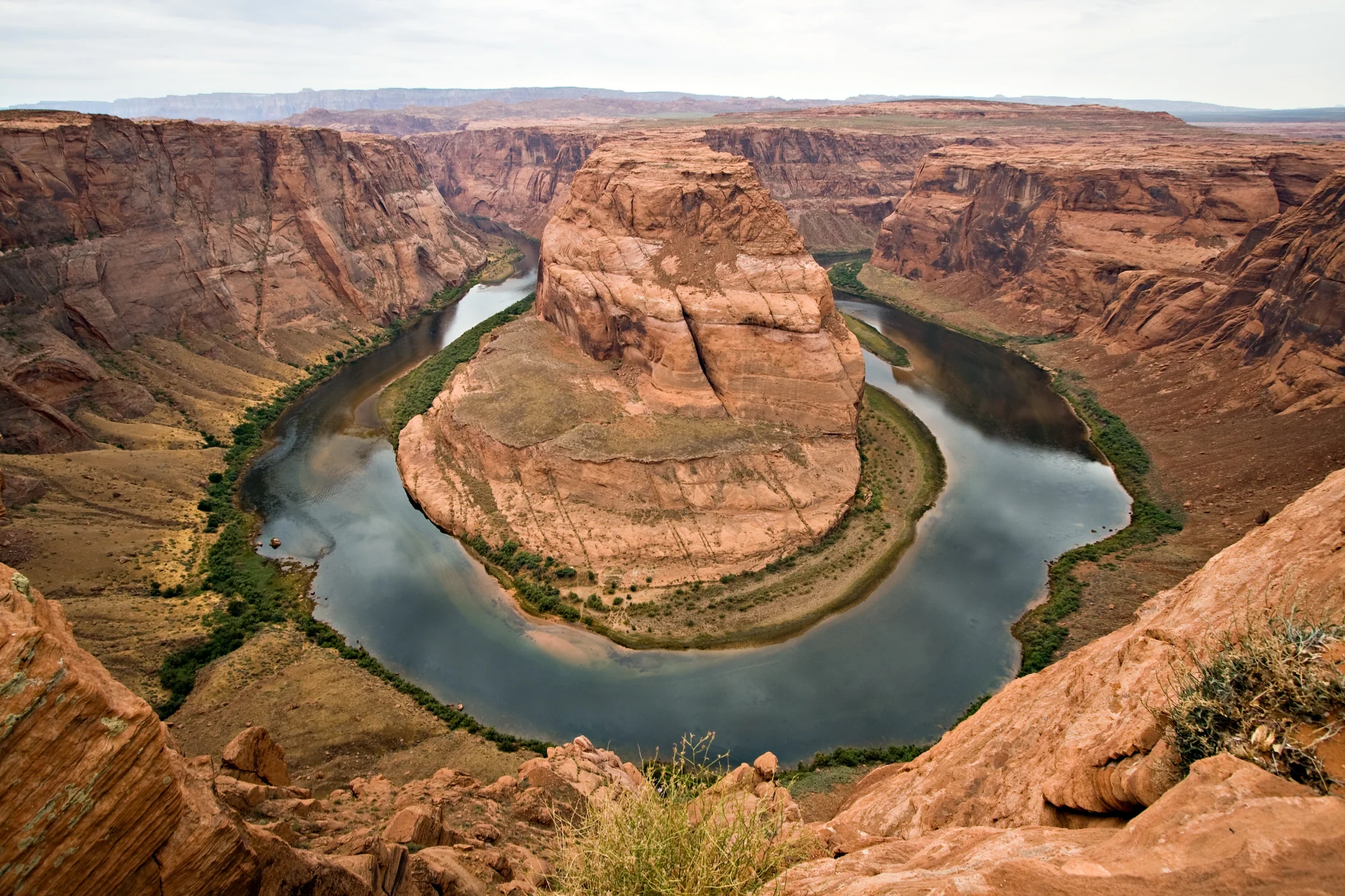
Horseshoe Bend Arizona is a 270-degree meander of the Colorado River cut into the Navajo Sandstone plateau just south of Page, in the Glen Canyon National Recreation Area. The viewpoint sits at roughly 1,290 meters elevation, and the river below sits at around 990 meters, which gives the overlook its signature 300-meter vertical drop. The bend itself is about 1.5 kilometers across at its widest, and it is the result of the river slowly cutting down through soft red sandstone over the last 5 to 6 million years, long after the surrounding plateau was uplifted.
Why It’s Extraordinary
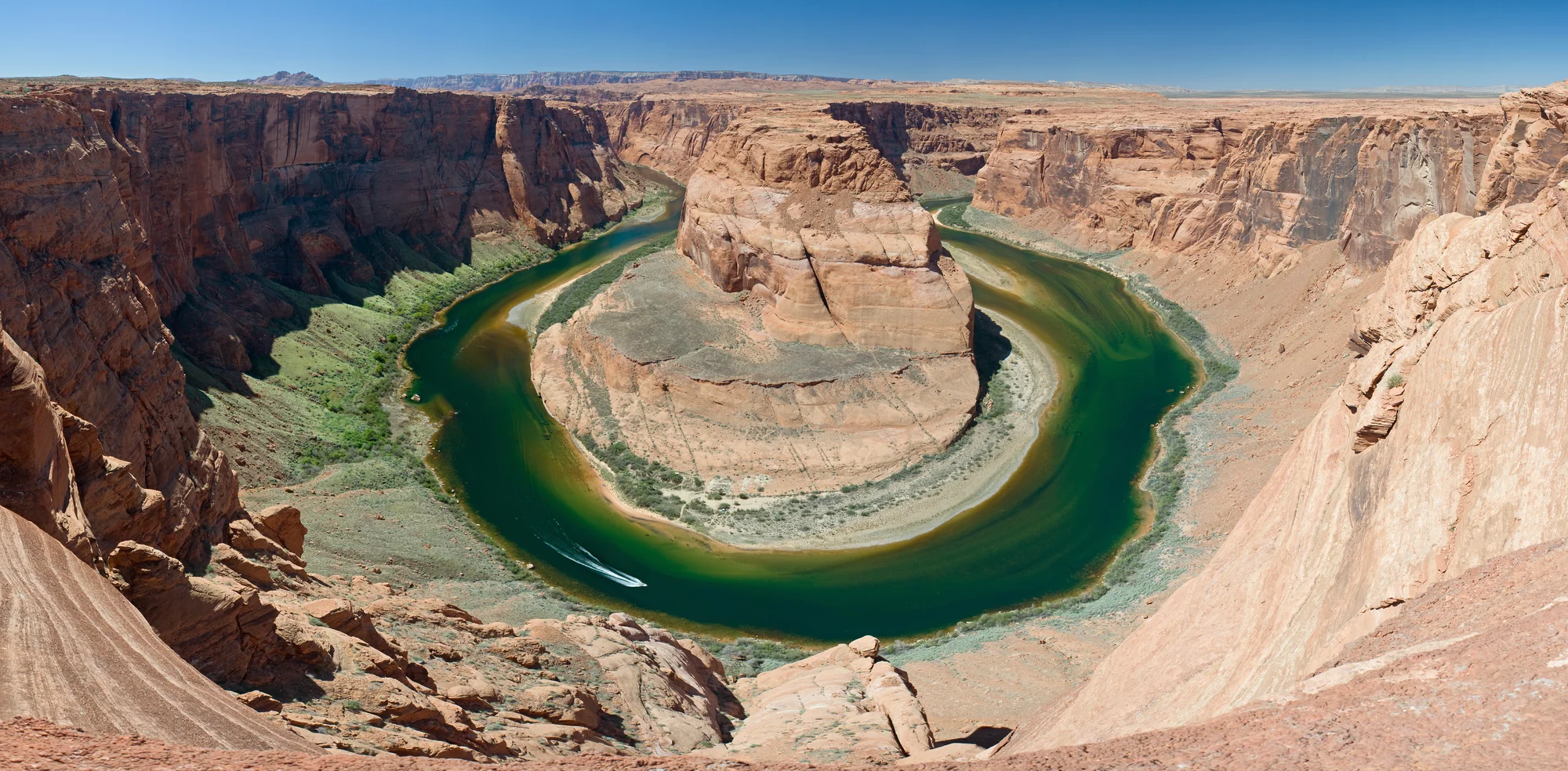
Most river bends do not survive long in nature. Rivers tend to cut through the neck of a meander and shortcut themselves, leaving oxbow lakes behind. Horseshoe Bend has avoided that fate because the Colorado has incised deep into hard sandstone at the exact rate the plateau has risen, locking the meander in place. The result is a canyon-within-a-canyon that looks sculpted on purpose. Standing on the overlook, the river below is wide, slow, and absurdly green against the red walls, and in late afternoon the opposite cliff catches the sun in a way that is hard to photograph and almost impossible to forget.
When to Go
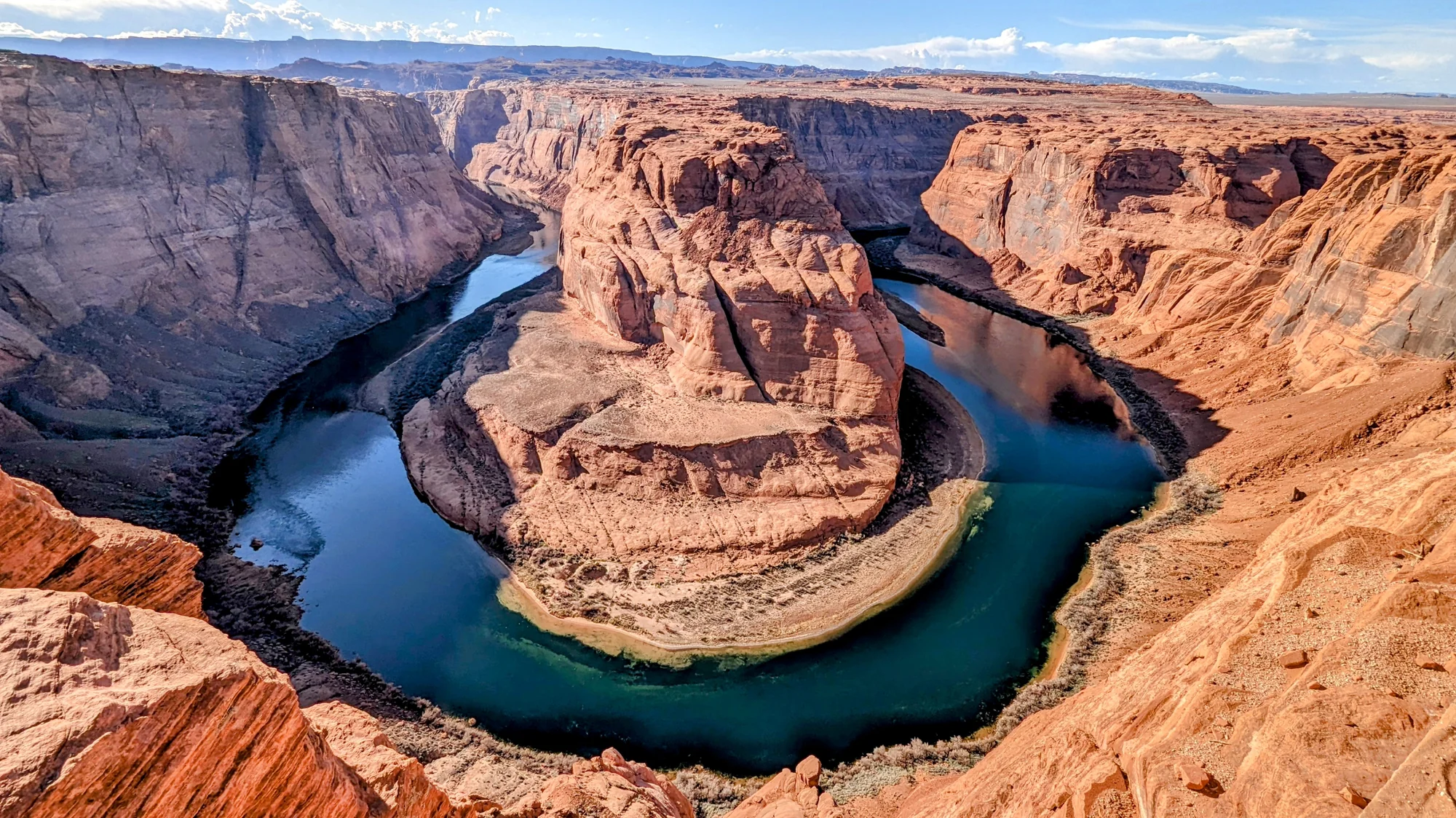
The best time of day to visit Horseshoe Bend Arizona depends on what you came for. Sunrise gives you cool temperatures, soft light, and almost no crowd, but the overlook faces north-west so the bend itself is still in shadow for the first hour. Mid-morning (roughly 9 to 11 AM) is when the full canyon finally gets lit, and this is when most photographers show up. Late afternoon and sunset deliver the richest colors on the opposite wall but also the heaviest crowd, and in summer the walk back is brutal in direct heat.
By season, April to May and September to October are the sweet spot. July and August are dangerously hot (surface temperatures on the sandstone can exceed 50°C), and the parking lot fills by 10 AM. Winter is quiet and dramatic, with the occasional dusting of snow on the red rock, but shorter days and biting wind at the rim are real.
How to Get There and What It Costs
Horseshoe Bend is 6.5 kilometers south of Page, Arizona, directly off U.S. Route 89. The turn is well signed. The parking area is managed by the City of Page (not the National Park Service), which means you pay a flat parking fee of around $10 per private vehicle as of 2026, cash or card at the entry booth. There is no entrance ticket for the overlook itself, and no reservation required. Expect the lot to fill between 9 AM and 5 PM in high season.
From the parking lot it is a 1.2-kilometer walk each way to the overlook, over flat sand and compacted gravel. The round trip takes most visitors about 45 minutes to an hour including time at the rim. There is a small shade pavilion halfway along the path, drinking fountains at the parking area, and basic toilets. No food, no gift shop, no cell signal at the rim.
The Drop Nobody Mentions
Only a short section of the overlook has a modern safety railing. Most of the rim is open sandstone with a vertical 300-meter drop and no barrier of any kind. People fall from Horseshoe Bend every year, almost always because they stepped backwards for a selfie or sat on an undercut edge that gave way. The sandstone looks solid and often is not: wind and freeze-thaw cycles undermine the rim constantly. The rule used by park rangers is simple. Do not sit on the edge. Do not back up without looking. Do not let children run on the slickrock. If you are not sure where the edge is, you are too close.
Combining Horseshoe Bend with Antelope Canyon
Horseshoe Bend sits roughly 15 minutes by car from Antelope Canyon, which makes the two sites the single most common half-day itinerary in Page, Arizona. The practical order is Antelope Canyon in the middle of the day (when the famous light beams happen, see our full guide to Antelope Canyon Arizona), then Horseshoe Bend in late afternoon for the long light on the sandstone. If you are driving between Las Vegas and the Grand Canyon South Rim, Page is a natural stop and you can comfortably do both sites plus a Lake Powell viewpoint in a single long day.
What to Bring
The walk is short, but the exposure is total. There is no shade on the trail past the halfway pavilion and no shade at the overlook itself. The minimum is 1 liter of water per person, a wide-brimmed hat, high-SPF sunscreen, closed shoes (the sandstone grit will shred open sandals and leave red dust in anything), and sunglasses. In summer bring more water than you think and never leave for the overlook after 11 AM without a plan to be back by 1 PM.
For photography, the same gear considerations as Antelope Canyon mostly apply here, with one difference: tripods ARE allowed at Horseshoe Bend. A wide-angle lens is almost mandatory to fit the full bend in a single frame (anything wider than 20mm equivalent on full frame). Our dedicated guide to camera gear for Antelope Canyon and the Page Arizona area covers the exact kit, which also works perfectly for the Bend.
Frequently Asked Questions
Is Horseshoe Bend free to visit? Not quite. There is no entry ticket, but the parking lot charges a flat fee of around $10 per private vehicle, collected at the entry booth. Bicycles and pedestrians arriving on foot from Page are free.
How long is the walk to Horseshoe Bend? From the parking lot to the overlook, it is 1.2 kilometers one way on flat sand and gravel. The round trip including time at the rim takes most visitors about 45 to 60 minutes.
Is Horseshoe Bend dangerous? It can be, yes. Most of the rim has no railing and the drop is roughly 300 meters. Fatalities occur almost every year, usually from backward steps or crumbling edges. Stay well back, do not sit on undercuts, and supervise children at all times.
Can you see Horseshoe Bend from the river? Yes. Guided half-day rafting trips from Glen Canyon Dam float through the bend at river level, and the perspective from the water is just as striking as from above. Operators are based in Page and the trip typically runs about 4 hours door to door.
This article contains affiliate links. Geonatra may earn a commission on qualifying purchases at no extra cost to you. Read our full affiliate disclosure.
About the Author
Elena Marsh writes Geonatra’s Places and Tools series, chasing landscapes rare enough to stop a scroll. She has walked the rim of Horseshoe Bend twice: once at sunrise with a thermos of coffee and almost no one else there, and once at 2 PM in July, which taught her everything she needed to know about Arizona heat and sandstone glare. She works with Geonatra’s geologists to keep every recommendation grounded in what the land is actually doing, and with photographers on the ground to keep the gear advice honest.