
An onsen is a natural hot spring certified by Japan’s Ministry of the Environment under the 1948 Onsen Act. To qualify, the water must meet at least one of 19 geochemical criteria tied to its volcanic origin, including minimum temperature, dissolved minerals, or specific compounds such as sulfur and carbon dioxide. Japan has more than 3,000 certified onsen. The water cannot be replicated or manufactured
Japan Onsen Culture: What Makes an Onsen Real
Japan Onsen Etiquette and Environment : Most visitors think of an onsen as a bath. The Japanese government defines it differently.
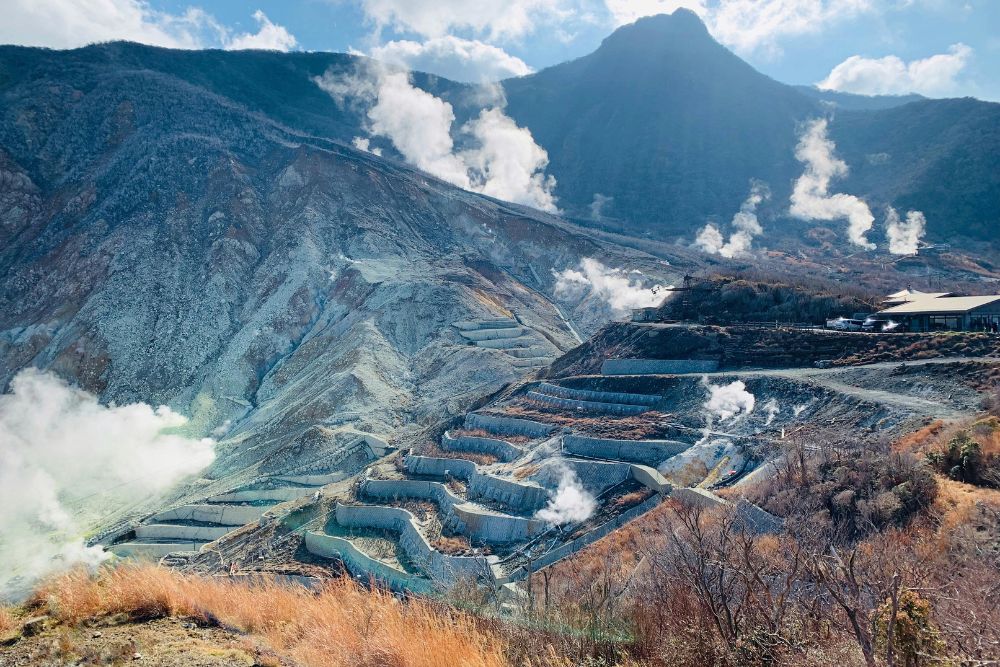
Under the 1948 Onsen Act, a hot spring earns certification only when its water meets at least one of 19 geochemical criteria set by the Ministry of the Environment: a minimum temperature of 25°C at the source, or measurable concentrations of specific dissolved minerals, from calcium and sodium to radon and lithium. These are not arbitrary thresholds. They reflect the geological fingerprint of water that has traveled through volcanic rock, sometimes for centuries, before reaching the surface.
That journey begins far below ground. Japan sits at the convergence of four tectonic plates, and the subduction of the Pacific and Philippine plates generates the magmatic heat that warms these springs. The water rising in a Hakone onsen has been heated by the same geological process that built the Japanese archipelago.
For the full geology behind Japan’s tectonic structure, see Japan’s tectonic plates: four plates, one archipelago.
The water is not renewable on any human timescale. That single fact changes everything about how responsible tourism should work here.
Three Things Most Visitors Get Wrong
None of this is obvious when you walk into an onsen for the first time. Most visitors make mistakes that carry real environmental consequences, not out of carelessness but simply because no one explained the reasoning.
The first mistake is using soap or shampoo in the water. Onsen etiquette requires washing thoroughly at the individual shower stations before entering the communal bath. The reason is not only cultural. Detergents alter the mineral chemistry of the water and accelerate microbial growth in a source that is biologically fragile. Many operators test water quality daily because the balance is that delicate.
The second mistake is timing. Popular onsen in Hakone, Beppu, and Kinosaki receive the bulk of visitors between 10am and 2pm. Choosing early morning or late evening reduces pressure on the water, the changing rooms, and the surrounding environment. It also tends to produce a better experience.
The third is defaulting to the most visible options. Onsen embedded in large resort complexes often supplement or entirely replace natural spring water with artificially heated tap water. The sign to look for is kakenagashi, which indicates the water flows directly from the spring without recycling.
For a deeper look at the geochemistry behind Japan’s hot springs, see Japan’s Hot Springs: The Science Behind the Onsen.
Why Japan Onsen Culture Got Geothermal Tourism Right
Compare Japan’s approach to Iceland’s. The Blue Lagoon, Iceland’s most visited geothermal site, uses water discharged from a power plant and processes thousands of visitors per day in an environment designed for throughput. The experience is engineered. Japan’s onsen network looks nothing like this.
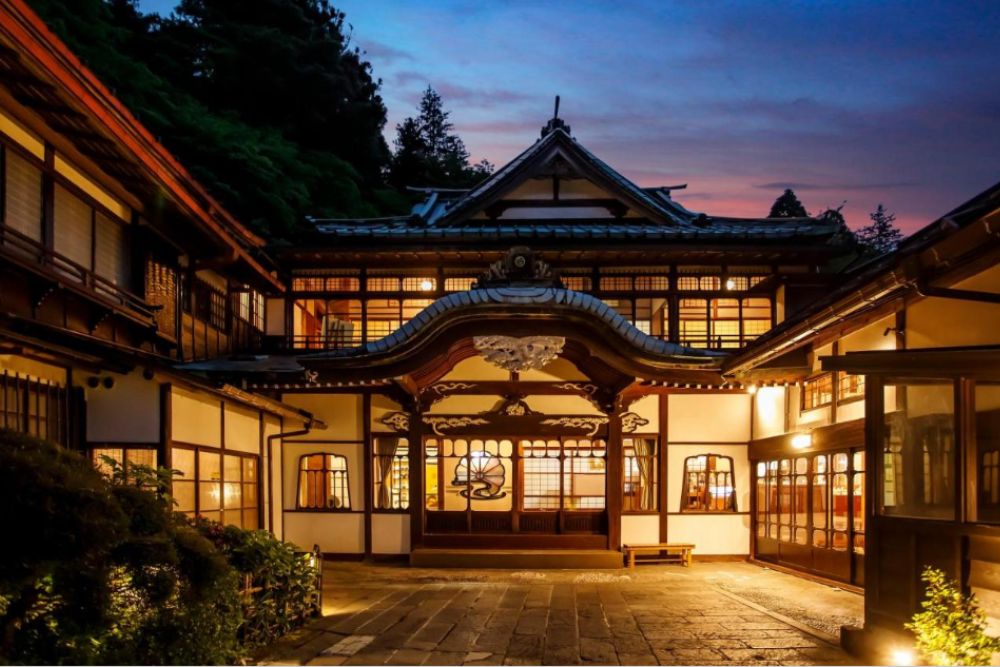
It developed over more than a thousand years through a different logic: the ryokan, a traditional inn where the bath is inseparable from the stay, the meal, and the relationship between guest and place. The result is an infrastructure that distributes visitors across thousands of small, independent sites rather than concentrating them in a handful of spectacles.
That distribution has preserved the resource. Nyuto Onsen in Akita prefecture limits daily visitors and operates under strict construction rules near the springs. Kurokawa Onsen in Kyushu runs as a collective of 24 independent ryokan sharing a single entry system, keeping the village atmosphere intact. Kinosaki Onsen in Hyogo has structured its seven public baths around a cultural circuit that visitors walk in yukata between stops.
None of these are accidents. They are the result of local governance and cultural investment maintained over generations.
On responsible travel across Japan more broadly, see How to travel Japan responsibly.
Japan Onsen Culture: How to Choose Wisely
Three questions are worth asking before booking.
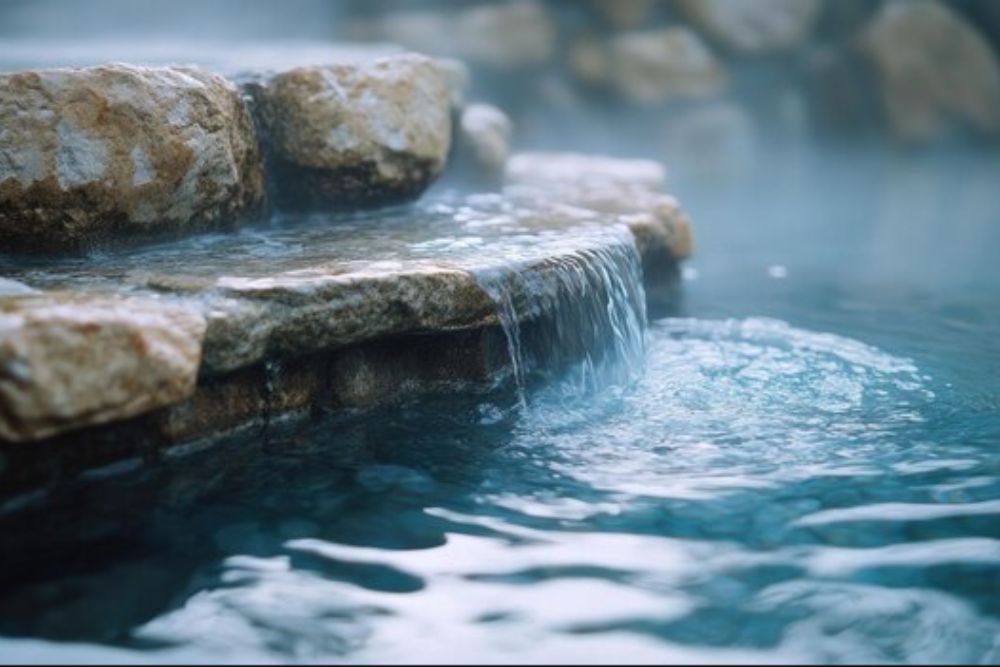
Is the water from a natural source? Look for tennen onsen (natural hot spring) on signage or in the facility description. Some facilities heat ordinary water and still market themselves as onsen. The distinction matters both legally and environmentally.
Is the flow kakenagashi or recycled? Source-flow onsen use fresh water continuously and drain it without reuse. Recycled water onsen treat and recirculate. Both are legal. Only one delivers the full geochemical experience and the lighter environmental footprint.
Is the facility small and independently operated? Large resort complexes often exceed the sustainable yield of their source. Ryokan with 20 rooms or fewer tend to operate with greater care, not out of ideology but because their business depends on the spring surviving.
The Eco Mark Japan certification, issued by the Japan Environment Association, provides an additional reference for operators who have formally committed to environmental standards.
FAQ
Is it okay to use soap in an onsen?
No. You wash fully at the individual shower stations provided before entering the communal water. Soap and shampoo alter the mineral chemistry of the spring and disrupt its microbial balance. This is both a cultural rule and an environmental one.
Are onsen environmentally sustainable?
The answer depends on the facility. Kakenagashi onsen, which use direct source-flow water without recycling, are the most sustainable in terms of resource management, provided visitor numbers stay within the regeneration capacity of the spring. Large resort facilities that supplement or recycle water carry a different environmental profile. Choosing smaller, independent ryokan is the simplest way to support sustainable geothermal tourism.
What is the difference between an onsen and a sento?
A sento is a public bathhouse that uses heated tap water. An onsen uses geothermally heated natural spring water certified under the 1948 Onsen Act. Both are communal bathing facilities. Only an onsen draws from a volcanic source and meets Japan’s official geochemical criteria.