
Iceland self-drive routes reward travelers more than almost anywhere else on Earth. Route 1, better known as the Ring Road, was finally completed in 1974, letting drivers circle the island by car instead of relying on ferries and coastal flights.
What that road actually does, geologically, is connect five completely different landscapes in a single loop: an active rift zone, a glacier sitting on top of a volcano, a peninsula built by one eruption, a coastline of the oldest rock in the country, and a plateau of lava fields still cooling from the last eruption cycle. Renting a car and driving yourself is not a convenience here, it is the only way most of this geology becomes visible, one bend in the road at a time.
This guide includes affiliate links to Booking.com. If you book a car or a room through one of them, Geonatra earns a small commission at no extra cost to you. We only link to properties and services we would use ourselves. Full details on our affiliate disclosure page.
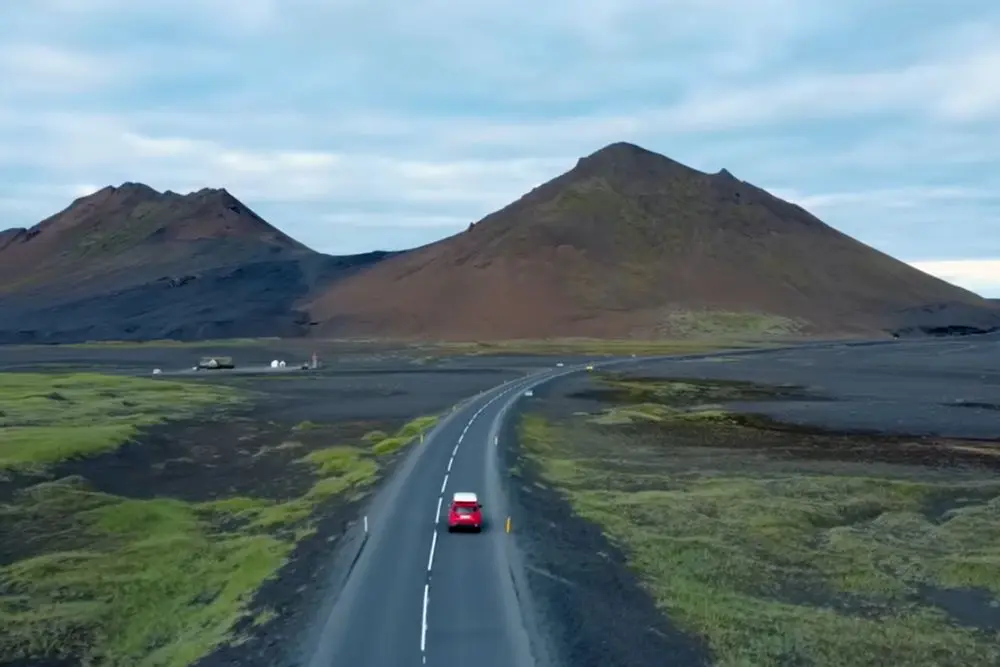
Renting a Car for Iceland Self-Drive Routes
Almost every self-drive trip in Iceland starts the same way: baggage claim at Keflavik, then a rental counter. Comparing car rental options at Keflavik Airport before you land saves you from the worst version of this experience, standing in a fluorescent-lit hall at six in the morning trying to decide between a small 2WD hatchback and a 4×4 you probably do not need.
For the five routes below, a standard 2WD is enough outside of the highlands season, roughly mid-June to early September, when the interior F-roads open. If your route includes long gravel stretches or you are traveling in shoulder season, size up. For the full logic behind sequencing a route around weather and daylight, our guide to planning a geology road trip in Iceland goes deeper than we have room for here.
The Ring Road East: Glaciers, Volcanoes, and the Long Way Around
Driving the eastern stretch of the Ring Road toward Hofn puts you alongside Europe’s largest ice cap for the better part of a day. Vatnajokull sits on top of at least seven active volcanoes, which means the ice you are looking at is not a static feature but a lid over a system that occasionally breaks through it, most famously at Grimsvotn.
Budget three to four days from Reykjavik to cover this stretch properly, with stops at Jokulsarlon’s glacial lagoon and the black sand beach at Diamond Beach where the icebergs wash ashore. For a base right off Route 1 in the middle of it, Hotel Smyrlabjorg is a family-run farm hotel roughly midway between the glacial lagoon and Hofn, with every room facing the mountains and glacier tongues that spill down toward the coast.
The Golden Circle and South Coast: Iceland’s Easiest Introduction
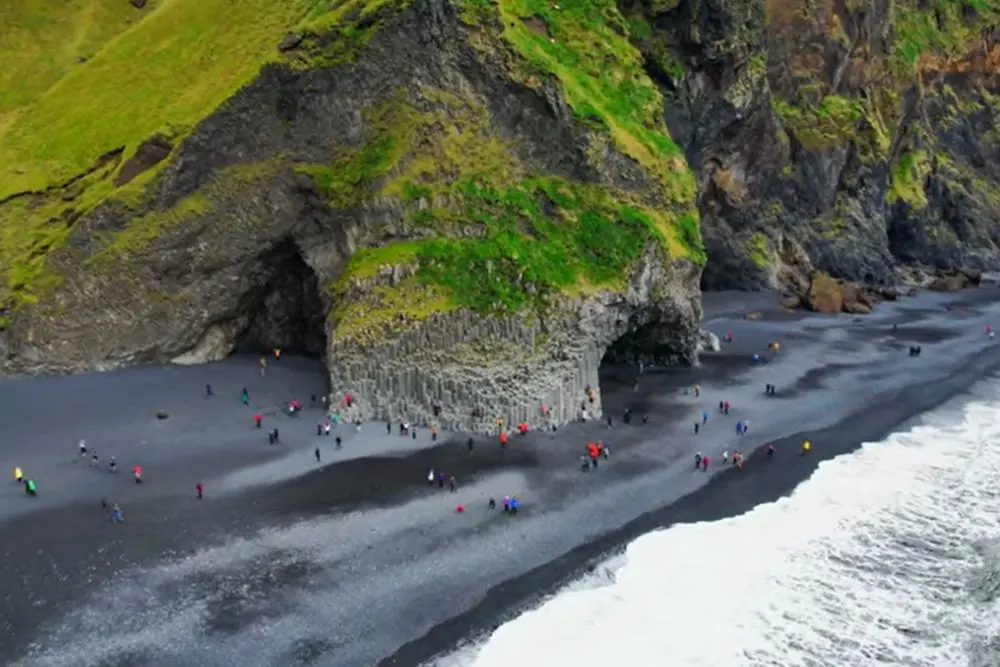
If you have three or four days and want the clearest possible introduction to what makes Iceland geologically strange, this is the route. The Golden Circle loop passes directly through Thingvellir, where the Mid-Atlantic Rift is exposed enough to walk between two tectonic plates, then continues south past waterfalls carved into basalt steps and the black sand beach at Reynisfjara, where the hexagonal basalt columns look too regular to be natural. Base yourself in Vik, the small town at the southern tip of the route, where Hotel Kria sits a five minute walk from the black sand beach and offers the kind of central, no-nonsense base that lets you fit in one more stop before dark.
Snaefellsnes Peninsula: Iceland in Miniature
Jules Verne set the entrance to the center of the earth at the summit of Snaefellsjokull, the glacier-capped stratovolcano that anchors this peninsula, and it is easy to see why once you are standing at its base. The volcano and the coastline it built compress most of Iceland’s geology into a single two to three day loop: lava tubes, black lava fields, basalt cliffs, and a coastline that shifts from golden sand to black volcanic rock within a few kilometers. It is close enough to Reykjavik for a shorter trip but far enough to feel remote. Hotel Budir sits alone on the peninsula’s edge next to a black church and a stretch of lava field running down to the ocean, the kind of setting that explains why this stretch of coast has its own gravitational pull on Icelandic folklore.
The Westfjords: The Oldest Rock in Iceland
Most of Iceland is geologically young, built by a hotspot that is still active today. The Westfjords are the exception. The basalt here erupted roughly ten to sixteen million years ago, making this peninsula the oldest exposed rock on the island by a wide margin, later carved into deep fjords by successive ice ages.
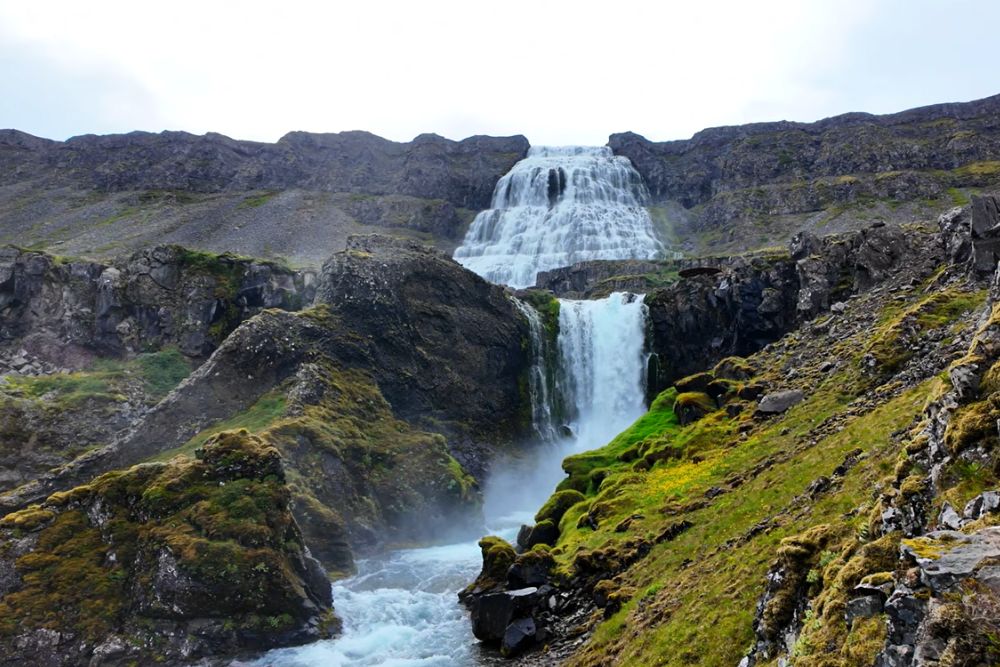
Fewer travelers make it this far northwest, which is exactly the appeal: empty roads, the thousand-foot bird cliffs at Latrabjarg, and the Dynjandi waterfall spreading out like a bridal veil over stepped basalt. Plan four to five days if you are coming from the south. Fosshotel Westfjords in the fishing village of Patreksfjordur puts you within striking distance of both Latrabjarg and Dynjandi without backtracking.
The Diamond Circle: Where the Rift Comes Above Ground
The north of Iceland gets a fraction of the traffic the south coast does, despite having some of the most directly readable volcanic geology on the island. Lake Myvatn sits inside an active rift segment, surrounded by pseudocraters, lava towers at Dimmuborgir, and the geothermal fields at Krafla that are still visibly steaming. Dettifoss, Europe’s most powerful waterfall, is a short detour from the same base and worth the gravel road it takes to reach it. Fosshotel Myvatn, built low with a grass roof that blends into the lava field around it, sits on the lake itself with views over the water most rooms in Iceland cannot match.
Frequently Asked Questions
Do I need a 4×4 to drive these routes?
Not for any of the five routes above if you are traveling between June and September. A standard 2WD handles the paved Ring Road and the gravel access roads to Dynjandi or Dettifoss without trouble. A 4×4 only becomes necessary if you plan to drive the F-road highland routes, which close outside of summer.
How many days do I need to combine more than one of these self-drive routes?
The full Ring Road plus a detour into the Westfjords realistically needs twelve to fourteen days. If you only have a week, pair the Golden Circle and South Coast with either Snaefellsnes or the Diamond Circle rather than trying to combine multiple Iceland self-drive routes into one trip.
Is it cheaper to book the car and hotels separately or as a package?
Booking them separately usually gives you more control over route changes, which matter in Iceland since weather can force a detour with little notice. Free cancellation policies, common on both car rentals and the hotels listed above, are worth prioritizing over a marginally lower package price.
Every one of these roads is still, geologically speaking, under construction. That is the part Iceland self-drive routes let you feel in a way a bus tour never will: the sense that the ground you are crossing was built recently enough that some of it is still cooling.