
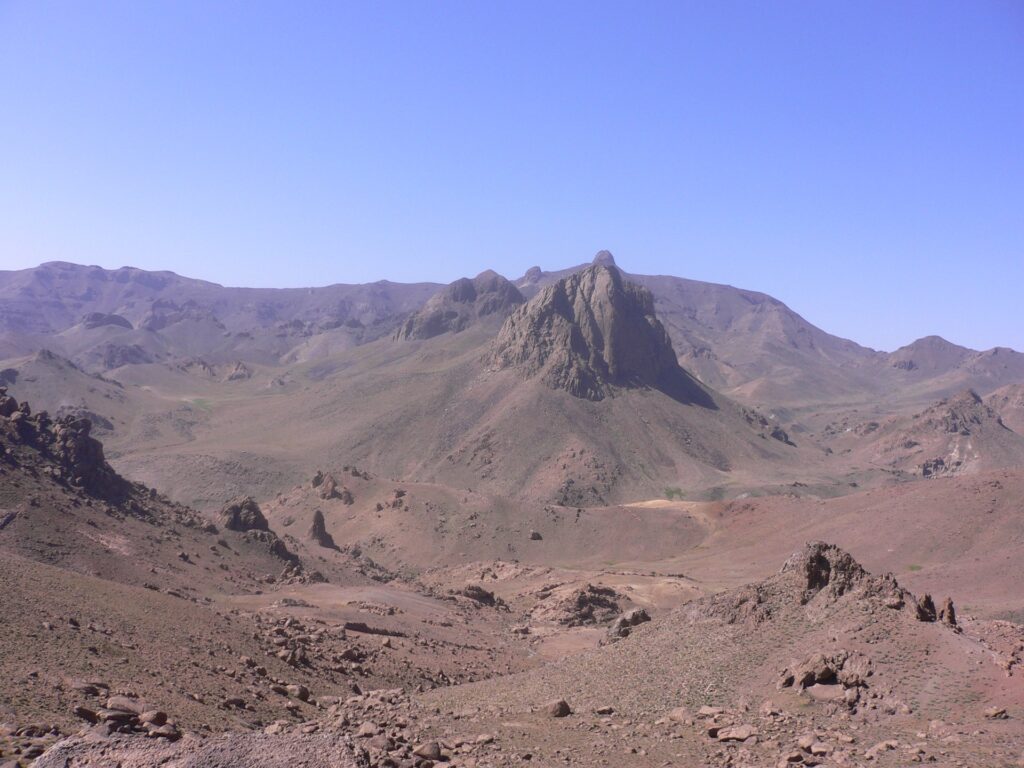
Jbel Siroua geology begins long before any road reaches Taliouine’s saffron fields at its base, where the mountain rises as a single dark cone, unremarkable at first glance among the ranges that ring it. Climb into its upper valleys and the mountain reveals what the distant view hides: a jumble of welded ash sheets, collapsed craters, and lava flows spanning not one eruption but two, separated by more time than complex life has existed on land.
The older rock here is Precambrian, laid down before animals had limbs. The younger rock is barely older than the Sahara itself. Few mountains anywhere let a traveler stand on both episodes within the same day’s walk, watching Jbel Siroua geology record two volcanic lives half a billion years apart.
Jbel Siroua Geology: The Short Answer
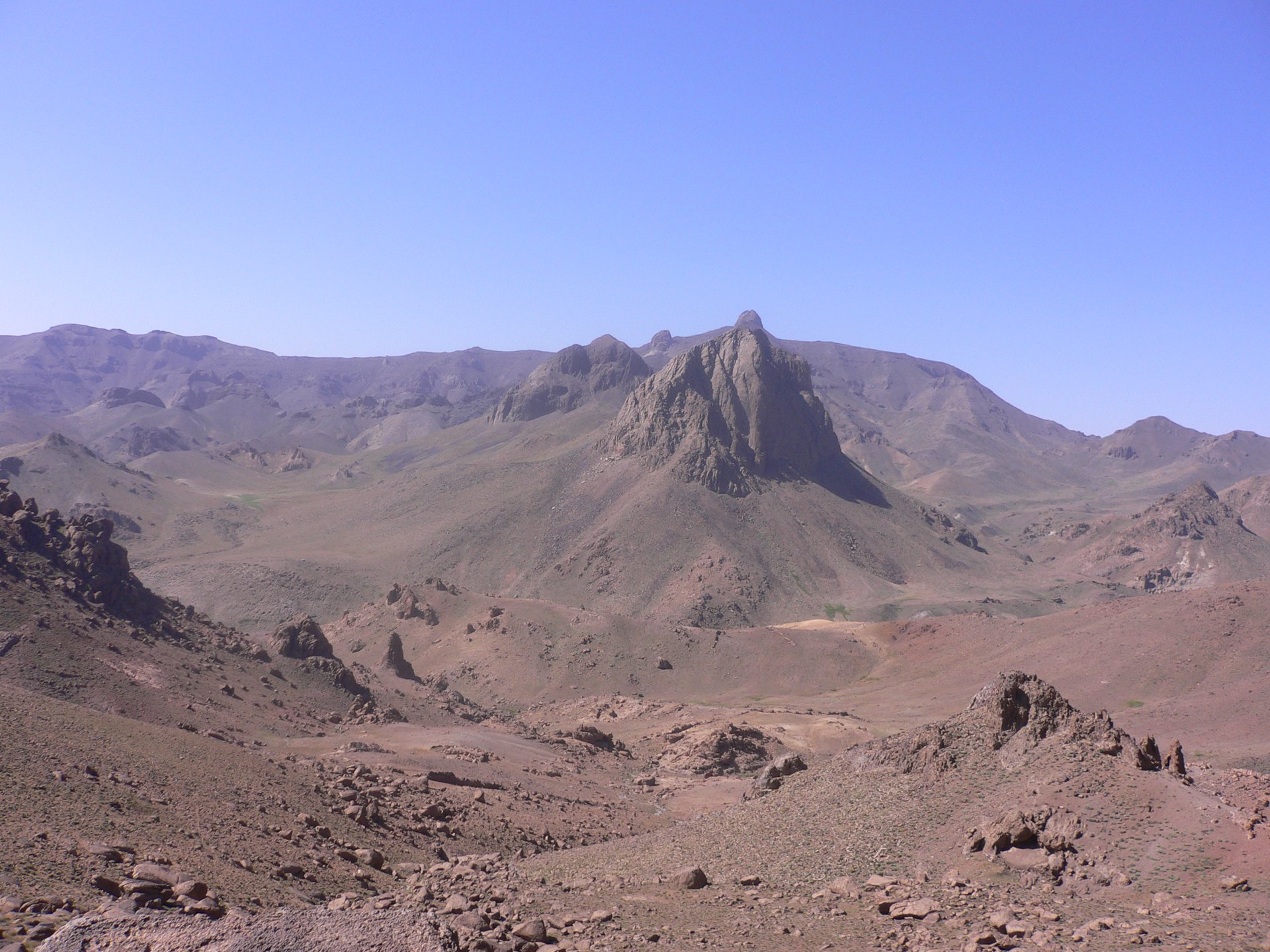
Jbel Siroua geology records two separate volcanic episodes on the same massif: a Precambrian to Cambrian caldera system of ignimbrite and lava tied to the Pan-African orogeny, and a much younger monogenetic volcanic field, active since the late Miocene, that marks the tectonic boundary between the High Atlas and the Anti-Atlas.
A Caldera System from Before Complex Life
Jbel Siroua geology begins with the oldest volcanic rocks exposed on the massif, laid down in the same late Precambrian to Cambrian episode that built much of the Anti-Atlas, part of the volcanic aftermath documented across our Anti-Atlas Pan-African Overview. As the Pan-African orogeny wound down, the crust here thinned enough to let magma reach the surface in violent, short-lived bursts.
Explosive eruptions produced rhyolitic ignimbrite sheets, sheets of ash and pumice fragments welded together by their own heat, thick enough to have collapsed the ground above the emptying magma chamber into calderas kilometers wide. Basalts, andesites, and dacites erupted alongside the ignimbrite in a diverse first cycle, laid down in a rift-like setting as the old Precambrian crust stretched and cracked. The layered sequence exposed on Siroua’s slopes today represents a volcanic system that stayed active, on and off, for tens of millions of years, at a time when the most complex organisms on the planet were still confined to the ocean.
Zgounder: Silver Locked in Mercury
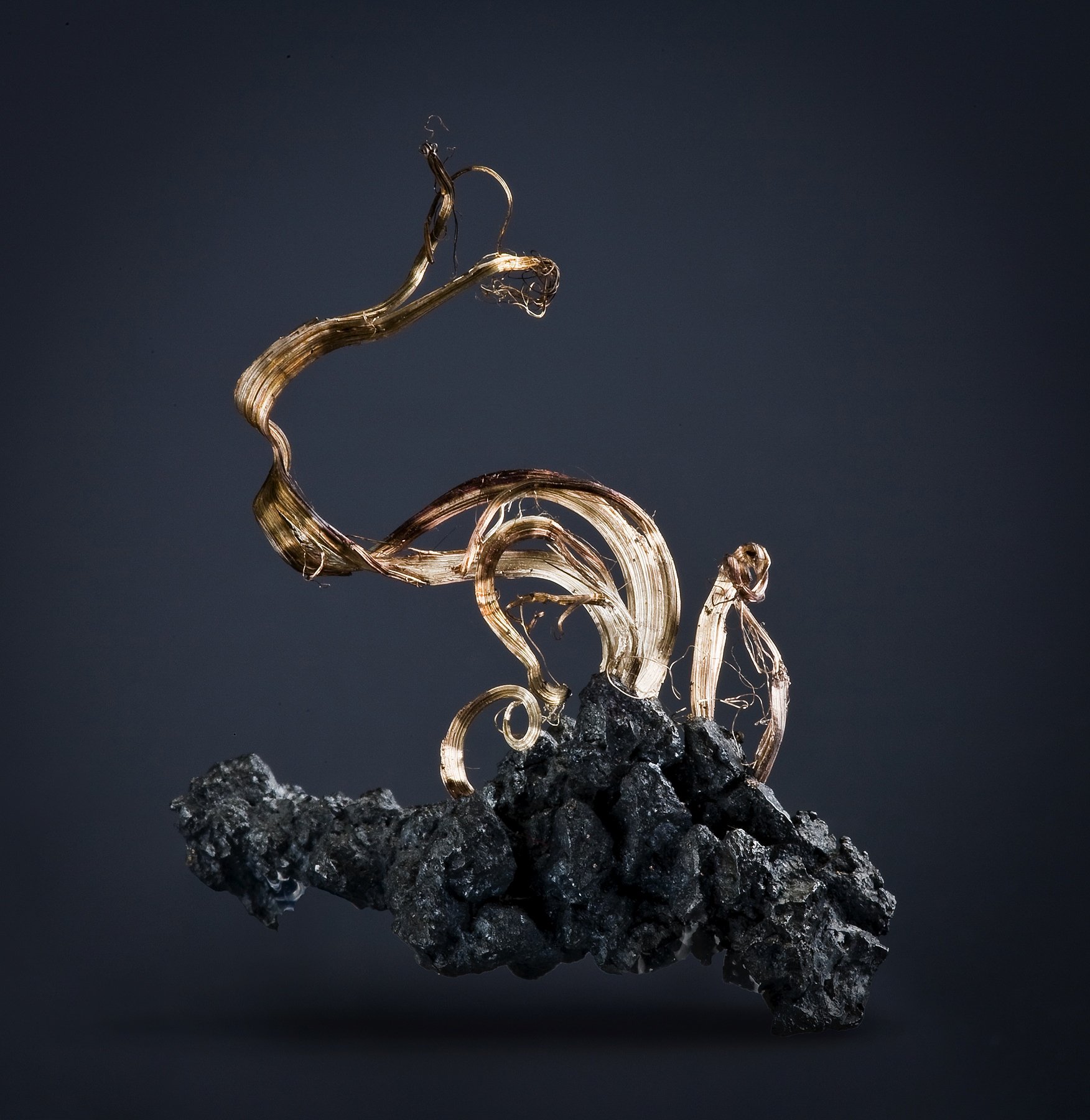
Within that same ancient volcanosedimentary sequence sits Zgounder, one of the more unusual ore deposits in the Anti-Atlas. The silver here is mercuriferous, native silver bound up with mercury at concentrations that can run from a few percent to nearly a third of the mineral’s weight, an association uncommon enough that Zgounder shows up regularly in geological literature on unusual precious metal deposits. Hosted in Proterozoic volcanosedimentary rock rather than a later intrusion, the deposit formed as hydrothermal fluids moved through the same volcanic pile responsible for Siroua’s caldera history, concentrating silver and mercury together along structural weaknesses in the rock.
The deposit places Siroua within a broader Anti-Atlas pattern, precious and base metal mineralization tied to Ediacaran volcanic activity, the same pattern that shows up at Bou Azzer with cobalt and at Jbel Saghro with gold and silver. Small-scale mining has worked the Zgounder deposit intermittently for generations, one more example of how the region’s deep volcanic past continues to shape what people dig out of the ground today, long after the eruptions that first concentrated these metals went quiet.
A Second, Much Younger Volcano
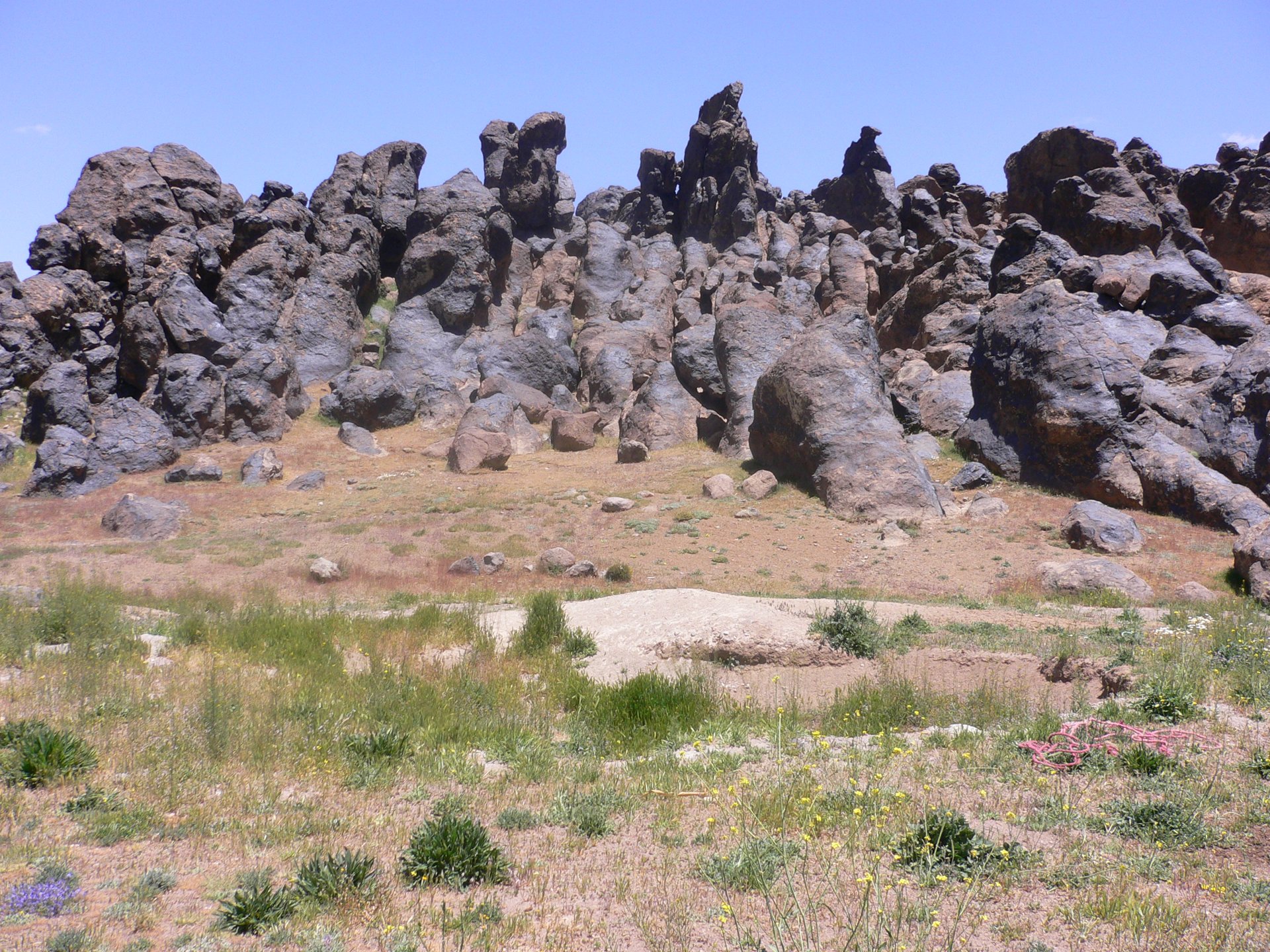
Long after the Pan-African volcanic system went cold, Jbel Siroua erupted again, this time far more recently. Since the late Miocene, a small monogenetic volcanic field, made up of many individual, short-lived vents rather than one long-lived cone, has been active along the tectonic lineament that separates the High Atlas from the Anti-Atlas. Research published in the open-access journal Volcanica maps the spatial distribution of these younger vents and ties their alignment directly to that structural boundary, evidence that the fault system dividing the two ranges has stayed active long after the mountains themselves finished forming.
The result is a genuinely strange piece of geology, a single named massif where the oldest rock predates animals with skeletons and the youngest rock is a geological blink of an eye old, the two separated by roughly 550 million years of Anti-Atlas history in between. No single viewpoint shows both episodes at once, but a day spent moving across the massif crosses that entire span on foot.
Taliouine: Saffron at the Foot of a Volcano
At Siroua’s base sits Taliouine, a town of under 6,000 people that produces more saffron than anywhere else in Africa. Each October and November, the surrounding plateau turns violet with crocus flowers, and the harvest, picked by hand at dawn before the blooms wilt in the sun, draws workers from across the region for a few intense weeks. The saffron trade here predates any formal geological survey of the mountain above it, but the two are not entirely separate stories.
Taliouine sits on the same Souktana plateau built from the volcanic and sedimentary rock shed off Siroua over millions of years, terrain that has shaped which crops take hold and where. For travelers arriving from the geological history documented in our West African Craton guide, Taliouine offers a rare pairing, half a billion years of volcanic rock overhead, and a harvest economy at its foot that has nothing to do with mining.
Frequently Asked Questions
How difficult is it to trek Jbel Siroua?
The summit sits at 3,305 meters, reachable on a multi-day trek through Amazigh villages rather than a technical climb. Most routes start from Taliouine or nearby Askaoun, with mules available for gear in some villages.
Can visitors see the Zgounder silver mine?
Zgounder is a working small-scale mining site, not a tourist attraction, and casual visits are not encouraged. The geology it exposes is better appreciated through the surrounding volcanic terrain, which is freely accessible on foot.
When is the best time to visit for both the geology and the saffron harvest?
Late October through November lines up with the saffron harvest in Taliouine and comfortable trekking temperatures higher up on Siroua, the one stretch of the year when both halves of the visit work well together.
Few places let a single day’s walk cross 550 million years of volcanic history and end at a saffron harvest. Jbel Siroua does both, and the mountain does not particularly care which one brought you there.