
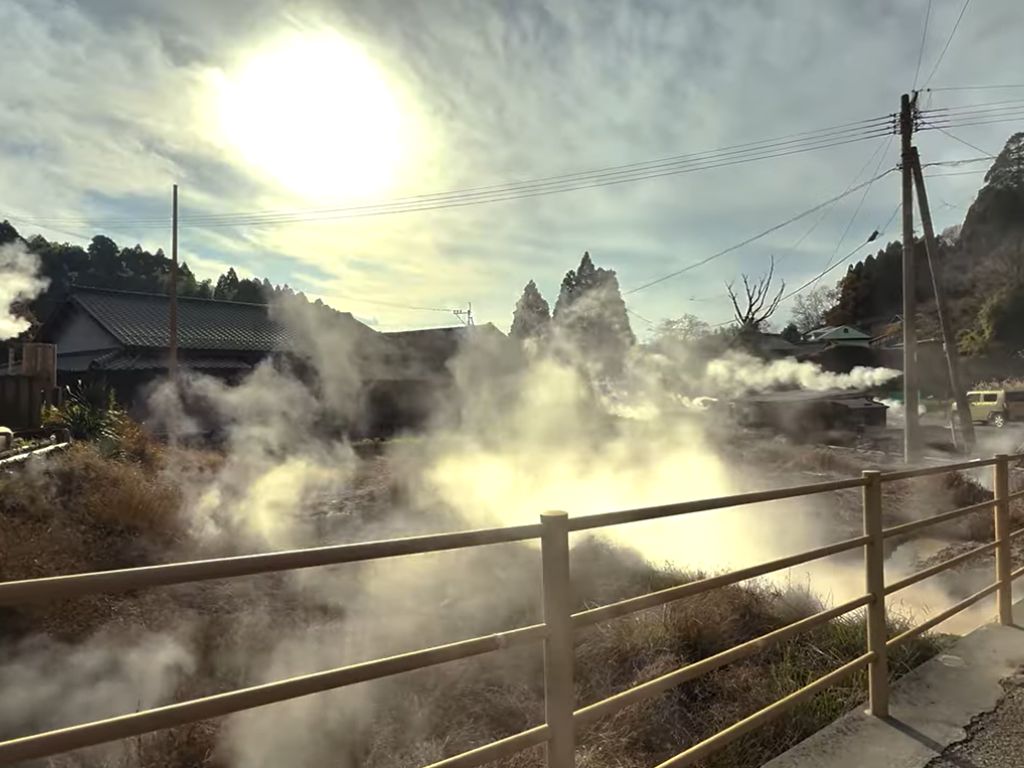
Six in the morning at a small ryokan in Hakone. The wooden door slides open onto a stone bath set in cedar mist. The water is exactly forty-two degrees Celsius. Place a hand on the rim and the warmth feels almost personal — as if the mountain itself had drawn this Japanese onsen.
In a way, it has. A few kilometres below this bath, magma is sitting at temperatures close to twelve hundred degrees. The water has cooled along the way through the rock, the fractures, the slow rise of the groundwater. By the time it reaches the soaker’s shoulders, all that violence has become a ritual. The Japanese onsen is not a spa. It is the surface of a working planet.
Japanese Onsen Science: A Quick Overview
Japan onsen hot springs science begins underground. Subduction of the Pacific Plate melts mantle rock, magma rises into the crust, and groundwater seeping through fractures absorbs that heat. With four converging plates and one of the world’s densest volcanic arcs, Japan holds roughly three thousand officially registered hot springs.
From Magma to Your Bath
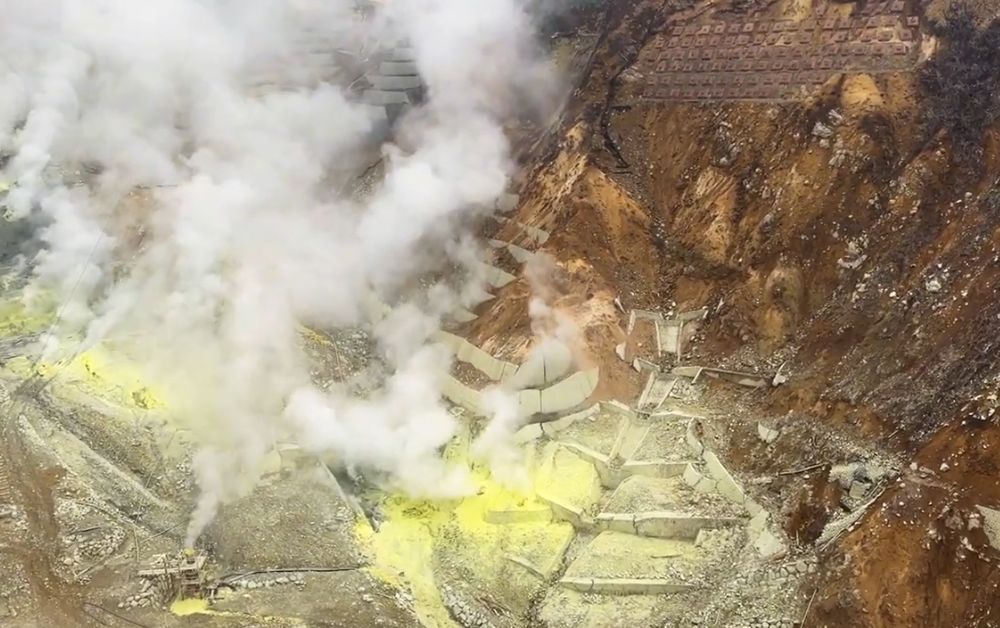
The Pacific Plate slides westward beneath Honshu at about eight centimetres a year. As it sinks, the mantle wedge above it begins to release water and other volatiles into the surrounding rock. That fluid lowers the melting point of the surrounding peridotite, and small volumes of magma rise toward the surface. Most of this magma never erupts. It pools in chambers a few kilometres beneath active volcanic zones, where it stays liquid for thousands of years.
Above those chambers, rainwater seeps into the ground. It travels through fractured volcanic rock, slows in deep aquifers, picks up heat from the magma it drifts above, and eventually finds a path back to the surface. The shorter the path, the hotter the spring. At Hakone the water can leave the ground at over ninety degrees and is cooled with cold spring water before reaching the bath. At Beppu, on Kyushu, some sources still arrive at boiling.
This is the same engine that produces Japan’s earthquakes. Where the plate slides and seizes, it shakes the islands. Where it sinks deeper, it heats them. Both phenomena share the same tectonic engine that drives Japan’s earthquakes, only one of them comes to the surface as a tremor and the other as a steaming pool. Where Iceland’s geothermal warmth comes from a mid-ocean ridge pulled apart, Japan’s comes from a slab pushed under. The bathwater simply records which kind of edge a country happens to live on.
What the Water Quietly Carries
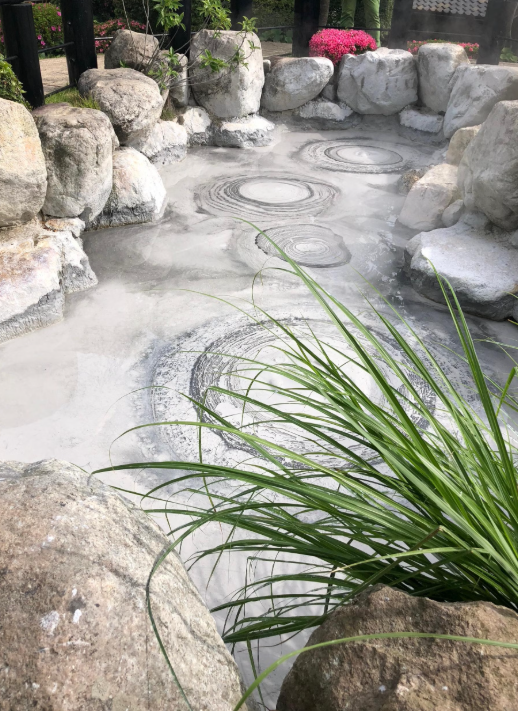
No two Japanese onsen taste the same. The water always carries a record of the rock it has just left.
At Yumoto in Hakone, hydrogen sulphide rises with the steam and gives the bath its faintly mineral sharpness. The smell is not a sign of decay. It is the trace of magmatic gas dissolving into hot groundwater, then escaping when pressure drops at the surface. At Beppu, deep brines carry sodium chloride, and the bath feels almost like a soft seawater. At Kusatsu, in the cold northern mountains, the water is acidic enough to soften skin within minutes. The pH is below two. The acidity comes from sulphuric acid, formed when magmatic gases meet circulating groundwater.
Iron, silica, calcium carbonate, radium in trace amounts: each onsen is essentially a chemistry report on the rocks beneath it. Hakone’s andesite leaves a different signature than Yakushima’s granite, and Beppu’s basement of older sedimentary terranes leaves a third. Readers curious about what these volcanic rocks taste like in water will find that the surface chemistry of an onsen mirrors the petrology of the crust below.
The Geological Survey of Japan publishes detailed thermal-water inventories for most active fields, including temperature, depth and dissolved minerals, and the patterns line up well with the geology of the surrounding crust. Reading an onsen, in that sense, is reading a vertical column of stone.
Japanese Onsen Etiquette: Soaking With Care
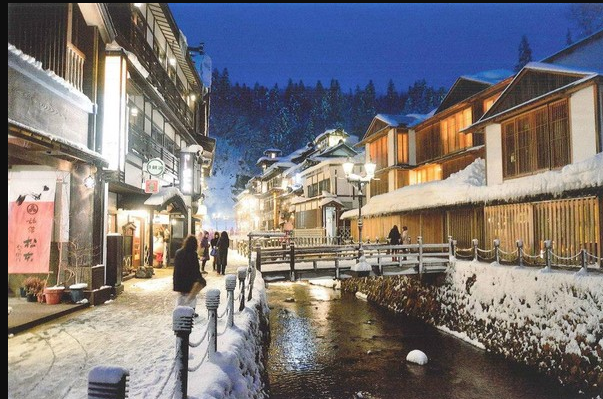
Three thousand officially registered hot springs sounds inexhaustible. It is not. Many onsen towns have seen pressure drop, water cool, or sources go intermittent over the past century. The cause is rarely natural. It is usually too many wells drilled into the same shallow aquifer. Once the local geothermal balance is broken, recovery takes decades, sometimes longer.
The Japanese have lived with this risk longer than most. The classical onsen etiquette is partly courtesy: wash before entering, no soap or product in the bath, quiet and modest behaviour, no photography. But it is also a form of resource discipline that no signage explains.
A communal bath shared by twelve guests uses far less water than twelve private showers. The ritual itself is a form of conservation.Stepping into a Japanese hot spring is also stepping into Japan’s place on the Ring of Fire, where the same forces that built the bath can erupt the mountain above it. Active volcanic zones close their onsen briefly after seismic events or gas spikes, and the rules are not theatre. They protect both the visitor and the source. For the wider arc story, see the Japan’s Volcanoes guide.
A traveller who treats an onsen as a piece of geology rather than a swimming pool tends to leave it intact for the next person.
Frequently Asked Questions
Why are Japanese onsen so hot at the source?
Because the water rises directly from rock heated by shallow magma, often only a few kilometres beneath the surface. Some Japanese springs leave the ground at ninety degrees or more. They are usually mixed with cold water before reaching the bath, which is why the soaking temperature feels calmer than the source.
Are all onsen waters the same chemically?
No. Each spring carries the chemistry of the rocks its water has just travelled through. Sulphur, sodium chloride, iron, calcium and weak acids appear in different combinations. Two onsen ten kilometres apart can feel and smell completely different, and this is a normal consequence of varied basement rock.
Is it safe to soak near an active volcano?
Most well-known onsen towns sit on or near active volcanic systems and operate under strict monitoring by the Japan Meteorological Agency. Public baths close quickly when alerts are raised. Soaking in Hakone or Kyushu is normally as safe as any urban activity in Japan, as long as the day’s notices are respected.
About the Author
Daniel Parker writes for Geonatra from the field, reading landscapes the way others read libraries. His Japan notebooks were filled walking the volcanic ridges of Kyushu and the steaming valleys of Hakone, with one quiet question in mind: how a ritual as gentle as a morning bath could be so directly connected to the violent geology beneath it.