
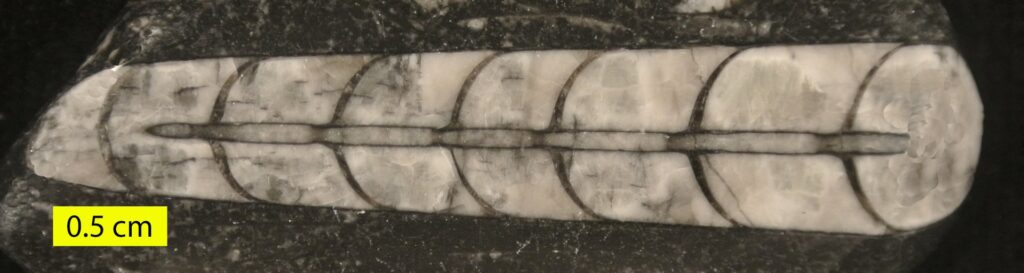
The Erfoud fossil trade begins in a workshop on the edge of town, where a man runs a diamond saw through a slab of black limestone the size of a dinner table. Water sprays across the blade. When the dust clears, dozens of pale spirals appear across the cut face, the coiled shells of orthoceras that swam in a shallow sea some 380 million years ago. He has done this cut a thousand times before.
Down the street, another workshop sells trilobites the size of a hand, priced by the inch, more of them than any single quarry could plausibly have produced in a season. The Tafilalt basin sits on one of the richest fossil beds on Earth, and an entire regional economy has grown up around cutting it out of the ground. Not all of what leaves these workshops is exactly what it claims to be.
What Is the Erfoud Fossil Trade
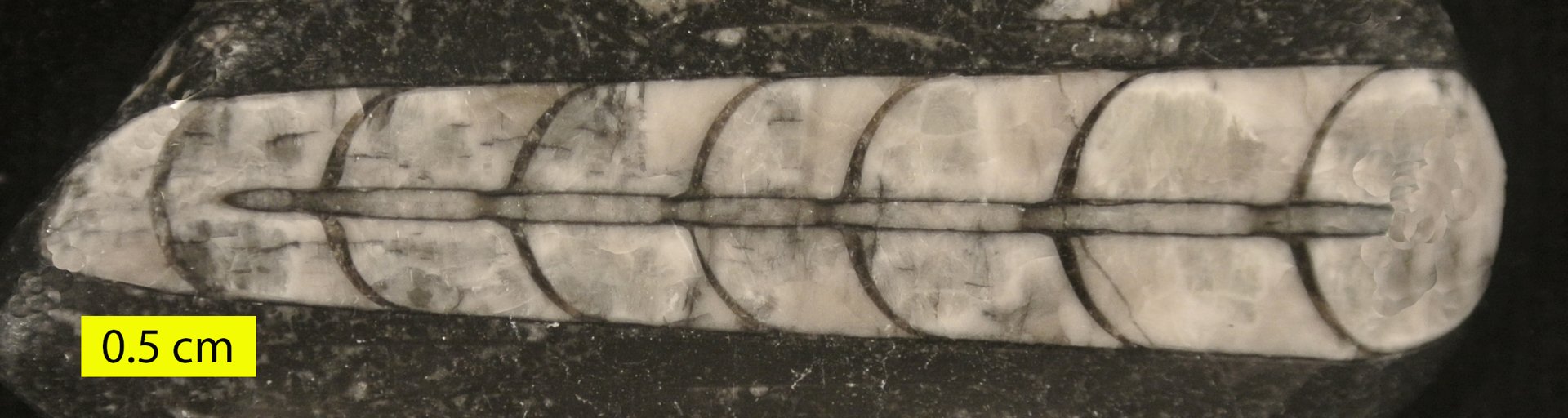
The Erfoud fossil trade is the commercial extraction, preparation, and export of Devonian-age fossils, chiefly trilobites, orthoceras, and ammonites, quarried from the Tafilalt basin in southeastern Morocco. Family-run workshops in Erfoud and nearby Rissani cut, polish, and sell these fossils locally and to international buyers, alongside a smaller trade in fabricated or composite specimens sold as genuine.
Why the Tafilalt Basin Is So Rich in Fossils
About 380 million years ago, during the Devonian period, the land that is now southeastern Morocco lay under a warm, shallow sea near the southern edge of Gondwana. Trilobites crawled the seafloor, orthoceras drifted through the water column trailing long conical shells, and ammonites had just begun to appear in the fossil record. When these animals died, fine mud settled over their remains fast enough to preserve delicate detail, compound eyes, spines, the segmented plates of an exoskeleton, before scavengers or decay could destroy it.
Over millions of years that mud compacted into the dark limestone and shale now exposed across the Tafilalt basin, part of the broader story documented in our Anti-Atlas Pan-African overview. Uplift and erosion since then have brought those Devonian layers close enough to the surface that a hand pick, rather than heavy machinery, is often enough to find something. That combination, abundance and accessibility, is what allowed a local economy to form around this basin long before any formal geological survey ever mapped it.
From Desert Rock to Export Market
The fossil trade around Erfoud and Rissani is younger than it looks. Large-scale commercial quarrying began in earnest in the late 1980s, when international collectors and dealers discovered the scale and quality of what the Tafilalt basin held. Word spread quickly through towns where farming and herding had long been the only steady income. Families that once moved goats between seasonal pastures started moving rock instead, and within a decade entire streets in Erfoud filled with workshops cutting slabs, polishing trilobites, and packing crates for export.
The industry now employs quarry diggers working the desert outcrops, preparators cleaning and stabilizing specimens under magnification, and shopkeepers selling everything from fist-sized trilobites to marble-like tabletops studded with orthoceras, a pattern of extraction-based livelihood not unlike the one that shapes mining towns such as Bou Azzer elsewhere in the Anti-Atlas. Finished pieces now travel from Tafilalt workshops to natural history shops, university teaching collections, and private collectors across Europe, North America, and East Asia, making this stretch of desert one of the more improbable links in a global specimen trade.
The Fake Fossil Problem
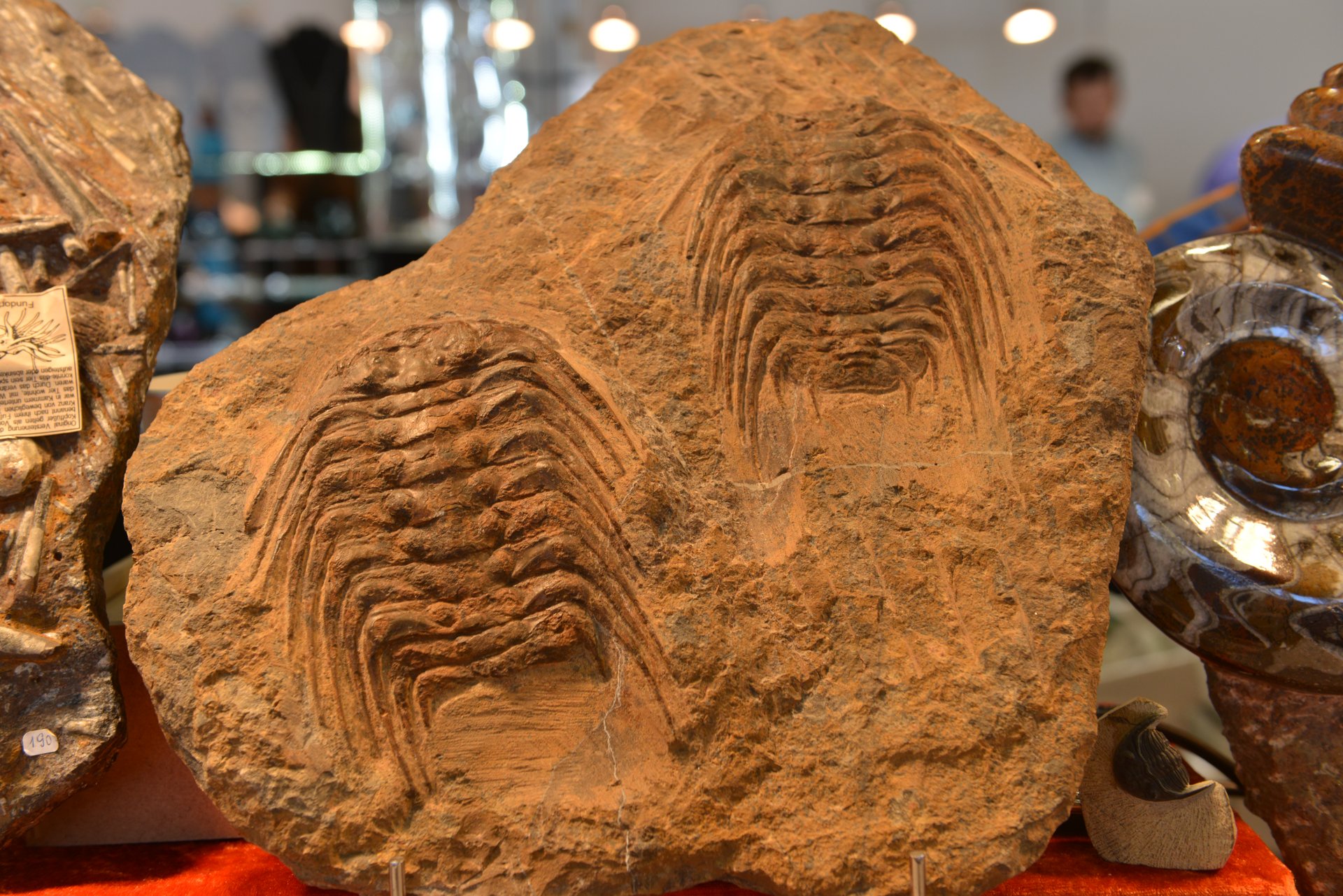
Not everything sold as a genuine trilobite in Erfoud or Rissani actually is one. Since the trade expanded, some workshops have supplemented real finds with composites, fossil fragments reconstructed with putty, resin, or unrelated rock, carved and painted to resemble a complete specimen. The best of these are convincing enough that even trained paleontologists have been fooled at a glance.
The American Museum of Natural History’s trilobite research collection documents the practice in detail, describing how fabricators mold replacement parts from genuine fossils and blend the seams into surrounding rock so carefully that ultraviolet light or a loupe is sometimes the only reliable way to tell. The practice has real costs beyond a disappointed buyer. It undercuts the honest preparators whose slower, more careful work cannot compete on price with a workshop turning out finished pieces in a fraction of the time, and it has made some research institutions cautious about acquiring Moroccan specimens at all, genuine ones included, without independent verification first.
Visiting Erfoud and Rissani Responsibly
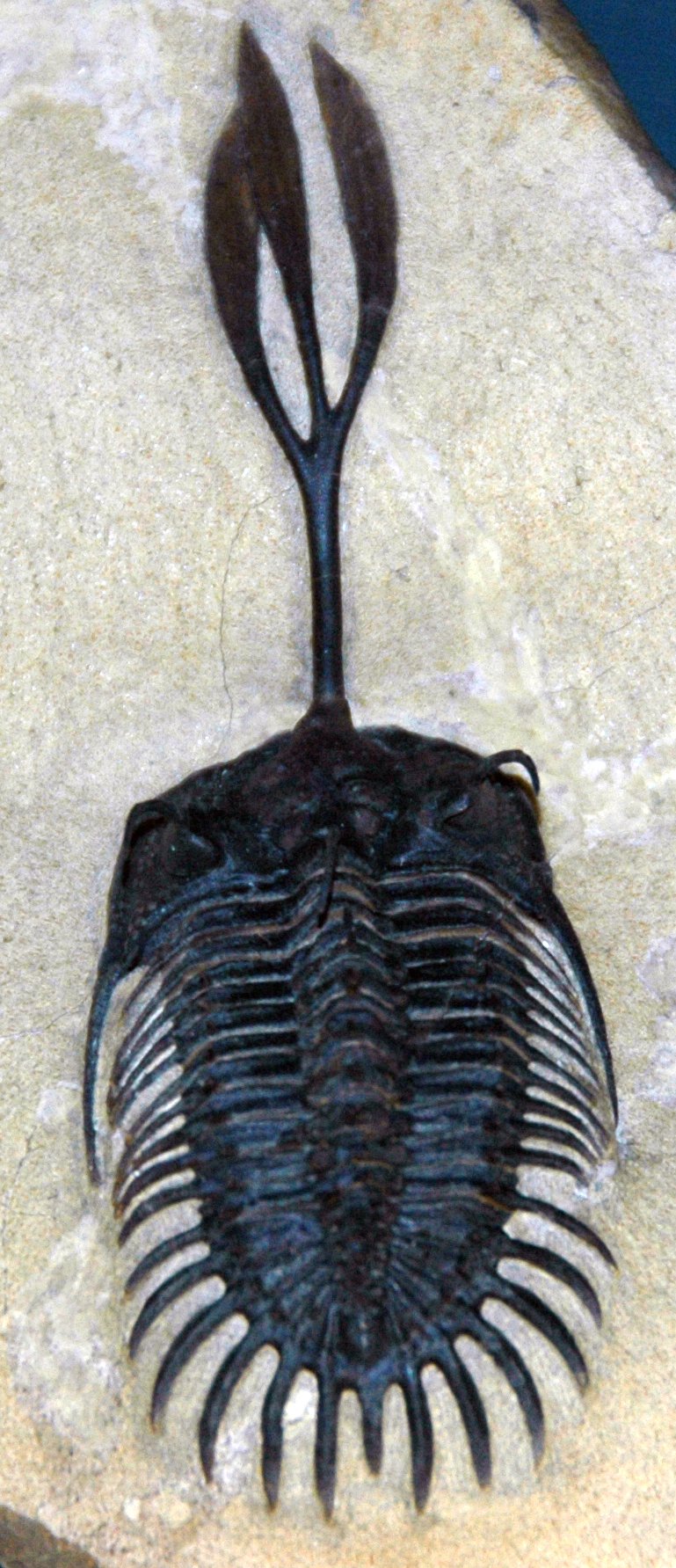
A visit to Erfoud or Rissani is still one of the more direct ways to see Devonian Morocco up close, as long as it comes with a few habits. Ask any workshop directly whether a piece is a composite or a full fossil; reputable sellers will tell you without hesitation, since disclosed restoration is standard practice and not something to hide. Look closely at the border between a trilobite and its surrounding rock, matrix and specimen should share the same color and texture, and a seam that looks too clean or too dark is worth a second look.
Buying from an established workshop rather than a roadside seller in the desert also improves the odds of an honest transaction. For the deeper geological story of what put these fossils here in the first place, the Devonian basin sits atop the same ancient basement documented in our guide to Morocco’s West African Craton, a connection worth understanding before deciding what, if anything, is worth bringing home.
Frequently Asked Questions
Is it legal to buy fossils in Erfoud or take them out of Morocco?
Yes, for fossils bought through licensed dealers with proper export documentation. Reputable Erfoud workshops that ship internationally are familiar with the paperwork. Buying from an unlicensed roadside seller is where the legal and ethical lines blur.
How can I tell if a trilobite is real or a composite?
Check where the trilobite meets the surrounding rock. A seam that is too smooth or a different color than the matrix is the most common giveaway. When in doubt, ask the seller whether the piece has been restored.
Is Rissani worth visiting separately from Erfoud?
Yes. Rissani’s weekly souk adds a market atmosphere Erfoud’s fixed workshops do not have, and its proximity to the edge of the Sahara makes it easy to pair both towns in a single day trip.
Every workshop street behind the Erfoud fossil trade sits on the same idea: rock that used to be seafloor, cut open to reveal what lived there. Most of what comes out is exactly what it claims to be. Knowing how to tell the difference is what makes the trip worth the detour.