
Anti-Atlas copper mining history is written in two very different chapters. Stand at the sealed entrance to the Bleïda mine and the desert is completely silent, no drilling, no trucks, nothing moving but heat off the rock. For seventeen years, this shaft pulled copper out of the ground fast enough to support an entire mining community built around it. Then the ore ran out, the pumps stopped, and the silence moved in for good.
Fifty kilometers away, at Bou Skour, the opposite is happening. Drill rigs are still testing the ground, still chasing copper and silver through the same ancient rock, on the chance that this deposit has more to give than Bleïda did. Two mines, one shared geological story, and two very different endings, one already written, one still open.
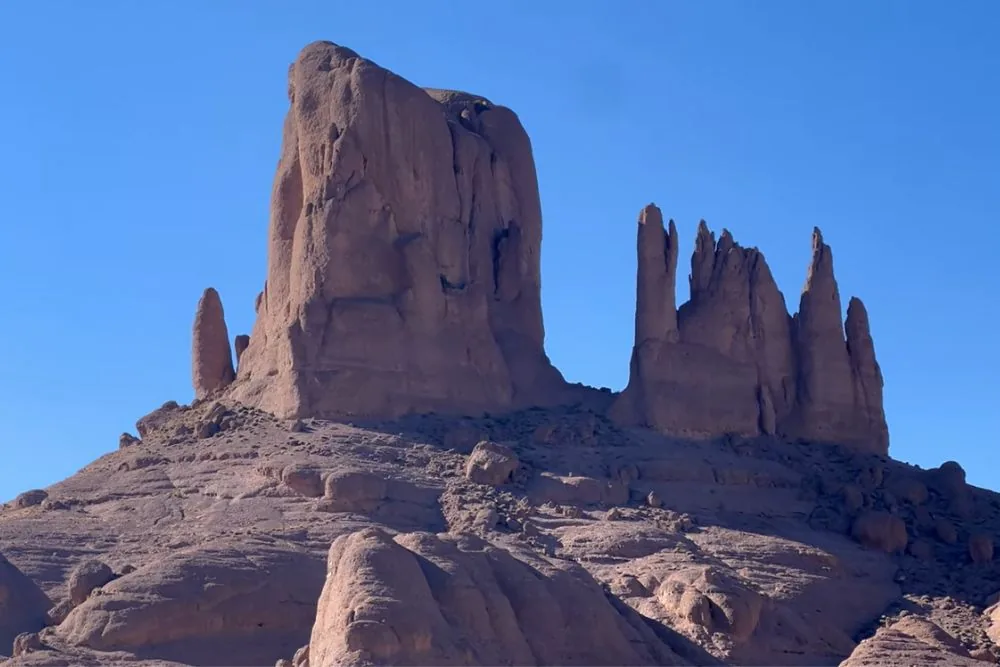
Anti-Atlas Copper Mining History Explained
Anti-Atlas copper mining history centers on two Precambrian ore bodies formed inside the same Pan-African shear zone. Bleïda operated as an underground mine from 1980 to 1997 before its sulfide ore ran out. Bou Skour, fifty kilometers east in the Jbel Saghro massif, has been explored on and off since the 1940s and remains an active target for copper and silver.
Ore Veins in an Ancient Shear Zone
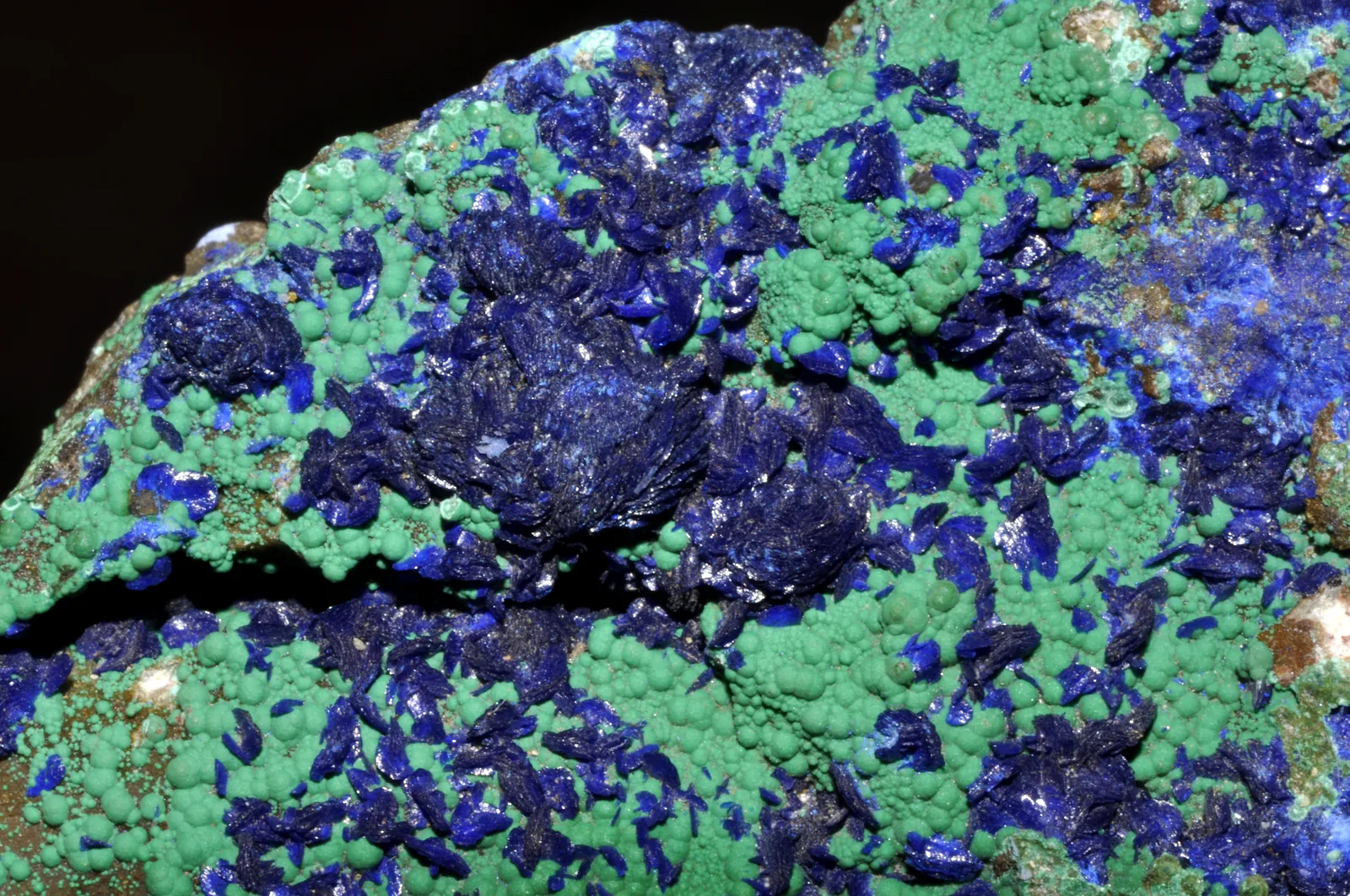
Both deposits owe their existence to the same violent chapter of Anti-Atlas history. As continental blocks collided during the Pan-African orogeny roughly 575 million years ago, the crust here did not just fold, it sheared, cracking into brittle fault zones that later became conduits for mineral-rich fluids. Copper, lead, zinc, and silver crystallized out of those fluids inside narrow veins, the same style of deposit at both Bleïda and Bou Skour despite the fifty kilometers between them.
Long before any modern company arrived, people already knew this rock held metal. Both sites show trenches, furnace remains, and slag heaps left by medieval miners working the surface outcrops centuries before geologists understood why the ore was there. Modern exploration only formalized what local prospectors had already discovered, first at Bleïda in the early 1970s, then more systematically at Bou Skour through several mining companies working the ground from the 1940s onward.
Bleïda’s Rise and Sudden Silence
Bleïda entered full underground production in 1980, extracting sulfide copper ore from a deposit roughly fifteen kilometers from the small village that gave the mine its name. For close to two decades, the operation anchored the local economy: wages, supply routes, a rhythm of trucks and shifts that shaped daily life far more than the desert around it did.
That rhythm stopped in 1997, when the sulfide ore reserves ran out. Mining companies do not keep unprofitable shafts open, and Bleïda’s economics depended entirely on ore that was, by definition, finite. The mine closed, and with it went the jobs, the supply contracts, and much of the reason people had settled near an otherwise unremarkable stretch of Anti-Atlas desert.
Bleïda is not unique in this pattern. Mining towns across the Anti-Atlas share the same underlying risk: an economy built on a single resource has no fallback once that resource is gone. The ruins near Bleïda today, quiet shafts and abandoned infrastructure, are a preview of a story that keeps repeating itself across Morocco’s mining geography.
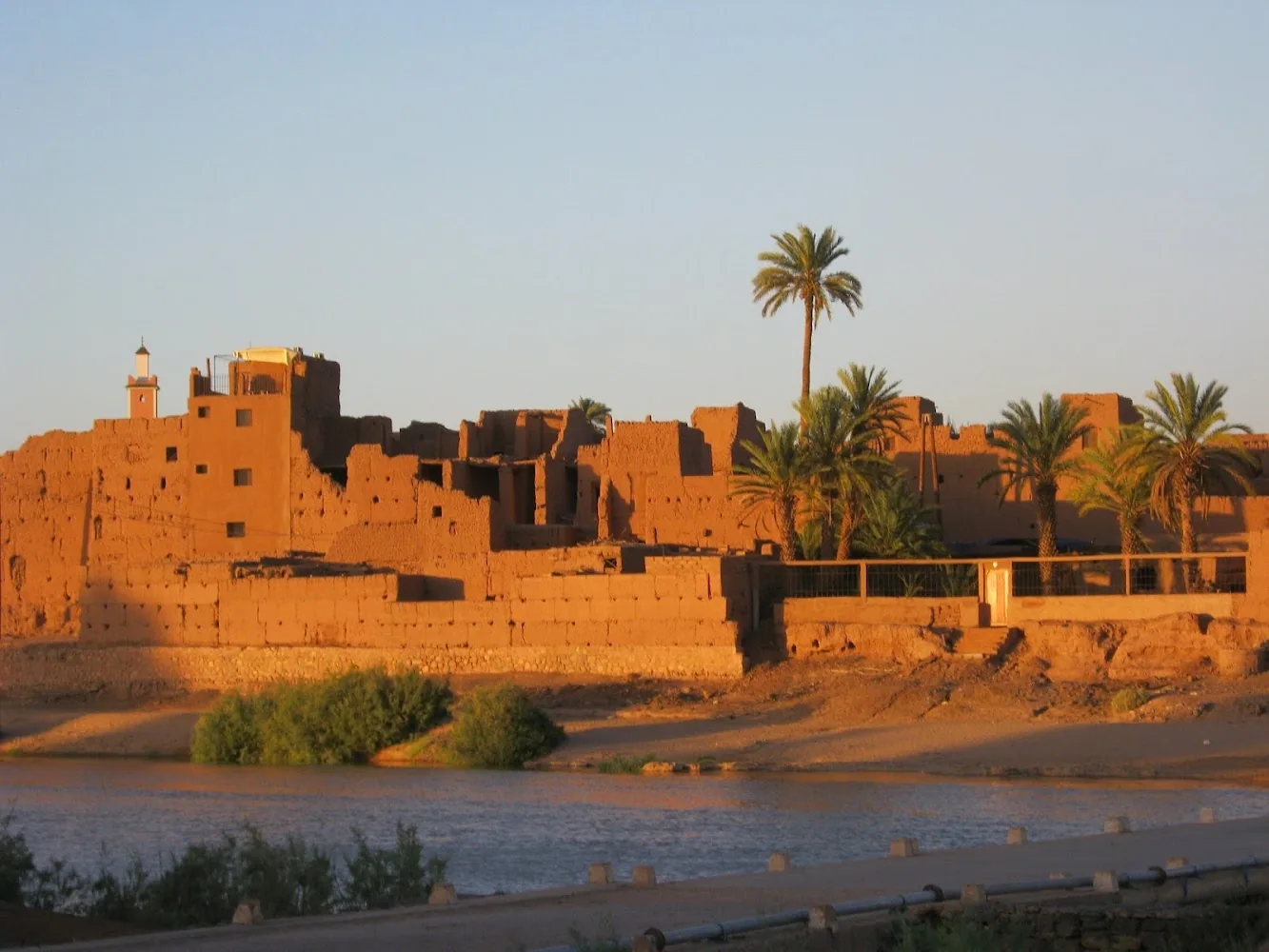
Bou Skour’s Unfinished Story
Bou Skour tells a different chapter of the same geology. Sitting in the western Jbel Saghro massif, the deposit hosts a set of parallel veins known locally as the Filon Principal and Filon 1 and 2, structures researchers writing in Comptes Rendus Géoscience have traced to a brittle-ductile shear zone dated at roughly 575 million years old, almost the same age bracket as the mineralization at Bleïda.
Unlike Bleïda, Bou Skour has never been fully mined out. Companies have worked the site in phases since the 1940s, and current research treats it as a potential porphyry-style copper-silver system, a larger and more complex kind of deposit than a simple vein. That distinction matters commercially. If the porphyry hypothesis holds, Bou Skour could still have decades of ore left where Bleïda had none.
When a Single Ore Runs a Whole Town
Bleïda and Bou Skour are two data points in a much larger pattern across the Anti-Atlas, where small communities have repeatedly organized themselves around a single mineral resource with no plan for what happens when it runs out. It happened with silver at the village that shut down Morocco’s biggest silver mine, and with fossils dug and sold around Erfoud’s trilobite economy. Both sites, like Bleïda and Bou Skour, sit on the same Pan-African basement complex explored at Bou Azzer, where an entire slice of ancient ocean floor was thrust onto the continent and later became one of the world’s few economically viable cobalt deposits.
That is the real lesson of Anti-Atlas copper mining history: the pattern is not unique to Morocco, but the Anti-Atlas offers an unusually clear record of it: mineral wealth measured in decades, communities measured in generations, and a landscape that keeps the evidence of both long after the mining stops.
Frequently Asked Questions
Can you still visit the Bleïda mine today?
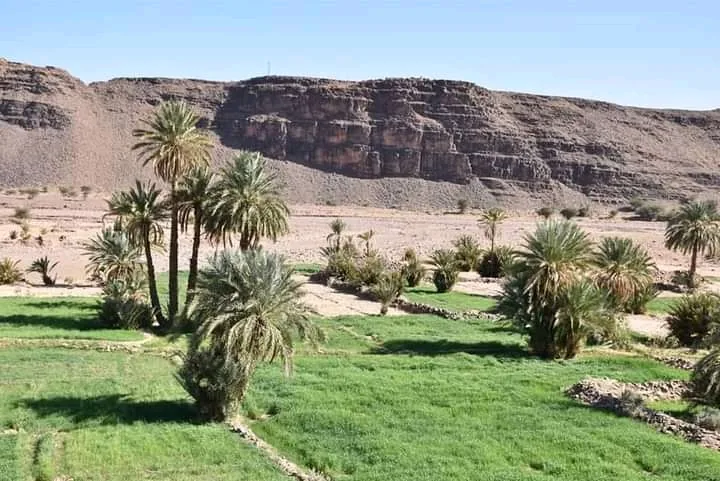
The site sits on private mining concession land in a remote stretch of Zagora Province and is not set up for tourism, so visiting the mine itself requires permission and is not something to attempt independently. The surrounding Anti-Atlas desert, however, is accessible by ordinary roads.
Is Bou Skour mine still active?
It is in an exploration and research phase rather than full commercial production, with mining companies periodically drilling and testing the deposit’s porphyry copper potential. Like Bleïda, it is not open to casual visitors.
Why are there two separate copper mines so close together in the Anti-Atlas?
Both sit inside the same Pan-African shear zone that fractured this part of the crust roughly 575 million years ago, creating ideal conditions for copper-rich fluids to form veins in more than one nearby location rather than just a single deposit.
About the Author
Daniel Harper has driven the unpaved tracks east of Tafraoute more than once, always struck by how ordinary an active mine looks from a distance and how completely a closed one disappears into the landscape. Researching Bleïda and Bou Skour meant tracing two very different fates written into the same 575-million-year-old rock.